


Council of Europe's Group of Experts on Action against Trafficking in Human Beings (GRETA): the latest annual report highlights an alarming rise in human trafficking for criminal exploitation across Europe
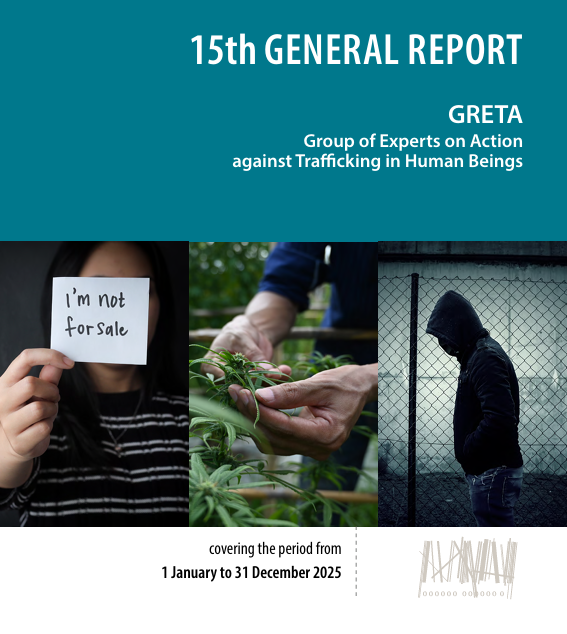
Published on 12 June 2026 with reference to 2025 data, the latest annual report by the Council of Europe's Group of Experts on Action against Trafficking in Human Beings (GRETA) documents a sharp and alarming rise in trafficking in human beings for criminal exploitation across Europe.
The report, which monitors the implementation of the Council of Europe Convention on Action against Trafficking in Human Beings of 16 May 2005, acknowledges some progress made by states parties, yet makes clear that human trafficking continues persisting and intensifying, as criminal organisations continue to extract great profits from the exploitation of highly vulnerable individuals. These victims are systematically coerced into committing crimes on behalf of their traffickers, including drug trafficking, property offences, migrant smuggling, money laundering, document fraud and online scams, making forced criminality an integral component of broader organised crime networks.
GRETA's report highlights the specific vulnerability factors that traffickers deliberately target and exploit: poverty, homelessness, unemployment, precarious or irregular migration status, disabilities and addictions all create conditions in which criminal groups can easily establish control over their victims. Children and young people are particularly at risk, especially unaccompanied or separated minors, children in residential care, and those from disadvantaged minority communities.
Recruitment methods have also evolved significantly, with traffickers increasingly turning to online platforms, like job announcements, service advertisements, gaming sites and social media, to lure and ensnare their victims, who are then compelled to engage in unlawful activities without being recognised for what they truly are: victims. GRETA President Conny Rijken has warned that the failure to identify these individuals as victims of trafficking leads directly to their arrest, prosecution, imprisonment and deportation, representing a profound injustice and a violation of states' obligations under international law. Indeed, the Convention's non-punishment provision requires all states parties to ensure that victims of trafficking are not penalised for unlawful activities they were compelled to carry out, yet GRETA's evaluation of 47 countries reveals that only 22 have adopted specific legal provisions to this effect.
Italy provides a notable example of judicial progress in this area: in its ruling No. 2319 of 2024, the Italian Court of Cassation, explicitly drawing on GRETA's second evaluation report and its recommendations concerning Italy, ruled in favour of a trafficking victim who had been investigated for drug trafficking offences, finding that she should not be punished given the circumstances of her exploitation, a landmark decision that reflects the real-world impact that GRETA's work can have on national jurisprudence.