


Loneliness Is Political: A Laboratory for the Engagement of Adolescents and Young Adults
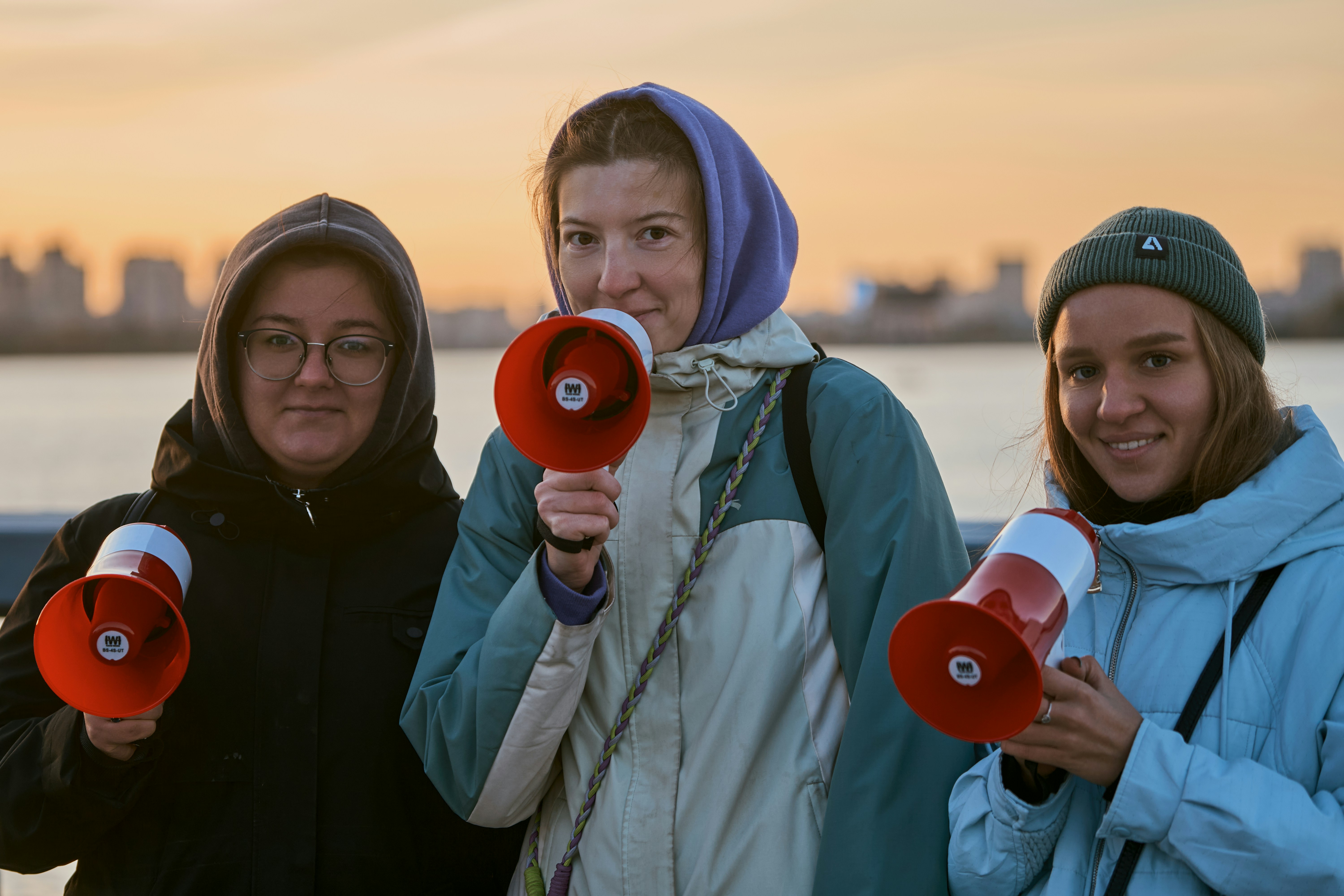
The Spiazzati project was developed through a collaboration between the La.R.I.O.S. Laboratory of the University of Padova and the Office for Social and Labour Pastoral Care of the Diocese of Padova. The project originates from the observation that adults—and young people in particular—often feel “spiazzati” (disoriented or unsettled) when confronted with contemporary contextual phenomena that affect and concern the present state of the world, making its future increasingly uncertain. It also stems from a desire to reclaim the public square as a space—both physical and virtual—with a political function in the most traditional sense of the term: social, communal, and participatory.
The laboratory-based project aims to promote civic engagement among participants, understood as the capacity to feel responsible for the common good, to recognise oneself as an active member of one’s community, and to imagine possible transformative actions capable of making everyday contexts more inclusive, participatory, and democratic. In a time often described as marked by youth disinterest and disengagement, Spiazzati instead seeks to create a space for listening, reflection, and participation, working on the variables that the relevant literature identifies as central to participation.
Flanagan (2013) conceptualises civic engagement through three interconnected sub-dimensions: (1) civic literacy, defined as the body of knowledge related to one’s reference group or community and to political functioning and decision-making processes; (2) civic skills, namely the competences required to pursue social, civic, and community goals; and (3) civic attachment, the affective and emotional dimension linked to a sense of belonging to a group or community. These are precisely the dimensions on which Spiazzati focuses, encouraging participants to acquire new knowledge and skills in relation to their communities of reference.
The programme, consisting of five two-hour sessions, has already been implemented in several parish contexts on the outskirts of Padua. During the workshops, participants were guided to reflect on their concerns about the future, both personal and collective. Within the diocesan community, through dialogical and participatory activities, a shared theme emerged with particular force: the experience of loneliness. This was not understood merely as a lack of relationships, but rather as social isolation and difficulty in feeling seen, heard, and recognised within everyday contexts—especially schools and local communities.
Building on this awareness, the group explored the phenomenon using contextual analysis tools and techniques. Among these, the bio-psycho-social-spiritual model was introduced, enabling participants to investigate social isolation across micro, meso, and macro levels, and to reflect on how this contextual issue may influence different dimensions of life: the biological dimension (related to the body and physical health), the psychological dimension (thoughts, emotions, and behaviours), the social dimension (the network of relationships in which individuals are embedded), and the spiritual dimension (what gives meaning and direction to life, including the search for purpose, self-transcendence, the perception of belonging to something greater, and, for some, the relationship with the divine).
Participants reflected on how loneliness, in all its dimensions, may manifest in individual experiences (micro), in relationships with peers and significant adults (meso), and within the social and institutional structures they inhabit (macro). This work enabled them to name experiences often perceived as purely personal, recognising instead their collective and social nature.
In the final phase of the project, participants were invited to engage in a utopian–imaginative exercise: assuming they had access to all the necessary resources, both material and immaterial, they were asked to imagine possible solutions to counter loneliness within their community. From this discussion, a significant proposal emerged: the creation—particularly within schools—of structured opportunities for debate and dialogue in small, heterogeneous groups, where students could discuss issues affecting their community and peer group. According to the participants, these spaces should be facilitated and mediated by external professionals in order to ensure a climate of listening and freedom of expression.
Another particularly interesting aspect of the proposal concerns the role of adults. While students participate in these moments of dialogue, teachers and educators could also be provided with dedicated spaces to engage in discussion on similar themes—not only as authority figures, but as individuals involved in the same community dynamics. In this perspective, addressing loneliness becomes a shared, intergenerational task.
The Spiazzati experience makes it possible to reinterpret loneliness not merely as an individual outcome of relational fragility, but as a deeply and intrinsically political phenomenon. Loneliness directly challenges the ways in which communities organise spaces for expression, recognition, and participation, and calls into question the responsibilities of educational, social, and cultural institutions. When adolescents and young people struggle to feel seen and heard, it is not only the quality of interpersonal relationships that is at stake, but also the very possibility of exercising citizenship. In this sense, the laboratory becomes a space of “divergent narration” in relation to dominant discourses that portray younger generations as disengaged or apathetic, instead offering an image of young people as capable of critical analysis, social imagination, and a desire for change.
Working on loneliness as a shared issue also makes it possible to overcome the dichotomy between the private and public spheres, showing how subjective experiences are intertwined with the social and structural conditions in which they take shape. Recognising this connection represents a crucial step in the development of civic engagement, as it allows participants to move from an individualised interpretation of distress towards a collective and transformative understanding. In this way, the public square—whether real or symbolic—is not merely a space for protest, but becomes a site of shared elaboration, where loneliness can be named, shared, and addressed politically.
The Spiazzati project demonstrates how education for participation can emerge from listening to lived experiences and transforming them into a lever for engagement and shared community responsibility. It shows how adolescents can be equipped with tools to critically interpret their present time and to propose utopian yet responsible solutions for the future of their communities. Giving them space does not simply mean listening to them, but recognising them as citizens of the present—individuals ready to reclaim the public square and to enact their political responsibility.