


Civicus Monitor Report 2025: civic space is obstructed in Italy
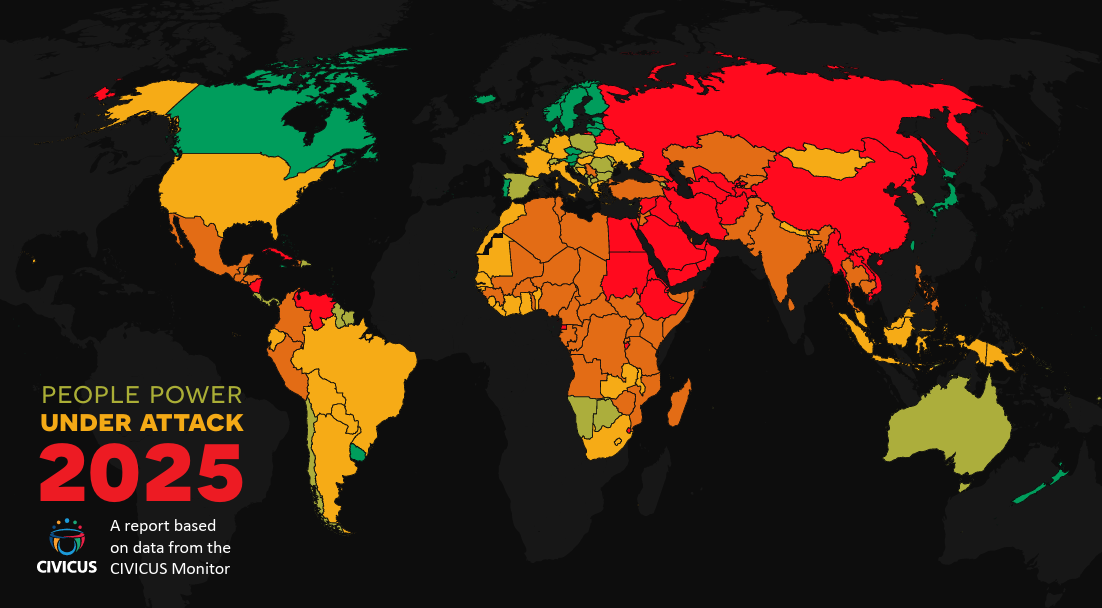
In the new 2025 annual report by CIVICUS Monitor, Italy has been officially downgraded to a country with “obstructed civic space.” This assessment confirms the structural deterioration of democratic freedoms and places our country among those where civic space is subject to significant restrictions, on the same level as Orban's Hungary.
The Civicus Monitor uses a methodology based on the collection and analysis of data from multiple sources, including civil society organizations, human rights observers, independent monitoring platforms, and legal analysis, assessing respect for freedom of expression, demonstration, and association.
The "obstructed" rating indicates that these freedoms are subject to recurrent violations, intimidation, arbitrary restrictions, and the distorted use of regulatory instruments. The arguments behind Italy's downgrade relate in particular to the approval of the security decree and the use of spyware against journalists and activists.
While civil society's commitment to the protection of fundamental rights is growing, Italian political authorities are closing down any space for democratic dialogue, showing a lack of interest in debate and a growing propensity to silence critical voices.
In Italy, the deterioration of civic space has been accelerated by the approval of the Security Decree, which introduces harsher penalties and repressive tools against peaceful dissent and, in general, against the exercise of freedom of peaceful assembly and association, in violation of the principles of legality, equality, and non-discrimination. Added to this is the use of Graphite spyware, produced by Paragon Solutions, which is used for illegal surveillance of journalists and activists, demonstrating a growing undermining of the right to criticism and free information.
All this is part of a general trend of criminalizing protest, which has mainly affected climate and environmental activism, NGOs engaged in sea rescue of migrants, and activists in movements defending the Palestinian people.
This is not an isolated phenomenon: France and Germany have also been downgraded, signaling a general decline in civic space in Europe. The growing climate of war and the progressive militarization of public policies are eroding democratic spaces, increasingly distancing citizens from decision-making processes. In this scenario, security often becomes a pretext for reducing fundamental freedoms and rights, fueling a repressive atmosphere.
On December 19 at 11:30 a.m., the results of the monitoring and the initiatives to protect civic space adopted by the Network in Defense of and civil society organizations will be presented at a press conference in the Chamber of Deputies.
In a context where press freedom and the autonomy of the judiciary are being called into question, with journalists facing reckless actions and trials for their work, the defense of civic space becomes an essential condition for ensuring pluralism, social justice, and the protection of human rights.