


Amnesty International: The 2026 Report on the State of the World’s Human Rights Warns Italy of Severe Structural Flaws
Table of Contents
- Introduction
- Detention Conditions, Torture, and the Penitentiary Crisis
- The Criminalization of Solidarity and Migrant Rights Abuses
- Systemic Violence Against Women and Reproductive Rights Rollbacks
- The Shrinking of Civic Space: Freedom of Assembly and the Press
- International Justice, Complicity in Conflicts, and Arms Transfers
- Socio-Economic Hardships and the Climate Crisis
- Conclusion
Introduction
The 2026 edition of Amnesty International’s annual report on the state of the world’s human rights was published in April, providing a comprehensive and critical assessment of human rights developments globally during the year 2025. The section dedicated to Italy highlights alarming, systematic trends that point towards a backsliding in democratic and human rights standards. From the hostile treatment of migrants and refugees to the severe cutback of the freedom of assembly and press, the report paints a concerning picture of a nation struggling to uphold its international and constitutional obligations. The findings show that marginalized groups such as people in detention, migrants, and women bear the weight of these structural flaws. Overall, the 2026 report serves as a warning to the Italian government, emphasizing that the normalisation of repressive policies and the erosion of civic space threaten the very fabric of human rights in the country.
Detention Conditions, Torture, and the Penitentiary Crisis
A primary concern raised in the report is the state of detention conditions across Italian prisons and migrant repatriation centres (CPRs). Detainees consistently endured overcrowded facilities, which fell significantly short of basic international standards for humane treatment, leading to high death rates and suicides in custody. The systemic failure to provide adequate care and security has transformed these facilities into epicentres of human rights abuses.
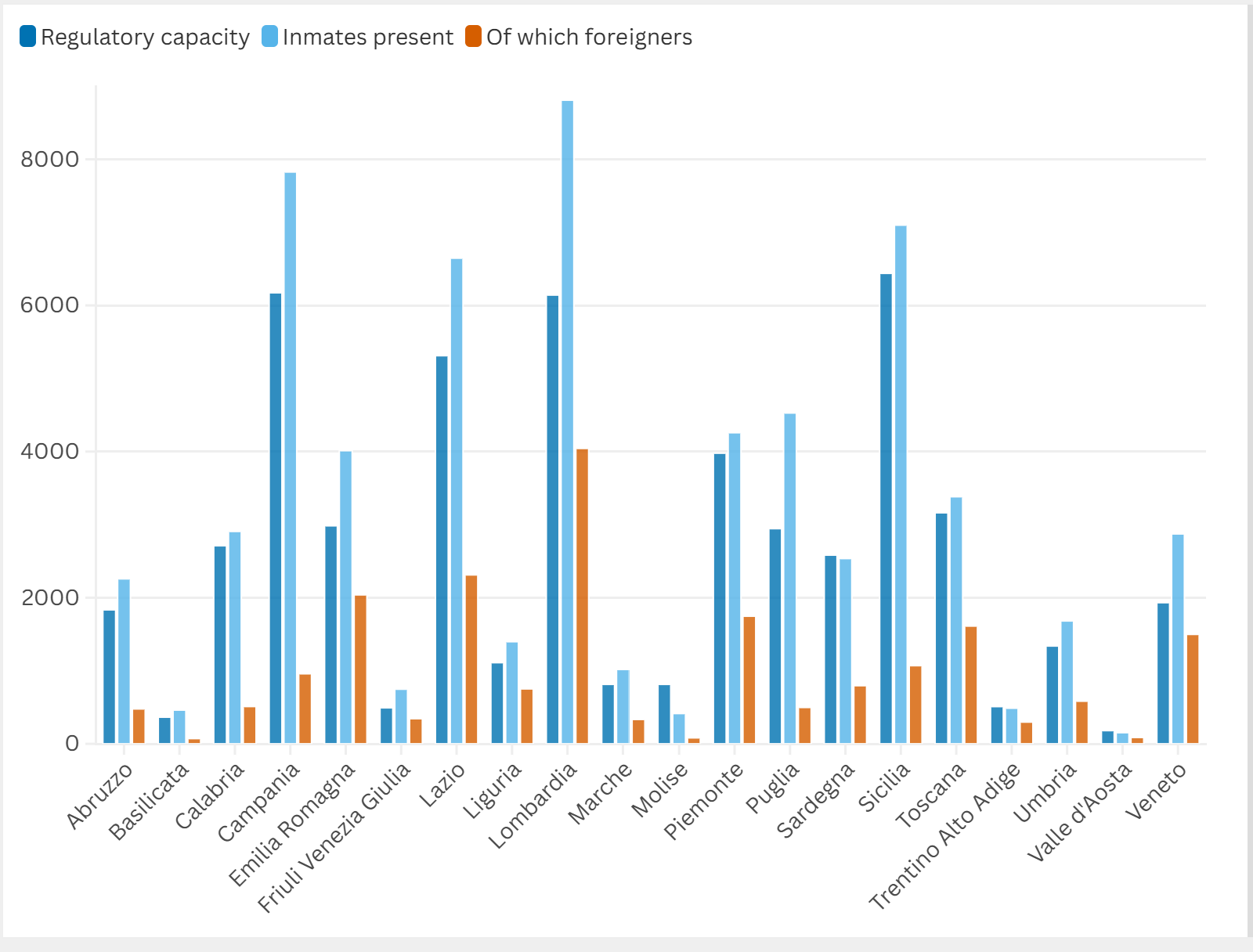
Figure 2 - Data on prisons’ population in Italy, showing overcrowding (data extracted from the Department of Prison Administration)
The report draws attention to an ongoing investigation into the alleged torture and ill-treatment of 33 boys at a juvenile prison in the city of Milan between 2021 and 2024. By August 2025, it emerged that 42 individuals, including prison directors and medical staff, were under investigation for their complicity or direct involvement in these abuses. Such incidents reflect a broader culture of impunity that continues to plague the Italian law enforcement and penitentiary systems. This was further highlighted in June 2025, when the European Court of Human Rights ruled that Italy had violated the prohibition of inhuman or degrading treatment regarding a 2001 case of police ill-treatment in custody. Although 31 officials had been initially charged, many prosecutions were ultimately discontinued due to the expiration of the statute of limitations, leaving victims without adequate redress.
In the context of CPRs, the situation was equally dire. Individuals ready for deportation continued to be held in bare cells without access to meaningful activities or adequate healthcare. In a landmark decision in July 2025, the Italian Constitutional Court ruled that the detention of migrants in these centres violated constitutional principles. The Court specifically cited the parliament’s persistent failure to establish clear and protective regulatory frameworks, effectively rendering the deprivation of liberty in these centres arbitrary and unlawful.
The Criminalization of Solidarity and Migrant Rights Abuses
The Central Mediterranean route remained one of the deadliest migration corridors globally, with at least 1,195 lives lost at sea in 2025. Amnesty International criticized Italian authorities for their delayed responses to distress alerts, a practice that deliberately placed the lives of vulnerable people, including children, at serious risk. The tragic consequences of such negligence were brought to the judicial forefront in July 2025, when six customs police and coastguard officers were indicted for failing to prevent a shipwreck near Steccato di Cutro in February 2023, an event that resulted in the drowning of at least 94 people.
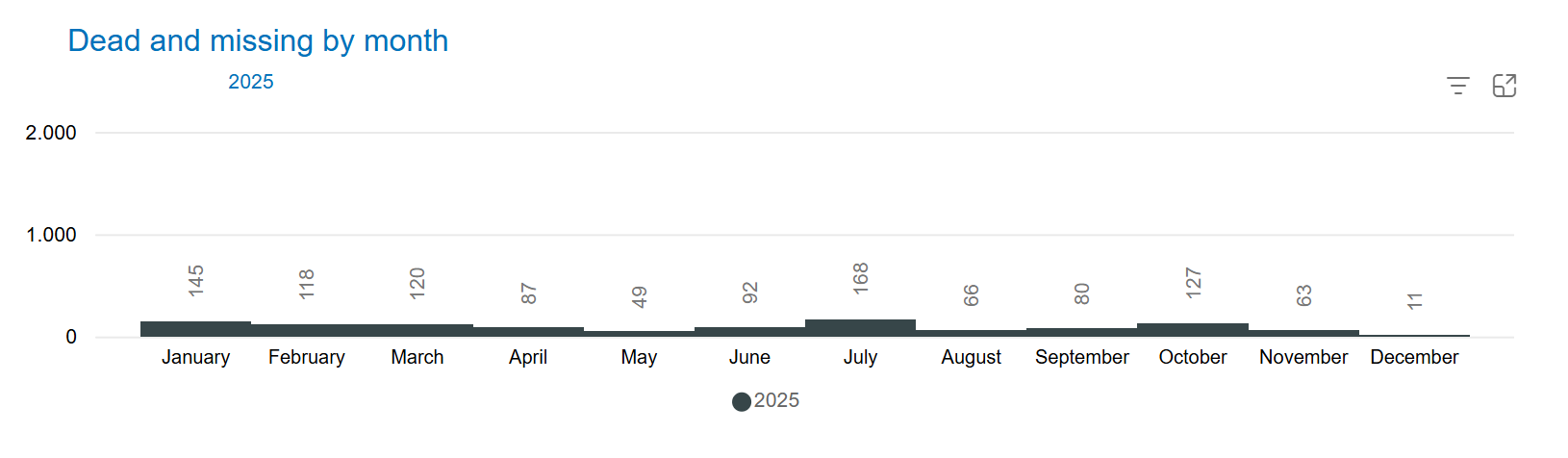
Figure 3 - Dead and missing at sea in 2025 by month (UNHCR)
Furthermore, the government intensified its obstruction of NGO rescue efforts. Authorities routinely assigned distant disembarkation ports to rescue vessels and subjected NGO ships and aircraft to administrative seizures, purposefully hindering their life-saving operations. The judicial harassment of human rights defenders peaked in October, when six members of the NGO Mediterranea Saving Humans stood trial in Ragusa. They were charged with the aggravated facilitation of irregular migration for rescuing 27 shipwreck survivors in 2020. Moreover, in March, the Cassation Court ruled that the government should compensate those rescued at sea and unlawfully held aboard the Italian coastguard ship Diciotti for 10 days in 2018, after the then minister of the interior blocked their disembarkation in Sicily. Italy's contentious extraterritorial asylum processing centres in Albania also faced significant legal and operational hurdles. In March 2025, the government attempted to expand the use of these centres to detain individuals who had already been served with an expulsion order while in migration detention in Italy. However, the expansion was stalled by the courts. Following an August ruling by the Court of Justice of the European Union which mandated that competent courts must be able to judicially review the application of the "safe country of origin" concept. Consequently, a Rome court ordered the urgent release of a man detained in Albania, citing that the arrangements failed to guarantee the right to health. Compounding these restrictive policies, Italy’s bilateral cooperation on migration control with Libya and Tunisia continued unabated, despite clear evidence of serious human rights violations in both countries.
Systemic Violence Against Women and Reproductive Rights Rollbacks
Violence against women remained a deeply entrenched structural issue in Italy. The 2026 report documents that, by the end of 2025, 85 women had been killed in domestic violence incidents, with 62 of these femicides committed by current or former partners. Despite the ongoing tragedy and persistent outcry from civil society, the Italian parliament failed to pass a crucial bill in November 2025 that would have introduced a consent-based definition of rape. This legislative paralysis leaves women inadequately protected and perpetuates a legal culture that fails to recognize the importance of explicit and actual consent, falling short of the standards set by the Istanbul Convention (art.36, par.2).
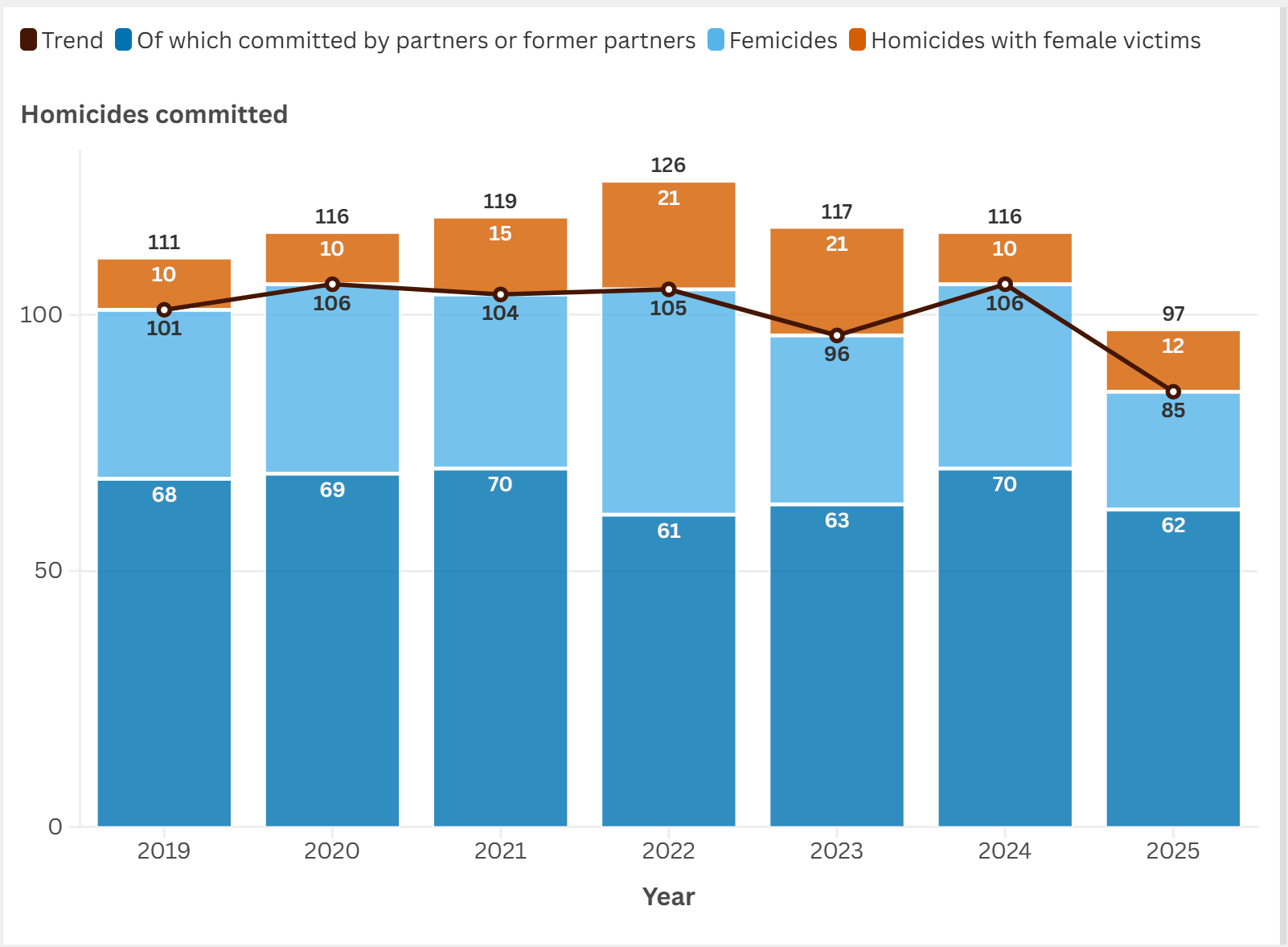
Figure 4 - Data on femicides in Italy (extracted from ISTAT)
In addition to the epidemic of gender-based violence, women’s reproductive rights faced continuous erosion. Access to lawful abortion services was systematically compromised by the extraordinarily high number of health professionals refusing to provide care on the grounds of conscience. The state’s failure to guarantee the presence of non-objecting medical staff in public hospitals has created insurmountable barriers for women seeking essential reproductive healthcare, effectively undermining a right established by Italian law decades ago.
The Shrinking of Civic Space: Freedom of Assembly and the Press
Civic space in Italy faced severe and unprecedented restrictions in 2025. In June, the government passed a piece of legislation that severely hindered the right to peaceful assembly. The law introduced new criminal offences and imposed harsher penalties for actions typically associated with peaceful protests and civil disobedience, such as passive resistance and blocking roads. Alarmingly, the legislation also explicitly penalized passive resistance within prisons and CPRs, stripping vulnerable detainees of one of their only non-violent methods of protest against inhumane conditions. This draconian law was widely criticized by UN special rapporteurs on the Rights to Freedom of Peaceful Assembly and of Association, on the promotion and protection of human rights and fundamental freedoms while countering terrorism, on the right to freedom of opinion and expression, on the situation of human rights defenders, and on the human rights of migrants as a measure that avoided parliamentary scrutiny and openly misaligned with international human rights standards.
Freedom of the press and the safety of journalists were similarly under attack. Media professionals faced threats and physical attacks, accompanied by credible allegations that journalists were unlawfully spied on. The pervasive sense of insecurity was validated when a parliamentary committee confirmed that Italian intelligence services had unlawfully deployed Paragon’s Graphite spyware to monitor activists and potentially journalists under the pretext of national security. This represents a severe breach of privacy, threatening the protection of journalistic sources and the foundational principles of a free press.
International Justice, Arms Transfers, and Complicity in Conflicts
The Amnesty International report criticizes Italy's failure to uphold international justice and its complicity in global conflicts. In direct defiance of the International Criminal Court (ICC), Italy failed to comply with its legal obligations to surrender Osama Elmasry Njeem, a Libyan national and militia member accused of serious human rights violations, who had been arrested on an ICC warrant. Because the ICC relies entirely on member states to execute its warrants, this refusal not only undermines the authority of the Court but also signals a troubling disregard for international accountability mechanisms.
Additionally, the country faced intense scrutiny over its irresponsible arms transfers. Despite taking some nominal measures to restrict the flow of weapons, Italy, like several other states, continued supplying weapons and military equipment to Israel under old export licences. This occurred against the backdrop of the ongoing genocide and grave violations of international humanitarian law in the Occupied Palestinian Territory, exposing a deep contradiction between Italy's stated commitment to human rights and its geopolitical and economic practices.
Socio-Economic Hardships and the Climate Crisis
The human rights assessment is incomplete without acknowledging the rising socio-economic struggles that plague the nation. The report notes that nearly 6 million people in Italy were living in absolute poverty in 2025. The government's failure to implement comprehensive social protection systems has left marginalized communities exposed to severe economic shocks, driving social exclusion and limiting access to basic rights such as housing and healthcare. Furthermore, Italy is dealing with the devastating impacts of the global climate crisis. Human-induced climate change caused thousands of deaths across the country, primarily driven by extreme weather events and severe heatwaves. The lack of immediate climate mitigation and adaptation strategies uniquely impacts the elderly and socio-economically disadvantaged populations, constituting a failure to protect the fundamental right to a healthy environment and the right to life.
Conclusion
Amnesty International’s 2026 report serves as an unequivocal indictment of the structural flaws in the Italian system. From the brutal conditions in detention centres and the hostile criminalization of migrant solidarity, to the legislative attacks on peaceful assembly and systemic gender-based violence, the findings depict a nation retreating from its human rights commitments. The report emphasizes the urgent need for comprehensive, systemic reforms Italian authorities should reverse these regressive policies immediately, ensure accountability for state abuses, and renew their commitment to upholding international human rights obligations to protect the dignity and lives of all individuals within their jurisdiction.