


GREVIO: “Building Trust Through Justice”, assessing Italy’s Response to violence against women in compliance with the Council of Europe Istanbul Convention
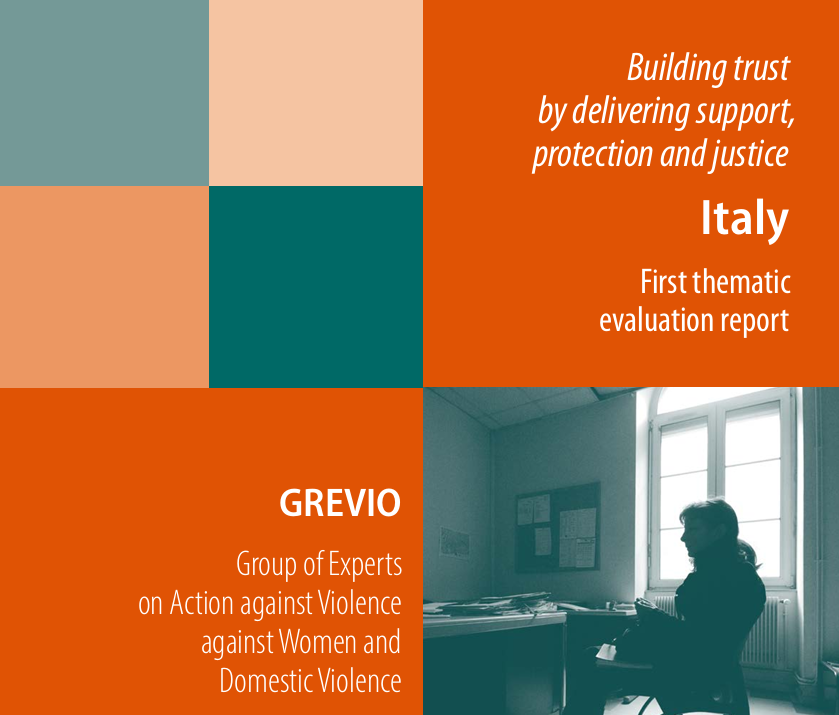
Table of Contents
- Building Trust as a Human Rights Obligation
- GREVIO and the Istanbul Convention: Monitoring Violence against Women
- Legislative Expansion and Institutional Reforms in Italy
- Criminal Justice Reforms: Progress and Unintended Consequences
- Prevention under Strain: Education, Gender Norms, and Digital Violence
- Protection and Support Services: Funding without Stability
- Data Collection and the Challenge of Accountability
- Intersectionality and Uneven Protection
- From Compliance to Trust: GREVIO’s Key Concerns
- Overall Assessment, Final Recommendations and Conclusion
Building Trust as a Human Rights Obligation
Violence against women constitutes one of the most persistent and severe violations of human rights in Europe. It affects women across social classes, regions, and age groups, undermining their dignity, safety, and full participation in society. International human rights law recognizes that states have a positive obligation not only to criminalize violence, but also to prevent it, protect victims, and ensure access to justice.
Within this framework, the Council of Europe Convention on Preventing and Combating Violence against Women and Domestic Violence (the Istanbul Convention) places particular emphasis on trust. Trust is not an abstract concept: it is built when women believe that institutions will respond promptly, respectfully, and effectively to violence. Conversely, trust is eroded when victims encounter delays, disbelief, procedural obstacles, or fragmented services.
GREVIO’s First Thematic Evaluation Report on Italy explicitly adopts this trust-centered approach. Rather than limiting its analysis to formal legal compliance, the report examines whether Italy’s institutional responses genuinely enable victims to feel protected, supported, and heard. In doing so, it provides a nuanced assessment of progress made and of structural weaknesses that continue to undermine trust in practice.
GREVIO and the Istanbul Convention: Monitoring Violence against Women
The Istanbul Convention establishes a two-pillar monitoring mechanism composed of the Group of Experts on Action against Violence against Women and Domestic Violence (GREVIO), an independent expert body, and the Committee of the Parties, a political body representing state parties. GREVIO’s mandate is to assess how the Convention is implemented in law and in practice, through country-based monitoring procedures.
Italy ratified the Convention in 2013 and was first evaluated in 2020 through a baseline report covering all provisions of the treaty. The first thematic evaluation round, launched in 2023, marked a shift in methodology. Instead of a comprehensive review, GREVIO focused on selected priority areas related to prevention, protection, and prosecution, examined through the overarching theme of “building trust”.
The evaluation of Italy drew on multiple sources: a state report submitted by the authorities, extensive written contributions from civil society organizations, and a nine-day evaluation visit conducted in October 2024. This multi-source approach allows GREVIO to assess not only formal measures, but also their practical impact on women’s lived experiences of violence and institutional response.
Legislative Expansion and Institutional Reforms in Italy
Since the publication of the baseline evaluation report, Italy has significantly expanded its legislative framework addressing violence against women. GREVIO acknowledges these developments as clear evidence of political commitment to implementing the Istanbul Convention.
A particularly important reform is Law No. 53/2022 on gender-based violence statistics, which aims to strengthen evidence-based policymaking through systematic data collection across health, justice, and law enforcement sectors. This law establishes obligations to disaggregate data, among other, by age, gender and victim–perpetrator relationship, addressing long standing gaps identified in the baseline evaluation.
Italy has also adopted measures addressing emerging forms of violence, including the non-consensual sharing of intimate images. Amendments to privacy legislation enable victims to report such offences and request the removal of illegal content from online platforms. In parallel, measures supporting victims’ economic empowerment have been expanded, including financial assistance schemes and incentives for employers to hire women who have experienced domestic violence.
The creation of the Bicameral Parliamentary Commission on Femicide and Gender-Based Violence and the Permanent Observatory on gender and domestic violence within the Ministry of Justice reflect an effort to strengthen coordination among institutions, monitoring, and legislative coherence. These bodies play a crucial role in translating legal norms into institutional practice, a key factor in building trust among victims.
Criminal Justice Reforms: Progress and Unintended Consequences
Criminal justice reform represents one of the most dynamic but also controversial areas of Italy’s response to violence against women. Following the introduction of the “Red Code” (Law No. 69/2019), Italy adopted several reforms aimed at accelerating proceedings and strengthening victim protection, including the so called Cartabia reform (Law No. 150/2022), Law No. 122/2023, and Law No. 168/2023.
These reforms introduced fast-track procedures for offences such as domestic violence, sexual violence, and stalking, as well as requirements to appoint specialized prosecutors and improve professional training. GREVIO recognizes these measures as important steps toward a more responsive justice.
However, the report also highlights significant unintended consequences. Fast-tracking has not been accompanied by sufficient financial and human resources, resulting in heavy caseloads and increased pressure on prosecutors and courts. According to legal practitioners, this has contributed to higher dismissal rates and reduced opportunities for thorough investigation. Moreover, changes to prosecution standards now require a “reasonable prospect of conviction” before cases proceed, further limiting access to justice for victims.
Of particular concern is the use of restorative justice in cases of violence against women. GREVIO stresses that restorative approaches, when applied without strict safeguards, risk exposing victims to secondary victimization. The report notes the absence of systematic risk assessments, informed consent procedures, and specialized training for mediators, all of which are essential to ensure victim safety and autonomy
Prevention under Strain: Education, Gender Norms, and Digital Violence
Prevention is a cornerstone of the Istanbul Convention, yet GREVIO finds that preventive measures in Italy remain uneven and insufficiently resourced. While national action plans emphasize prevention and gender equality, implementation varies significantly across regions and educational institutions.
Education on gender equality, consent, and non-stereotyped gender roles is not systematically integrated into mandatory curricula. Although civic education has been introduced as a transversal subject, GREVIO observes that this approach has failed to ensure consistent teaching on violence against women and sexual consent. Topics such as rape defined by lack of consent and the risks associated with violent pornography remain largely absent.
These shortcomings are particularly concerning in light of emerging trends identified in the report. GREVIO documents a significant increase in sexual violence against girls and in gang rapes involving minors. Research cited in the report links these developments to early exposure to violent pornography and to the absence of educational tools enabling children to critically assess such content. In this context, prevention is not merely an educational issue, but a structural safeguard against future violence.
Protection and Support Services: Funding without Stability
Italy has substantially increased funding for anti-violence centers and shelters, a development GREVIO explicitly welcomes. Funding levels rose from approximately €10 million per year at the time of the baseline evaluation to €55 million in 2023 and €80 million in 2024.
Despite this progress, structural problems persist. GREVIO highlights significant delays in the disbursement of funds, with anti-violence centers often waiting up to fourteen months to receive allocated resources. Such delays undermine service continuity, force organizations into financial precarity, and limit their capacity to plan long-term support for victims.
Furthermore, funding criteria vary widely across regions, leading to unequal treatment and uneven service provision. Funds typically cover accommodation costs but rarely account for operational expenses, prevention activities, or the extensive data collection obligations imposed on service providers. These structural shortcomings weaken the sustainability of support services and risk eroding victims’ trust in the availability of protection.
Data Collection and the Challenge of Accountability
Effective data collection is essential for accountability and policy evaluation. Law No. 53/2022 has laid important foundations for improved data systems, requiring coordinated data collection across multiple institutions.
However, GREVIO finds that implementation remains incomplete. Data on prosecutions, convictions, civil proceedings, and protection orders are fragmented or unavailable, making it difficult to track cases from reporting to conviction. Without such tracking, it is impossible to assess attrition rates, evaluate the effectiveness of criminal justice reforms, or identify systemic failures.
The report emphasizes that incomplete data undermines transparency and accountability, ultimately weakening public trust in institutions responsible for combating violence against women
Intersectionality and Uneven Protection
Although Italy’s national action plans acknowledge the importance of intersectionality, GREVIO identifies significant gaps in addressing the specific needs of certain groups of women. Roma and Sinti women, LBTI women, women in prostitution, and women with disabilities are not consistently reflected in policy design or implementation.
Regional disparities further exacerbate these gaps, as not all regional action plans adopt an intersectional or gender-sensitive approach. GREVIO stresses that a “one-size-fits-all” response fails to account for intersecting forms of discrimination and leaves some women systematically excluded from protection and support.
Addressing intersectionality is therefore not an optional policy choice, but a core requirement for building trust among all women affected by violence
From Compliance to Trust: GREVIO’s Key Concerns
GREVIO concludes that while Italy has demonstrated strong legislative and policy engagement, trust cannot be built through laws alone. Delays, inconsistent implementation, insufficient consultation with civil society, and resource constraints continue to undermine victims’ confidence in institutions.
The report urges Italy to ensure sustainable funding, meaningful civil society participation, harmonized data collection, and systematic training for professionals, particularly within the justice system.
Overall Assessment, Final Recommendations and Conclusion
GREVIO’s first thematic evaluation of Italy highlights significant progress in strengthening the country’s response to violence against women, particularly through legislative reforms, increased funding, and improved institutional coordination. These developments reflect a clear commitment to the effective compliance with the Istanbul Convention and provide important foundations for enhancing victims’ trust in public institutions.
At the same time, the report underlines that trust cannot be built through legal measures alone. Persistent gaps between law and practice continue to limit the effectiveness of Italy’s response. Fast-tracked criminal proceedings introduced without sufficient resources risk weakening access to justice, while delays in funding and regional disparities undermine the sustainability and quality of protection and support services. Shortcomings in prevention, especially in education and awareness-raising, further constrain efforts to address the structural roots of violence.
GREVIO also stresses the need for a more consistent intersectional and victim-centered approach. Women exposed to multiple forms of discrimination, including Roma and Sinti women, LBTI women, women with disabilities, and women in precarious situations, remain insufficiently protected. Addressing these gaps is essential to ensure that institutional responses are inclusive and equitable.
Attached to the GREVIO s report an appendix lists the main recommendations to address the above mentioned concerns as follows:
- Introduce definitions of domestic violence and violence against women in line with Article 3 of the Istanbul Convention
- Ensure National Action Plans address all forms of violence against women, have an intersectional approach, have clear operational plans, timelines, budgets, and indicators
- Harmonize policies on violence against women at the regional/local level and improve coordination between national and regional/local governments
- Ensure meaningful consultation and participation of civil society in shaping policies
- Provide sustainable long-term funding for policies on violence against women, including for prevention measures. Simplify funding disbursement to anti-violence centers and shelters
- Strengthen data collection on all forms of violence against women by all relevant agencies
- Ensure mandatory education on topics like gender equality, gender-based violence, consent in sexual relations across the education system
- Provide systematic mandatory training on violence against women for professionals like social workers, law enforcement, judges, healthcare providers, teachers
- Increase number and capacity of perpetrator programs, ensure widespread attendance, clear standards, and program evaluation
- Increase number and capacity of specialist shelters for all women victims. Verify and monitor minimum standards for support services
- Ensure custody decisions systematically consider domestic violence and prohibit concepts like "parental alienation syndrome"
- Proceed with caution on restorative justice, ensure risk assessment, informed consent, legal representation for victims
- Address high dismissal rates and ensure dissuasive sentences for violence against women cases
- Ensure systematic risk assessment and safety planning for all violence against women cases
- Increase issuance of emergency barring and protection orders and extend protection to children
- Apply existing protection measures effectively during investigations and proceedings
Overall, the evaluation makes clear that building trust is an ongoing process requiring sustained political commitment, stable funding, meaningful civil society participation, and effective coordination across institutions. By strengthening these elements, GREVIO considers that Italy can move beyond formal compliance and ensure that support, protection, and justice are experienced by women as tangible and reliable realities.