


The International Labour Organisation’s Work on Regulating the Worst Forms of Child Labour
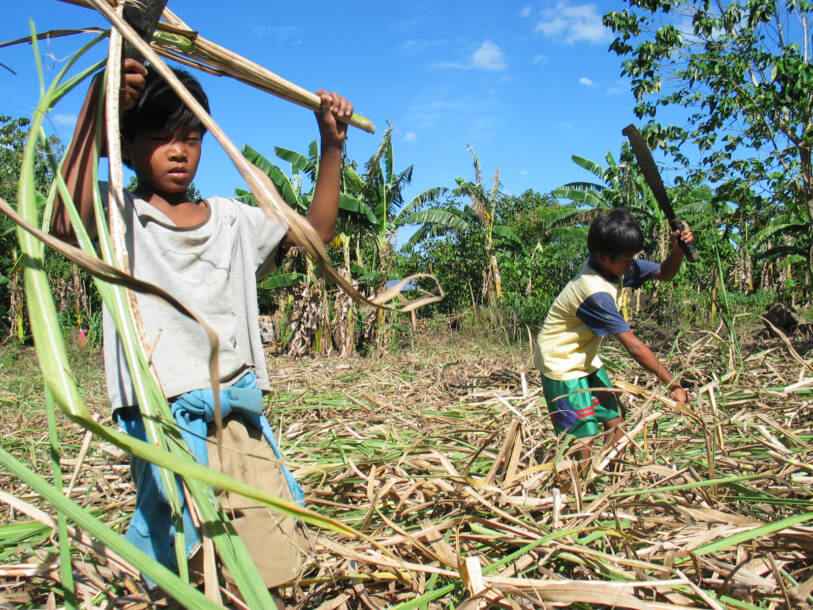
Table of Contents
- The Historical Evolution of Child Labour in Wester Societies
- The Institutional Development of the ILO and the Internationalisation of Child Protection
- From Convention No. 138 to a New International Instrument
- The Adoption of Convention No. 182 (1999)
- Universal Ratification, Persistent Violations
- Case Study I: Bolivia’s Sugarcane Sector
- Case Study II: India’s Garment Industry
- Conclusions
The Historical Evolution of Child Labour in Western Societies
Child labour was not always perceived as exploitation. In pre-industrial Western societies, children contributed to family economies through agricultural or domestic work. Historians such as Hugh Cunningham and Philippe Ariès have shown how childhood itself is a socially constructed concept that evolved over centuries. Only with industrialisation did the exploitation of children in factories and mines provoke moral outrage and reform movements.
By the late nineteenth century, childhood had increasingly come to be understood as a protected phase of life centred on education and development rather than economic productivity. This transformation laid the groundwork for modern children’s rights and for international intervention.
However, as I highlight in my research, this Western-centred vision cannot be universally imposed without friction. In many parts of the Global South, child labour remains connected with poverty, survival strategies, and local cultural norms. The tension between universal standards and socio-economic realities remains at the heart of the issue.
The Institutional Development of the ILO and the Internationalisation of Child Protection
The creation of the International Labour Organization in 1919 marked a turning point in the international regulation of labour standards. Born thanks to the Treaty of Versailles, the ILO was founded on the principle that lasting peace requires social justice.
Its tripartite structure, that brings together governments, employers, and workers, was revolutionary. From its earliest conventions, the ILO recognised children as a vulnerable group in need of protection. Moreover, over the decades, the organisation progressively developed international labour standards. The 1944 Declaration of Philadelphia reaffirmed its broader social mission, and in 1969 the ILO received the Nobel Peace Prize in recognition of its global impact.
Child labour remained a central concern throughout the twentieth century. Yet early conventions often struggled with ratification and implementation, particularly in colonial and developing contexts.
From Convention No. 138 to a New Instrument
A major milestone came with Convention No. 138 (1973), which established a unified minimum age for employment. However, its ratification progressed slowly.
In the 1990s, momentum grew again. The adoption of the Convention on the Rights of the Child(CRC) in 1989, reframed children not only as protected subjects but as rights-holders. This normative shift revitalised international attention on child labour.
Furthermore, in 1992 the ILO launched the International Programme on the Elimination of Child Labour (IPEC), adopting a more operational and pragmatic strategy. Rather than relying solely on normative instruments, the organisation began providing technical assistance and engaging with civil society.
Still, the persistence of slavery-like practices, trafficking, and hazardous work made clear that stronger action was needed.
The Adoption of Convention No. 182 (1999)
Convention No. 182 represented a decisive shift. Instead of attempting the immediate abolition of all child labour, it focused on eliminating its worst forms: slavery, trafficking, forced recruitment of child soldiers, sexual exploitation, and hazardous work.
As I have examined in my analisis, the 1998 ILO report Child Labour: Targeting the Intolerable laid the foundation for this approach. It documented severe physical and psychological harm suffered by children in agriculture, mining, domestic servitude, and informal sectors up until that time, highlighting the need to intervene and face the problem.
Therefore, Convention No. 182 was negotiated and in 1999 it became a reality, rapidly coming to be the most universally ratified convention in ILO history. It explicitly recognised international cooperation as essential and acknowledged structural poverty as a root cause of the problem.
In my thesis, I reconstruct the negotiation process, showing how compromises were reached, for example, by including child soldiering under forced labour and allowing national flexibility in defining hazardous work.
Universal Ratification, Persistent Violations
One of the most impactful findings in my research concerns the gap between legal ratification and effective implementation.
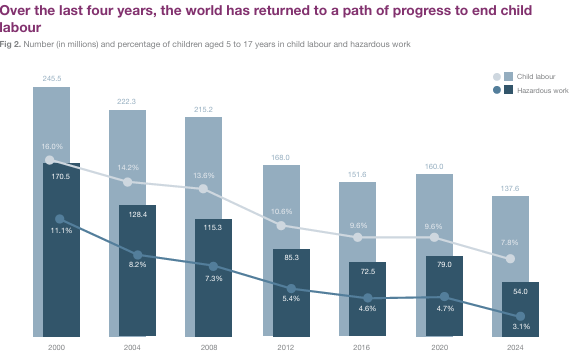
According to the 2024 Global Estimates published jointly by the ILO and UNICEF, an estimated 138 million children remain engaged in child labour, including 54 million in hazardous work.
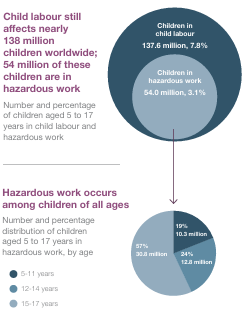
Although progress has been made and there has been a reduction since 2020, the world failed to meet Sustainable Development Goal Target 8.7 (eradication of child labour by 2025).
The universal ratification of Convention No. 182 demonstrates strong normative consensus.
Yet enforcement mechanisms, labour inspections, education systems, and social protection measures often remain insufficient. States must translate the international commitments into effective national policies to ensure that the worst forms of child labour are stopped.
Case Study I: Bolivia’s Sugarcane Sector
In Bolivia, I observed what scholars call “deviant compliance”, meaning formal adherence to international norms combined with selective reinterpretation at the domestic level.
Although Bolivia ratified both ILO conventions 138 and 182, past legislation controversially allowed children under certain conditions to work below the minimum age of 14.
Moreover, focusing on hazardous child labour, in the sugarcane sector children are employed mostly informally and seasonally to work in the crops, facing harsh work conditions risks due to exposure to agrochemicals and manual harvesting. Nevertheless, due to poverty, migration, informal labour systems, and weak inspection mechanisms, the situation persists and is necessary for many families and children in order to survive.
Here, international standards confront entrenched socio-economic realities. Highlighting the fact that without structural change, conventions risk remaining symbolic.
Case Study II: India’s Garment Industry
India presents a similarly complex picture. Despite legislative frameworks such as the Child Labour (Prohibition and Regulation) Act of 1986, informal subcontracting allows child labour to remain hidden within supply chains.
In Delhi’s garment sector, children often work in home-based workshops performing delicate tasks under unsafe conditions. They tend to work at the margins of supply chains, informally and therefore manage not to be traced by the system. It is clear how in this context, structural inequalities like caste discrimination, rural poverty, gender hierarchies, intersect with weak and blurred enforcement.
While in the region of Tamil Nadu, the recruitment system known as Sumangali (meaning happily married woman), further demonstrates how adolescent girls can be exploited under the guise of empowerment: this employment system, far from being empowering, lures girls from extremely poor, low-caste rural environment with the promise of steady income and the opportunity to save money for their future, but in reality, confines them in factory-controlled hostels, living under extreme circumstances jeopardising their fundamental and basic rights.
These dynamics show that child labour is not merely a legal issue but a socio-economic and moral challenge requiring corporate accountability, education investment, and community empowerment.
Conclusions
My thesis ultimately asks whether the ILO’s evolving approach, from early protective conventions to Convention No. 182, remains useful and necessary and my answer is yes.
The ILO has succeeded in building global standards and consensus and creating enforceable norms. Its conventions, particularly Convention No. 182, have raised awareness, mobilised states, and created a normative framework that is now universally recognised, marking significant achievements in international labour law.
However, the persistence of 138 million child labourers demonstrates that the adoption of international standards is not in itself sufficient because normative progress does not automatically translate into social justice. Making the ILO’s work necessary and needed but limited on its own. Its conventions provide indeed the essential legal foundation, but they must be complemented by broader policies addressing poverty reduction, access to education, and social protection.
My analysis shows that the international community possesses the tools and knowledge needed to eliminate the worst forms of child labour. The challenge lies in transforming legal commitments into concrete, measurable change. On the one hand, continuing to strengthen international standards and their application is fundamental. In contrast on the other hand, continuing to tackle the socio-economic realities, like systemic poverty, and governance issues that fuel and sustain the phenomenon, is also a necessary step to follow in order to achieve a world where child labour is not needed for survival.
Documents
Links
Keywords
How to cite this article
Lidia Meloni, "The International Labour Organisation’s Work on Regulating the Worst Forms of Child Labour", 11.08.2026, Human Rights Centre "Antonio Papisca", University of Padova, http://unipd-centrodirittiumani.it/en/topics/the-international-labour-organisations-work-on-regulating-the-worst-forms-of-child-labour
