


No one is invisible to culture: the right to enter
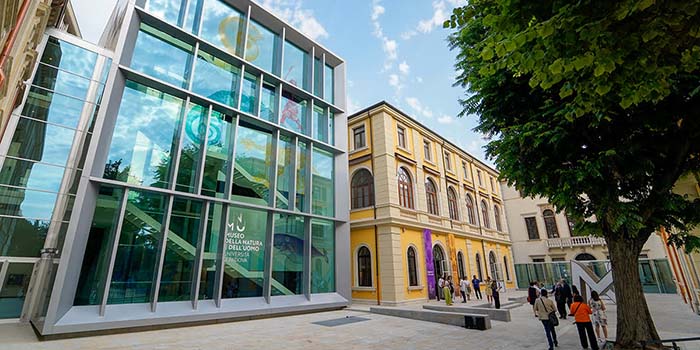
In Padua, heritage sites and associations are joining forces to guarantee homeless people their right to culture.
On Monday 26 October, the Auditorium of the Museum of Nature and Humankind in Padua hosted the meeting "The right to enter. Culture and homeless people", a discussion on everyone's right to enjoy and benefit from cultural heritage.
The University Centre for Museums and the "Antonio Papisca" University Centre for Human Rights of the University of Padua, together with the Department for Social Services of the Municipality of Padua, promoted the event. Representatives of the city institutions that manage cultural venues and of the associations operating in the area to assist homeless people also took part.
Beyond the bed and the meal
Homeless people are recognised as needing a bed and a meal, but rarely the right to enter a museum, a library, or an archive. The day placed precisely this threshold at its centre: a moment of reflection and encounter between those who work in social services and those who operate within cultural venues.
Assistance focuses primarily on the needs deemed essential (food, health, shelter, legal and administrative protection), which social services and street associations address every day, and whose work is coordinated by the inclusion forum established by the Department for Social Services. However, among the fundamental rights of the person is also access to culture, which guarantees human dignity, freedom of expression and the full development of the individual.
Open, accessible and inclusive museums
Professor Mauro Varotto, the Rector's Delegate for Museums at the University of Padua, recalled that the definition of museum adopted by ICOM in 2022 invites museums, and not only them, to be "open, accessible and inclusive" and to operate "with the participation of communities".
The communities out there are many and varied. For several years now, the University of Padua Museums have been committed to broadening the circle of people who enter the University, so that they may come to feel that heritage as their own. It is not merely a matter of guaranteeing the right of entry, but of engaging in dialogue with people and institutions in order to understand their different needs and to make room for a culture of listening and welcome. The hope is that this path will lead, in the future, to the co-design of events and initiatives.
In this regard, the memorandum of understanding signed precisely on the occasion of the meeting between the University Centre for Museums and the Social Services Department of the Municipality of Padua is particularly valuable: an instrument that lends continuity and solidity to individual initiatives, transforming them into a common strategy.
A fundamental right often denied
The meeting continued with further contributions. Professor Marco Mascia, retracing the history of treaties and the internationalisation of human rights, explained that the aim of the day was to promote the right of homeless people and those living in conditions of extreme poverty to participate in cultural life.
This is a fundamental right, recognised by the Universal Declaration of Human Rights, which in reality is often denied: poor people are, in fact, turned away from cultural venues because of their appearance or their social condition, and this fuels exclusion and marginalisation. Culture is not a right reserved for those who have already satisfied all their other needs, but an essential instrument of dignity, identity and personal development.
The experience of Genoa
Lorenzo Penco, director of the listening centre of the San Marcellino Association in Genoa, recounted his experience of many years, one of the rare examples at a national level in this direction and a model to which to refer.
The signing of the memorandum
At the conclusion of the conference, the memorandum of understanding between the University Centre for Museums of the University of Padua and the Social Services Department of the Municipality of Padua was then signed by Fabrizio Nestola, President of the University Centre for Museums, and Margherita Colonnello, Councillor for Social Policies.
The event was an example of good practice and showed how deeply interconnected the right to culture and human rights are.