


The Third Italian National Action Plan for the Promotion of Rights and Inclusion of Persons with Disabilities has been published
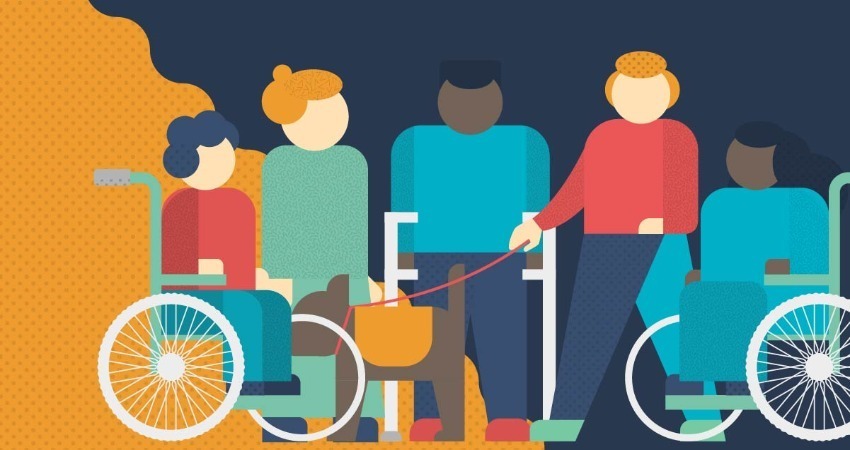
The Third National Action Plan for the Promotion of Rights and Inclusion of Persons with Disabilities was published in the Official Gazette on 21 May 2026 through a Presidential Decree issued by President Mattarella on 12 March 2026. This objective is not merely a statement of intent; rather, it represents a genuine roadmap that Italy will follow over the next three years.
The National Action Plan is a strategic document with a three-year duration. Its purpose is to define priority actions, implementation timelines, responsible bodies, and indicators for measuring progress in the inclusion of disabled persons.
The Plan is structured around seven concrete areas of intervention:
- Accessibility: removal of architectural and digital barriers, and improved access to digital heritage and media.
- Well-being and Health: enhancement of clinicians’ expertise and the establishment of dedicated hospital networks.
- Employment Inclusion: updating and improving targeted employment schemes and strengthening protection against discrimination, including for carers.
- Education, Higher Education and Training: ensuring continuity in education and defining professional profiles for autonomy support services.
- Life Planning: promoting deinstitutionalisation, independent living, and support arrangements for life after the loss of family carers.
- Inclusive Safety and International Cooperation: ensuring the protection of persons with disabilities during emergencies and natural disasters.
- Monitoring Systems and Data Digitalisation: promoting the use of ISTAT’s Disability in Figures platform and introducing an obligation to publish annual monitoring reports.
Following the National Recovery and Resilience Plan (PNRR), Italy enacted Law No. 227/2021 (the Delegating Law) with the aim of comprehensively reforming disability legislation. In this regard, Legislative Decree No. 62/2024 is particularly significant, as it sought to redefine the legal concept of disability by replacing fragmented and often disabling medical assessments with a single, more person-centred evaluation focused on the individual and their life plan.
Consequently, this new National Action Plan is the outcome of a structural transformation that has been underway since 2021. It creates a broad national framework encompassing economic, social, and healthcare policies, all aimed at supporting individual autonomy.
At the international level, this represents the fulfilment of commitments Italy has made to both the United Nations and the European Union.
As previously noted, this Action Plan is not about charity or paternalistic welfare. Rather, it seeks to actively dismantle the traditional model through which disability has been viewed and addressed. By recognising individuals as active agents rather than passive recipients of care, the Plan promotes self-determination and acknowledges that people with disabilities have aspirations, responsibilities, and life goals like anyone else.
For many years, Italy largely operated under a medicalised, paternalistic model that often led to depersonalisation. The lives of persons with disabilities revolved around two certainties: assessment by an INPS medical commission and the assignment of a degree of “invalidity”. This was generally followed either by the provision of financial benefits intended to compensate for or assist with disability, or by placement in specialised institutions that frequently functioned more as segregated environments than as places of empowerment. Even the term invalidity carries problematic implications, suggesting inadequacy, incapacity, or a lack of worth.
This National Action Plan seeks to move beyond that outdated approach and to fulfil Italy’s obligations under international agreements, particularly those established by the United Nations. There is now a growing recognition that individuals are not inherently “disabled”; rather, they are often disabled by society. When society creates environments, services, and structures that fail to accommodate diverse needs, it effectively restricts people’s autonomy and participation.
In practical terms, the Plan now allows individuals greater freedom to choose independent living arrangements, including co-housing models, shared living with others, and self-managed support services, enabling them to decide how and with whom they wish to live.
The Action Plan also addresses the social dimension of disability by tackling ableism.
If ableism is understood as the systemic prejudice that regards disabled people as inferior because of their bodies, behaviours, or ways of living, then it inevitably produces exclusion and segregation. The Plan intervenes in precisely those areas of life that are fundamental to individual participation: education, housing, employment, and leisure.
In education, Italy is legally obliged to provide all pupils and students with equal access to learning opportunities of the same standard and quality. In the past, however, responsibility was often delegated almost entirely to support teachers, who were frequently viewed as secondary professionals and as the sole individuals responsible for disabled students. This often resulted in fragmented educational pathways marked by significant gaps. The National Plan aims to promote continuity and professional specialisation in this area, reducing the constant turnover of teaching staff and improving educational outcomes for both disabled students and the wider student population.
Within the labour market, the existence of so-called “special lists” often contributed to the perception that disabled individuals obtained employment solely because of their disability. This frequently confined them to undervalued roles that did not reflect their actual skills and abilities. The National Plan introduces measures such as expanded remote working opportunities, reforms to employment placement services focused on genuine competencies, and the implementation of reasonable accommodations, including support services and flexible working hours. These measures aim to ensure that individuals are no longer expected to adapt to disabling social structures, but that society itself becomes more inclusive.
With regard to family life, traditional sexist and patriarchal assumptions often led mothers or other family members to sacrifice their own independence in order to provide care for disabled relatives. Today, the role of the carer is increasingly recognised at a national level. This recognition helps restore the carer’s role as fundamentally relational and familial, rather than reducing it to an invisible and unsupported responsibility.
Finally, the new National Action Plan seeks to reduce bureaucratic burdens by focusing on the individual’s personal life story rather than on administrative procedures. People should no longer be required to navigate multiple local offices simply to have their rights recognised, obtain support services, or access assistive measures. Instead, the objective is to consolidate relevant documentation within a unified life-project framework.
In conclusion, this reform should not be regarded as a final destination, particularly given the considerable work that still lies ahead for Italy. Nevertheless, it undoubtedly represents an important first step and offers tangible hope to all those who refuse to be disabled by an ableist society.