


United Nations Human Rights Council: the 61th regular session was held from February 23 to March 31 2026
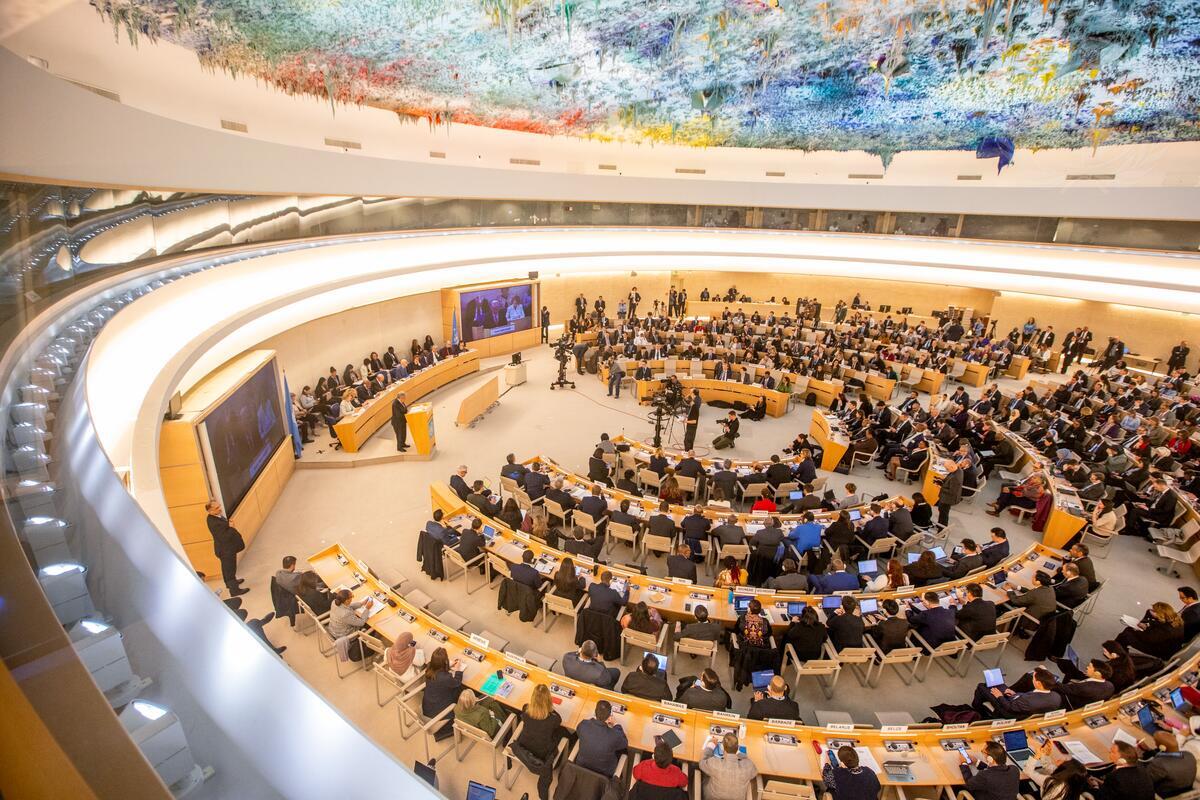
On 31 March 2026, the Human Rights Council concluded its sixty-first regular session, having adopted 38 resolutions extending 19 country-specific and thematic mandates. Throughout the session, the Council held general debates, interactive dialogues, panel discussions, two urgent debates, and adopted the outcomes of the universal periodic reviews of 13 countries. The sixty-second regular session of the Council is scheduled from 15 June to 10 July 2026.
A key theme of the session was the ongoing conflict in West Asia. The Council adopted a resolution A/HRC/61/L.38 calling on Iran to “immediately and unconditionally cease all unprovoked attacks, threats and provocations” against Bahrain, Kuwait, Oman, Qatar, Saudi Arabia, the United Arab Emirates and Jordan. On 27 March, at the request of Iran, China and Cuba, an urgent debate was held on the aerial attack on Shajareh Tayyebeh Girls' School in Minab, Iran, described as a grave breach of international humanitarian law and international human rights.
The 38 adopted resolutions reflect a comprehensive commitment to human rights across multiple dimensions, addressing the needs of people in vulnerability, including people living on the streets, persons with disabilities, children affected by armed conflict, and communities under occupation, as well as human rights concerns related to the Occupied Palestinian Territory, East Jerusalem, and the occupied Syrian Golan. Other resolutions tackle systemic issues such as the negative impact of unilateral coercive measures on the enjoyment of human rights, the importance of transparent and accountable public services and the role of disability-inclusive digital technologies. Cultural rights, freedom of religion, the right to food, and mental health also feature prominently, alongside resolutions linking human rights to the 2030 Sustainable Development Goals and focusing on the prevention of genocide, discrimination, and violence based on religion or belief. In response to the United Nations funding crisis, several resolutions also included cost-saving measures.
A high-level panel discussion was announced to commemorate the sixtieth anniversary of the International Covenant on Economic, Social and Cultural Rights and the International Covenant on Civil and Political Rights, to be held during the sixty-third session of the Human Rights Council at the General Assembly’s eighty-first session.
Nine country-specific mandates were extended during the session, including the Commission on Human Rights in South Sudan; the International Commission of Inquiry on the Syrian Arab Republic; the Special Rapporteur on the situation of human rights in Belarus and the Group of Independent Experts on the Situation of Human Rights in Belarus; the Special Rapporteur on the situation of human rights in the Democratic People's Republic of Korea; the Independent International Commission of Inquiry on Ukraine; the Special Rapporteur on the situation of human rights in Myanmar; the Independent Expert on the situation of human rights in Mali; and the Independent human rights Expert monitoring the situation in Haiti.
Ten thematic mandates were also extended for three years, covering: the Special Rapporteur on the sale, sexual exploitation and sexual abuse of children; the Special Rapporteur on torture and other cruel, inhuman or degrading treatment or punishment; the Independent Expert on the effects of foreign debt; the Special Rapporteur on the promotion and protection of the right to freedom of opinion and expression; the Special Rapporteur on minority issues; the Special Rapporteur on adequate housing; the Special Rapporteur on the human rights of migrants; the Special Rapporteur on the situation of human rights defenders; the Intergovernmental Working Group on the Effective Implementation of the Durban Declaration and Programme of Action; and the Special Rapporteur on contemporary forms of racism, racial discrimination, xenophobia and related intolerance.
During this session, the Council also adopted the universal periodic review outcomes of 13 countries: namely Belarus, Liberia, Malawi, Mongolia, Panama, Maldives, Andorra, Bulgaria, Honduras, Marshall Islands, Croatia, Jamaica and Libya. A total of 3,230 recommendations were made to these States, of which 2,418 were accepted in whole; 745 were noted; and 45 partially accepted.
Finally, the Council appointed 17 new mandate holders, comprising nine Special Rapporteurs (on the situations of human rights in Cambodia and in Myanmar; adequate housing; contemporary forms of slavery and trafficking; extreme poverty and human rights; unilateral coercive measures; right to food; sale, sexual exploitation and sexual abuse of children; and human rights defenders); one Independent Expert on rights of older persons; a member for the Working Group of Experts on People of African Descent; an Expert Mechanism on the Right to Development members and an Expert Mechanism on the Rights of Indigenous Peoples members.