


Giving Children the Best of Humanity: the Right of Young People to Imagine the Future
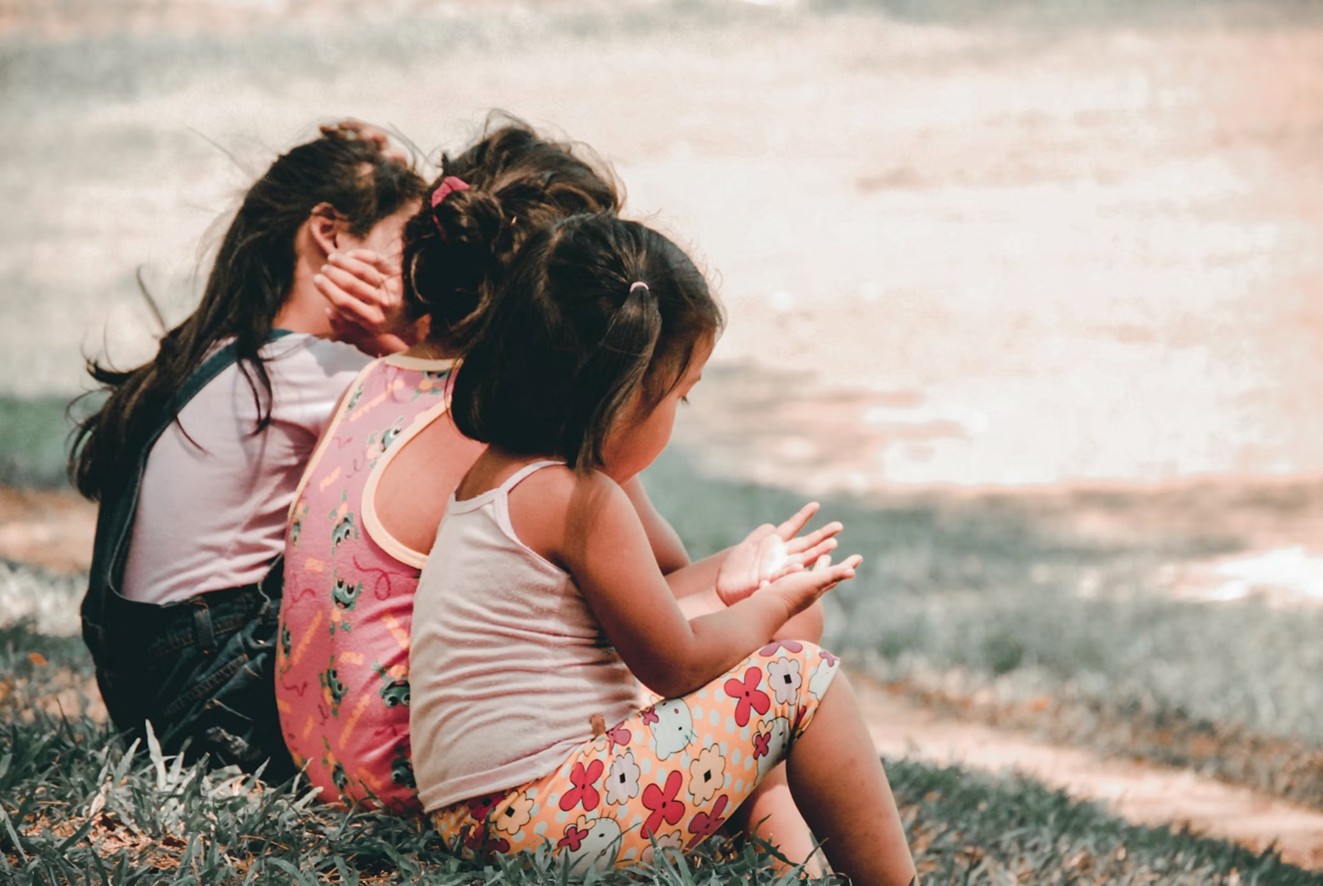
“What would you like to be when you grow up?” It is a question that almost all children and young people are asked at some point: around the dinner table, during a meeting with teachers or over a meal with relatives. The answer often comes quickly: the name of a school, a profession or a more or less ‘prestigious’ university course. Let us try, then, to change the question and ask a child or young person how they imagine themselves ten years from now, or what they would like to find in their future life. The answer comes more slowly, and sometimes does not come at all. Yet it is precisely within this space for reflection that prospective thinking takes shape: the capacity that enables us to imagine the future.
On 20 November, we celebrate World Children's Day, also known as the World Day for the Rights of the Child and Adolescent. The date is no coincidence: on 20 November 1959, the United Nations General Assembly adopted the Declaration of the Rights of the Child and, thirty years later, on the same day in 1989, adopted the Convention on the Rights of the Child, which Italy ratified in 1991. The two documents reflect a shift in perspective: in 1959, the child is primarily someone to be protected; in 1989, the child becomes a rights-holder, with a voice that deserves to be heard.
Yet, among the Convention's 54 articles, none explicitly refers to the right to dream, imagine, plan and build a fulfilling future. And yet, that right does exist.
To recognise it, we need only read the text through the eyes of those who work with the future. Article 6 recognises not only the right to survival, but also the right to development: a concept which, by definition, looks ahead, towards the unfolding of human life. Article 29 calls for education to develop each person's abilities and talents ‘to their fullest potential’. Article 12 guarantees children the right to express their views on all matters affecting them, and few matters concern them as much as their future. Article 31 protects the right to play and to participate freely in cultural and artistic life: spaces in which imagination can be nurtured and exercised. Finally, Article 28, in paragraph (d), commits States to making ‘educational and vocational information and guidance’ available and accessible to every child and young person.
Career guidance, therefore, is not an optional service: it is a right.
Psychological research also tells us that hoping, planning and imagining different possibilities are not innate qualities that some people possess and others do not. Rather, they are abilities that can be developed and strengthened: identifying goals that are personally meaningful, recognising possible paths towards achieving them, and feeling capable of pursuing those paths. These abilities are also linked to well-being: those who can look ahead with a degree of confidence are better equipped to cope with the difficulties of the present. From this perspective, a ‘fulfilling’ future is one in which everyone can identify what gives meaning to their life, the relationships they value and the contribution they wish to make to their community.
Anthropologist Arjun Appadurai (2007) offers a remarkably relevant way of understanding this. He speaks of the ‘capacity to aspire’, namely, the ability to imagine a desirable future and identify possible ways of achieving it. Here, too, this is not a natural gift, but a cultural capacity that can be exercised and strengthened through experience. Above all, it is not equally distributed. Those with greater resources have had more opportunities to develop it: they have encountered more role models, received more information and been able to make mistakes without paying too high a price. Those with fewer resources risk seeing their horizons narrow before they have even had the chance to explore them. It is no coincidence that the Convention begins with the principle of non-discrimination (Article 2) and calls for education to be provided ‘based on equal opportunity’ (Article 28). Guaranteeing everyone the right to shape their future also means working to ensure that their starting point does not determine their destination in advance.
Almost sixty years ago, the pupils of the Barbiana school, together with Father Lorenzo Milani, wrote Letter to a Teacher (1967). They denounced an education system that ended up excluding children from disadvantaged backgrounds instead of helping them to grow. No one can equate that school with our own: such a comparison would be inappropriate. Nevertheless, Barbiana continues to remind us that inequalities are not measured solely in terms of academic achievement. They can also be seen in the futures that young people feel entitled to imagine.
Something important is at stake in the right to imagine oneself in the future: the possibility of seeing oneself as an active participant in shaping one's own future, rather than as a mere spectator of what is to come. So let us ask ourselves: do we all enjoy this right to the same extent? How many children and young people living in the deprived areas of our cities – without even having to look to the other side of the world – are unable to imagine and plan futures beyond those that their initial socio-economic and cultural circumstances seem to have already mapped out for them?
The preamble to the 1959 Declaration ends with these words: ‘mankind owes to the child the best that it has to give’. For a child, that ‘best’ also means having adults who never stop asking ‘how do you imagine yourself?’, schools that open up new horizons rather than reinforce existing ones, and communities that provide everyone, starting with those who have the least, with the tools to aspire and build.
The right to imagine tomorrow should therefore not be a luxury reserved for a few, but a promise that, sixty-seven years on, we still have a duty to fulfil.
How to cite this article
Carlo Bortolami (2026), "Giving Children the Best of Humanity: the Right of Young People to Imagine the Future", in Inclusion and Eco-Social Justice, ISSN 3035-5265, https://unipd-centrodirittiumani.it/en/topics/giving-children-the-best-of-humanity-the-right-of-young-people-to-imagine-the-future (consulted on 20/11/2026).
