


Italy’s role, priorities, interests and challenges during the 58th session of the UN Human Rights Council
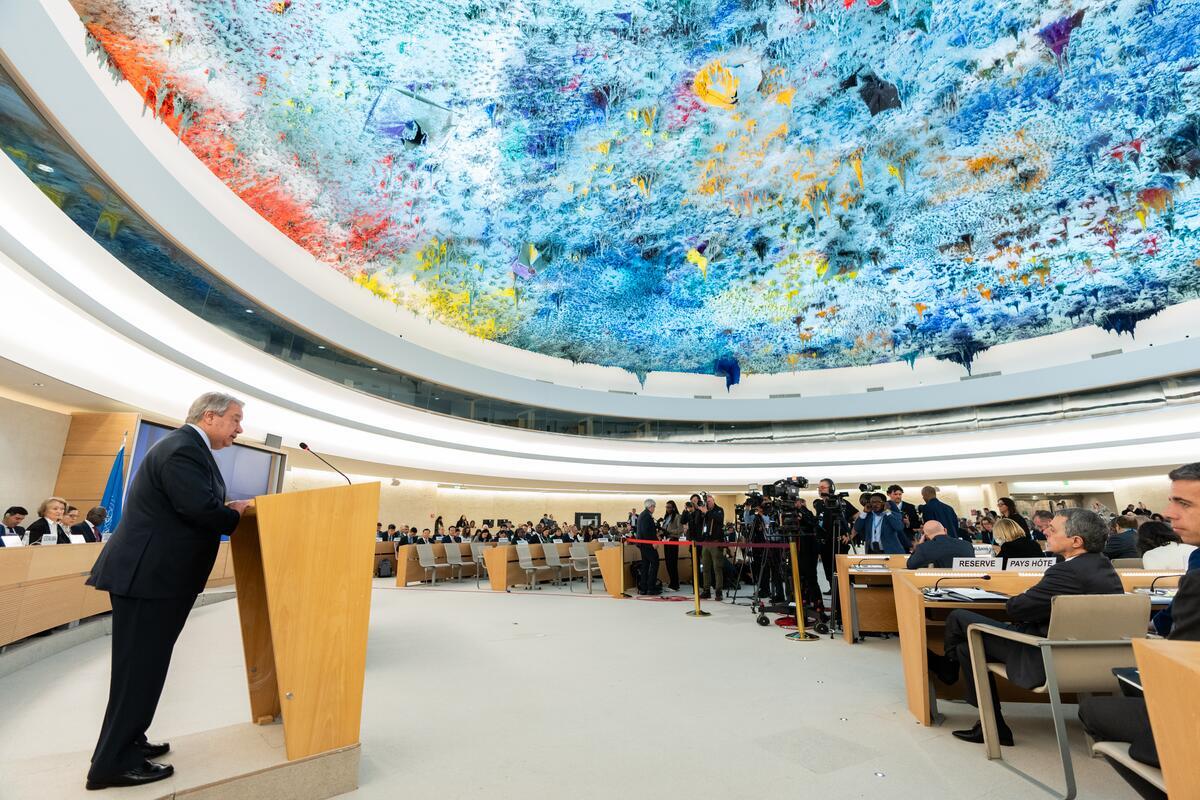
Table of Contents
- Introduction
- Context of the 58th session: main dynamics and agenda density
- Italy’s diplomatic positioning and institutional presence
- Italy’s thematic priorities
- Italy and country situations addressed during the session
- Italy’s forward-looking agenda: norm-setting and coalition-building
- Interests behind Italy’s engagement
- Challenges and limitations
- Conclusion
Introduction
The fifty-eighth session of the Human Rights Council (HRC58), held in Geneva from 24 February to 4 April 2025, reflected the growing complexity of the international human rights agenda. The session addressed a wide range of issues, combining long-standing country situations with an expanding set of thematic concerns. Throughout its program of work, the Council devoted attention to situations requiring urgent international scrutiny, while also engaging with broader questions related to cultural rights, the death penalty, technological change and the protection of vulnerable groups. The density of the agenda highlighted both the persistence of global human rights crises and the Council’s effort to adapt its work to evolving political, social and technological contexts.
Within this framework, Italy participated actively in the work of the Council. Its engagement was visible across different segments of the session, including high-level meetings, interactive dialogues and thematic discussions. Examining Italy’s role during HRC58 offers insight into how a European State navigates a crowded and politically diverse agenda while contributing to both country-specific debates and cross-cutting thematic discussions within the UN human rights system.
Context of the 58th session: main dynamics and agenda density
HRC58 unfolded within a particularly dense institutional framework. Over six weeks, the Council held numerous meetings covering organizational matters, thematic debates, country situations and the adoption of resolutions. This structure reflects the Council’s dual function: responding to immediate human rights crises while advancing longer-term normative and institutional processes.
A defining feature of the session was the wide range of issues on its agenda. The program included a high-level segment with the participation of senior political representatives, followed by interactive dialogues with the High Commissioner for Human Rights, special procedure mandate holders and investigative mechanisms. Alongside these exchanges, the Council engaged in general debates and panel discussions on issues such as cultural rights, racism and discrimination, the death penalty, environmental protection and the human rights implications of new and emerging technologies. The coexistence of these diverse formats illustrates the increasing complexity of the Council’s work and the competition for limited institutional time.
Country situations remained central to the session’s dynamics. The Council devoted substantial attention to contexts including Ukraine, the Occupied Palestinian Territory, the Islamic Republic of Iran, Myanmar, Sudan and Nicaragua. These discussions were often marked by political polarization and contrasting narratives among States. Their recurrence on the agenda underscored the persistence of unresolved conflicts and structural human rights violations requiring sustained international engagement.
Italy’s diplomatic positioning and institutional presence
Italy’s participation during HRC58 reflected a pattern of steady and institutionally embedded engagement rather than isolated or symbolic interventions. Italy appeared across multiple segments of the session, positioning itself as a consistent participant within the Council’s formal structures and working methods.
At the high-level segment, Italy was represented by senior political leadership, notably through the participation of the Minister for Disabilities. High-level participation plays both a symbolic and practical role, signaling political priorities and reinforcing national visibility within the Council’s diplomatic environment.
Beyond this segment, Italy’s diplomatic positioning was shaped by frequent alignment with collective European and cross-regional statements. In several interactive dialogues and general debates, Italy intervened as part of broader groupings, reflecting a preference for coordinated multilateral action. This approach strengthens coherence and amplifies collective influence, while situating Italy within a shared normative discourse that emphasizes accountability, cooperation with UN mechanisms and support for international human rights standards.
Italy’s institutional presence was further evident through its engagement with the Council’s core mechanisms, particularly interactive dialogues with mandate holders and investigative bodies. By participating in discussions on both country situations and thematic reports, Italy contributed to the Council’s core monitoring and review work.
Italy’s thematic priorities
Italy’s engagement during HRC58 revealed a degree of thematic coherence across different agenda items. Rather than dispersing its interventions across a wide range of issues, Italy’s participation clustered around a set of recurring themes reflecting both established commitments and emerging concerns.
One key thematic area concerned the protection of vulnerable groups in contexts of heightened risk. Italy engaged in discussions addressing the human rights impact of armed conflict, including dialogues related to children affected by conflict and the broader humanitarian consequences of violence. These interventions aligned with the Council’s emphasis on civilian protection and reinforced a rights-based framing linking humanitarian concerns with accountability and international legal obligations.
A second thematic priority focused on cultural rights and the protection of cultural heritage. During HRC58, the Council adopted resolutions addressing cultural participation and the safeguarding of heritage. Italy’s involvement echoed its broader diplomatic attention to culture as an integral component of human dignity, social inclusion and identity.
Italy also engaged with debates on the implications of new and emerging technologies for human rights. Discussions addressed digital environments, technological development and the protection of human rights defenders in the digital age. Italy’s participation signaled an awareness of the evolving nature of human rights challenges and the need for the Council to adapt its normative tools accordingly.
Italy and country situations addressed during the session
Country-specific situations constituted a central dimension of the Council’s work during HRC58, and Italy’s engagement unfolded within this broader landscape of international scrutiny. Rather than focusing on a single context, Italy participated across multiple country-related dialogues, reflecting a multilateral and procedurally embedded approach.
Among the most prominent situations addressed was Ukraine, where the Council devoted extensive attention to the human rights consequences of the ongoing conflict. Discussions emphasized accountability, the protection of civilians and humanitarian impact. Italy participated within this collective framework, contributing to debates shaped by significant political polarization.
The situation in the Occupied Palestinian Territory also featured prominently, with dialogues focused on accountability and justice. These discussions highlighted long-standing human rights concerns and deep divisions among States. Italy’s engagement formed part of a wider pattern of interventions addressing persistent and unresolved challenges.
Beyond these cases, the Council examined situations in the Islamic Republic of Iran, Myanmar, Sudan and Nicaragua. Italy participated in these discussions as part of a collective review process, reinforcing the principle that international scrutiny should be applied consistently across contexts.
Italy’s forward-looking agenda: norm-setting and coalition-building
Beyond immediate country situations, Italy used HRC58 to engage in the Council’s longer-term normative work. This forward-looking dimension was visible through its involvement in thematic initiatives and support for resolutions addressing structural and emerging human rights challenges.
Italy’s engagement in areas such as cultural rights and technological change reflects an effort to contribute to norm development capable of attracting broad cross-regional support. Participation in coalition-based initiatives and co-sponsorships illustrates a diplomatic preference for consensus-oriented approaches and collective action.
Through this engagement, Italy contributed to shaping discussions that extend beyond individual sessions and influence the evolution of the Council’s agenda. This forward-looking approach complements its involvement in country-specific debates and reinforces its positioning as a State attentive to both present challenges and future directions of the international human rights system.
Interests behind Italy’s engagement
Italy’s sustained engagement during HRC58 can be understood as reflecting both normative commitment and strategic interests. One key interest relates to international visibility and credibility within the UN human rights system. Participation across multiple segments of the session reinforced Italy’s profile as a consistent and reliable actor.
A second interest concerns Italy’s positioning within European and multilateral frameworks. Alignment with collective statements strengthened cohesion and amplified influence, while participation in cross-regional initiatives allowed Italy to engage beyond narrow regional alignments.
Finally, Italy’s involvement in coalition-based initiatives facilitated the cultivation of cross-regional diplomatic relationships. This approach supports Italy’s broader foreign policy tradition of dialogue-oriented engagement within a polarized multilateral environment.
Challenges and limitations
Italy’s engagement during HRC58 operated within significant structural and political constraints. One major challenge was the high level of polarization characterizing several country-specific debates, which limited the space for consensus-oriented diplomacy.
A further limitation caused by the density of the session’s agenda. The large number of dialogues and resolutions constrained the depth of engagement on individual issues and required strategic prioritization.
Finally, Italy’s frequent alignment with collective positions, while strengthening coherence, reduced the visibility of its individual voice. This reflects a broader tension between multilateral coordination and national distinctiveness within highly institutionalized forums.
Conclusion
Italy’s participation in the fifty-eighth session of the Human Rights Council illustrates a coherent and institutionally grounded approach to multilateral human rights diplomacy. Through sustained involvement in high-level discussions, thematic debates and country-specific dialogues, Italy contributed to the Council’s monitoring, accountability and norm-development functions.
At the same time, the session highlighted the limits within which Italy’s diplomacy operates, shaped by polarization, agenda density and reliance on collective frameworks. Within these constraints, Italy’s engagement during HRC58 demonstrates how a European State navigates the tensions between normative commitment, strategic interest and political realism in the contemporary human rights system.
How to cite this article
Sediqe Heydari (2025), "Italy’s role, priorities, interests and challenges during the 58th session of the UN Human Rights Council", in Italian Yearbook of Human Rights, ISSN 3035-5435, https://unipd-centrodirittiumani.it/en/topics/italys-role-priorities-interests-and-challenges-during-the-58th-session-of-the-un-human-rights-council (consulted on 20/10/2026).
