


A decree-law introduces limits on foreign pupils and face-covering garments in schools
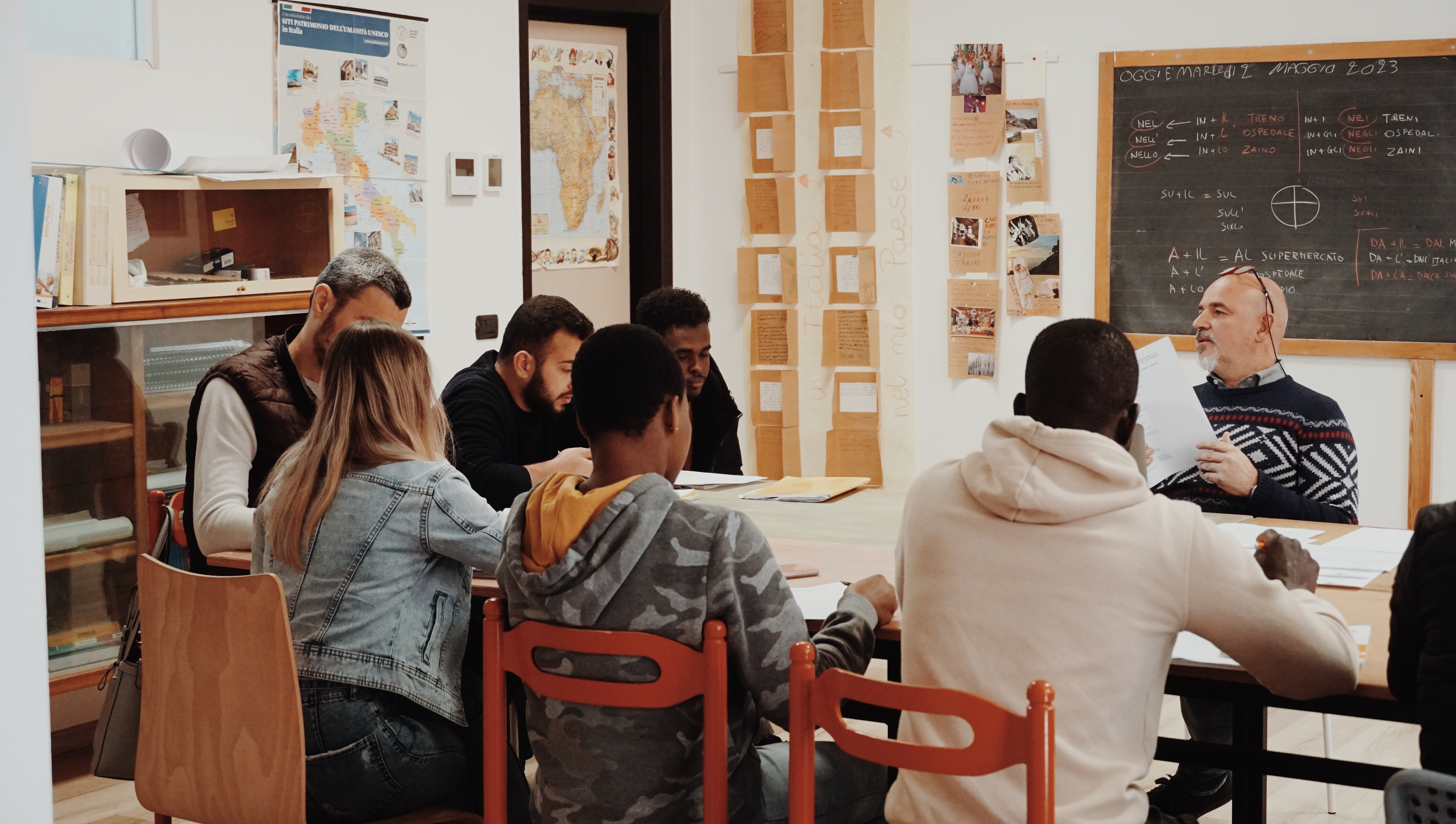
The Council of Ministers of the Italian Government approved the Decree-Law 170/2026 titled "Urgent measures to ensure the orderly start of the 2026/2027 school year, to support the measures of the National Recovery and Resilience Plan (PNRR) under the Ministry of Education and Merit, to promote the integration of foreign students in schools, and on higher education and research,” on 24 September 2026. After six days, on 30 September, President Mattarella signed it after implementing some alterations. The decree-law entered into force on 1 October 2026, but it requires parliamentary approval within 60 days, that is before 1 December 2026, to remain permanently in force.
The decree-law is a legislative package of fifteen articles across four chapters.
Chapter I addresses the start of the new school year and other education-related measures, including individualized education plans for students with disabilities. Chapter II concerns the implementation of the (PNRR) National Recovery and Resilience Plan within the Ministry of Education. Chapter III contains the face-covering rule and parental-engagement measures in article 12, the classroom cap in article 13, and a set of unrelated provisions on higher education and research funding were grouped in article 14. Chapter IV contains article 15 and sets out final provisions.
This analysis focuses on articles 12 and 13 of Chapter III.
The original draft of article 12 of this decree-law, explicitly banned students from attending the school wearing niqab and burqa. While the measure was initially announced as a ban on these specific garments, the final text, after the President’s revision, applies to garments that cover the face, or in any other way prevent facial recognition, with no restrictions on the hijab. The exemption clause for the face covering rule was also adjusted, from an earlier reference to "health or security reasons" to the final "health reasons or reasons linked to teaching and training activities."
Violations are established by the school's head teacher and sanctioned by the prefect, with administrative fines ranging from €200 to €1,000 imposed on the students’ parents.
Italian Prime Minister Giorgia Meloni argued in favor of the ban on niqab and burqa, stating that covering young girls' faces in the name of tradition denies them their fundamental rights. "When a woman, or worse, a young girl, is forced to cover her face, she is being denied fundamental rights and the very integration that is so often loudly championed," she said. Therefore, Meloni framed the ban as a matter of equality rather than religion.
This decree-law is a response to some incidents that had drawn national attention.
In 2024, a 10-year-old girl arrived at a Pordenone elementary school wearing a niqab; her family accepted that she attended school uncovered upon teacher’s request.
In 2025, in Monfalcone, five students who attended school wearing the niqab were taken individually to a separate room each morning so a teacher could confirm their identity before they joined class.
Estimates report that fewer than 1% of muslim women in Italy wear a full face veil, implying that a very small number of 500-600 students nationwide may be directly affected by this decree-law.
The same article 12 requires schools to report to social services any case where persistent language barriers among foreign parents or guardians are found to be affecting a student's integration or education, and provides for free Italian-language courses. Parents who don't take part in such courses face the same administrative sanction from 200 to 1000 euro.
European countries have adopted different approaches on this matter. For instance, Austria, France, Belgium, Switzerland and most recently Portugal, ban face coverings in public spaces and have consequently restricted wearing of niqab and burqa in public spaces, while In Spain and Poland, covering one’s face remains a matter of individual and religious freedom, with no national ban.
Article 13 of Decree-law 179/2026 stipulates that in primary schools a cap of 30 percent of the class components applies to non-Italian citizens who were not born in Italy or have not attended at least two years of preschool. In secondary schools, it would affect non-Italian citizens who have not successfully completed at least three years in Italy’s education system. According to a recent estimate, about 7% of all the classrooms across Italy exceed the 30% threshold of non Italian students.
In 2010, a similar and precursor limit to article 13 was adopted:, a 30 per cent cap was introduced on students with foreign citizenship attending the school in Italy, who do not have sufficient knowledge of Italian language. In 2010, this cap concerned only 2.8% of classes in Italy which exceeded the 30% limit. Although it was and reportedly was not enforced in practice this , it has resurfaced again this year with more flexibility and adaptability, adopting an uneven distribution of foreign families across different Italian cities and neighbourhoods. Unlike the 2010 version, this year’s decree put the cap only on the foreign students, with little or no knowledge of Italian, attending the first year of primary, middle, and high schools.
After this decree takes effect, the local authorities are responsible for transferring students to a nearby school where the 30 per cent cap was not reached, mindful of their proximity to the pupil’s home. This could still pose a challenge for families living in migrant-dense neighbourhoods.
From 2027-28, schools can increase or decrease the 30 per cent cap based on the students’ proficiency in Italian language.
Earlier in September, at a party youth rally, Meloni said: "It is unacceptable that in an Italian classroom the children who end up feeling pushed into a corner are Italian children because they have become the minority," warning against what she called "ghetto classrooms." She used the same logic to defend the 30% classroom cap, arguing that a single child who doesn't speak Italian can usually catch up with help from classmates and teachers, but once that becomes a large group, or a majority, integration becomes difficult.
Based on the reports of the Fondazione Iniziative e Studi sulla Mobilità Umana (ISMU) research institute, from 2022 to 2023, around 11% of the students in Italian schools have a foreign citizenship, and about 65% of them were born in the Italian territory.
The population of foreign-born students is concentrated mostly in the northern cities of Italy with Milan as the leading city with the most foreign born students, followed by Rome, Turin, and Brescia.
Students originally from Romania, Albania, Morocco, China and Egypt, constitute half of the population of foreign students in Italy.