


A fresh decree-law amends the security decree-law on awarding lawyers for favouring migrants' voluntary return. But the measure is still flawed
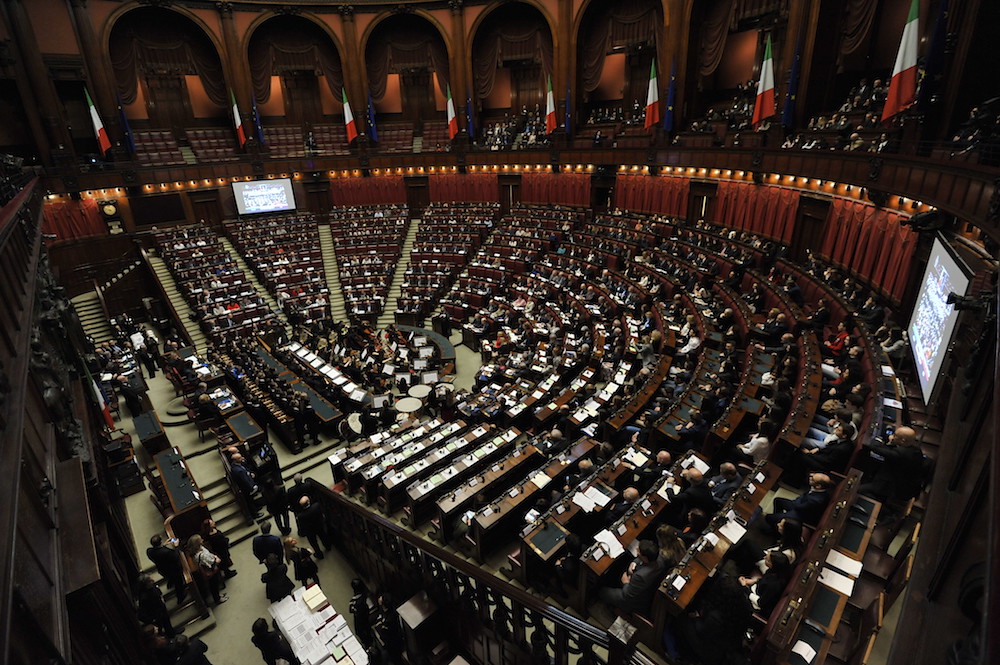
On 24 April 2026, in an unprecedented move for the Italian legal system, the government adopted a decree-law (No. 55/2026) to correct a provision of Legislative Decree 23/2026, which Parliament converted into law on the same day (Law 54/2026).
The provision on which the government intervened (Article 30-bis of Law 54/2026) concerned the fee recognised to lawyers who contribute to bringing about the voluntary return of an irregular migrant. This provision had been heavily criticised for its constitutional shortcomings, as it conflicted with the right to a defence and with the rule of law. Having no time to amend the decree-law (the conversion of which into law had to take place by 24 April on pain of the entire measure lapsing), the government's choice, endorsed by the parliamentary majority that supported it, was to proceed with the definitive conversion of the decree-law, immediately promulgated by the President of the Republic, while simultaneously submit to the President himself the text of a second decree-law, No. 55/2026, which amends the contested Article 30-bis and repeals its most controversial parts.
The new decree-law (which must be converted into law within the next 60 days) provides for two substantial amendments to the regime introduced by Article 30-bis of Law 53/2026. First, the financial contribution from the state for accessing an assisted return programme (calculated at 615 euros for each case initiated) is awarded not only to the legal representatives (lawyers) of migrants, but also to other representatives who support them in the assisted return procedure (the sum set aside for the payment of such services is slightly increased and should reach, from 2027, around 500,000 euros per year). Furthermore, it is provided that the fee is paid regardless of the outcome of the procedure, that is to say, irrespective of whether the migrant actually leaves Italian territory.
According to data from recent years, the number of people adhering to the assisted return procedure is a few hundred per year: in 2025 they were 675, approximately one tenth of the total returns carried out from Italy in the same period.
The issuance by the President of the Republic of an emergency decree to correct a provision deemed unconstitutional, introduced by Parliament during the conversion of a previous emergency decree, is an atypical and unprecedented step. It highlights the scant attention the legislature pays to constitutional profiles when legislating on matters concerning migrants and asylum seekers.
Italy has a low level of voluntary returns, and this is probably due to the type of migratory flows that concern it and to the limited attractiveness of the support measures for return. Motivating social workers and lawyers with financial incentives does not help to correct this trend.
The measure, whilst remedying the evident unconstitutionality of the first version, remains highly criticisable. It could generate distrust among migrants and the operators tasked with providing them with assistance, fuelling suspicion that assisted return is favoured not in the migrant's interest but for the operator's own benefit. By inducing distrust among migrants and their representatives, there is a risk of further reducing the already low number of voluntary returns and of placing irregular migrants in an even more vulnerable position.