


Confirmatory Constitutional Referendum on Justice: Voting on March 22 and 23, 2026
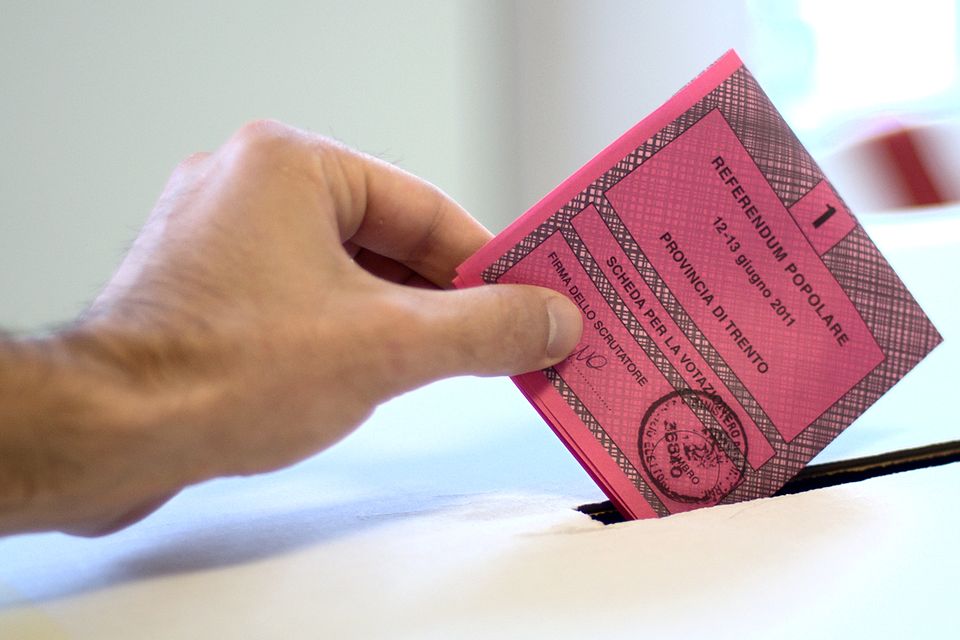
The confirmatory constitutional referendum, also known as constitutional or suspensive referendum, is governed by Article 138 of the Constitution and calls on eligible voters to decide on the entry into force of a constitutional law or a law amending the constitution, expressing their opinion with a "yes" or "no" vote. Indeed, such a law comes into force only if approved by citizens, through achieving a majority of "yes" votes. It's a referendum that doesn't require a quorum; in fact, the vote count occurs regardless of the participation of a certain percentage of eligible voters. This feature distinguishes the confirmatory referendum from the abrogative referendum, which requires a majority of eligible voters.
On January 13, 2026, by decree of the President of the Republic, a confirmatory constitutional referendum was called for the constitutional law entitled: "Rules on the judicial system and the establishment of the Disciplinary Court," approved by Parliament and published in the Official Gazette of the Italian Republic No. 253 of October 30, 2025, for Sunday, March 22 and Monday, March 23, 2026.
The articles of the Constitution involved are Article 87, tenth paragraph; Article 102, first paragraph; Article 104; Article 105; Article 106, third paragraph; Article 107, first paragraph; and Article 110, first paragraph.
Specifically:
Article 87
Currently defines the role of the President of the Republic. The tenth paragraph states that "[The President of the Republic] Presides over the Superior Council of the Judiciary". The constitutional law requests the introduction of the following words at the end of this paragraph: "for the judging magistracy and the Superior Council of the Judiciary for the prosecuting magistracy".
Article 102
Establishes that the jurisdictional function is exercised by ordinary magistrates. Specifically, the first paragraph says, "The jurisdictional function is exercised by ordinary magistrates established and regulated by the rules on the judicial system". The constitutional law requests that the following words be added at the end: ", which also regulate the distinct careers of judging and prosecuting magistrates".
Article 104
Currently says: "The judiciary constitutes an autonomous order independent from any other power. The Superior Council of the Judiciary is presided over by the President of the Republic. The First President and the Attorney General of the Court of Cassation are members by right. Other members are elected for two-thirds by all ordinary magistrates among the various categories, and for one-third by Parliament in a joint session among full professors of law at universities and lawyers with fifteen years of practice. The Council elects a vice-president from among the members designated by Parliament. Elected members of the Council remain in office for four years and cannot be immediately re-elected. They cannot, while in office, be registered in professional registers, nor be members of Parliament or of a Regional Council."
The constitutional law requests that this article be replaced with: "The judiciary constitutes an autonomous order independent from any other power and is composed of magistrates of the judging career and the prosecuting career. The Superior Council of the Judiciary for judging magistrates and the Superior Council of the Judiciary for prosecuting magistrates are presided over by the President of the Republic. The First President and the Attorney General of the Court of Cassation are members by right, respectively. Other members are drawn by lot, for one-third, from a list of full professors of law at universities and lawyers with at least fifteen years of practice, which Parliament in joint session, within six months of its installation, compiles through election, and, for two-thirds, respectively, among judging magistrates and prosecuting magistrates, in the number and according to the procedures provided by law. Each Council elects its own vice-president from among the members designated by lot from the list compiled by Parliament in joint session. Members designated by lot serve for four years and cannot participate in the subsequent drawing procedure. Members cannot, while in office, be registered in professional registers nor be members of Parliament or of a Regional Council."
Article 105
Currently says: "According to the rules of the judicial system, appointments, assignments and transfers, promotions and disciplinary measures in respect of magistrates are within the competence of the Superior Council of the Judiciary."
The constitutional law requests that it be replaced with: "Each Superior Council of the Judiciary is responsible, according to the rules on the judicial system, for appointments, assignments, transfers, professional evaluations, and conferment of functions regarding magistrates. Disciplinary jurisdiction regarding ordinary magistrates, both judging and prosecuting, is attributed to the High Disciplinary Court. The High Court is composed of fifteen judges, three of whom are appointed by the President of the Republic from among full professors of law at universities and lawyers with at least twenty years of practice, and three drawn by lot from a list of subjects meeting the same requirements, which Parliament in joint session, within six months of its installation, compiles through election, as well as six judging magistrates and three prosecuting magistrates, drawn by lot from among members of the respective categories with at least twenty years of exercise of judicial functions and who perform or have performed legitimacy functions. The High Court elects the president from among the judges appointed by the President of the Republic or drawn by lot from the list compiled by Parliament in joint session. Judges of the High Court serve for four years. The position cannot be renewed. The office of judge of the High Court is incompatible with those of member of Parliament, of the European Parliament, of a Regional Council and of the Government, with the practice of the legal profession and with any other position and office indicated by law. Appeals against sentences issued by the High Court in the first instance are allowed, even on the merits, only before the same High Court, which judges without the participation of the members who contributed to pronouncing the appealed decision. The law determines disciplinary offenses and related sanctions, indicates the composition of the panels, establishes the forms of disciplinary proceedings and the rules necessary for the functioning of the High Court and ensures that judging or prosecuting magistrates are represented in the panel."
Article 106, third paragraph
Currently says: "The Superior Council of the Judiciary may appoint, for their outstanding merits, full professors of law in universities and lawyers who have fifteen years of practice and who are registered in the special professional rolls for the higher courts to the office of Councillors in the Court of Cassation."
The constitutional law requests that after the words "of the Judiciary" the word "for judging magistrates" be inserted, and that after the words "law in universities" the phrase "prosecuting magistrates with at least fifteen years of exercise of functions" be inserted.
Article 107, first paragraph
Currently says: "Magistrates may not be removed from office. They cannot be dismissed or suspended from office or assigned to other courts or functions unless following a decision of the Superior Council of the Judiciary, taken either for the reasons and with the guarantees of defense established by the rules of the judiciary or with their consent."
The constitutional law requests that the words "of the Council" be replaced with "of the respective Council".
Article 110, first paragraph
Currently says: "Without prejudice to the competence of the Superior Council of the Judiciary, the Minister of Justice has responsibility for the organization and functioning of the services relating to justice."
The constitutional law requests that the words "of the Council" be replaced with "of each council".
The specific question that Italian voters will have to answer is:
"Do you approve the text of the law revising Articles 87, tenth paragraph, 102, first paragraph, 104, 105, 106, third paragraph, 107, first paragraph, and 110 of the Constitution approved by Parliament and published in the Official Gazette of October 30, 2025 with the title 'Rules on the judicial system and the establishment of the Disciplinary Court'?"