


Environmental peacebuilding: building peace in a changing climate. The case of EcoPeace Middle East
Table of Contents
- Introduction
- Natural resources, climate, and conflict
- “Dark sides” and gaps in environmental peacebuilding
- The case of EcoPeace Middle East
- Conclusion
Introduction
Environment, resources, and climate play a crucial role in shaping human societies’ wellbeing and security. Therefore, in the past few decades, they have been the object of increasing political and academic attention. A key issue has been the concern that environmental factors could function as a cause of violent conflict. A recent line of research, however, emphasises the environment’s potential role in promoting peace: environmental peacebuilding has developed as a branch of the study of peacebuilding focused on using environmental cooperation to build long-lasting peaceful relations.
Environmental peacebuilding has evolved, thanks to the contributions of both research and concrete action, into a large interdisciplinary field. By examining its theory and practice, it is possible to outline its development and analyse its ability to produce benefits for the environment and peace. An illustrative example is the work of the NGO EcoPeace Middle East, which is presented here to investigate the practical application and concrete results of the environmental peacebuilding approach in a complex ecological and political context.
Natural resources, climate, and conflict
From the 1970s onwards, the potential role of natural resources and the environment in influencing the risk and dynamics of violent conflict became the object of a heated debate in the field of International relations, especially following the publication of the Brundtland Report (Our Common Future) and over the course of the 1990s. The debate is divided into two main lines: on the one hand, the group of theories arguing that increased risk of armed conflict is due to abundancy of natural resources (specifically non-renewables with high market value, like oil or diamonds), on the other hand the ones that attribute this effect to scarcity of renewable resources, which acts as an indirect or structural cause through its negative impacts on economic and social systems.
With rising attention towards climate change and its implications for national and international security, the debate on the climate-conflict nexus emerges from this field. Since it constitutes a threat to human security, taken to mean the “condition where people and communities have the capacity to manage stresses to their needs, rights and values”, climate change can affect armed conflict. There is indeed a growing consensus around the identification of climate change as a threat multiplier for violent conflict risk. It is crucial to highlight that these effects are strictly context-dependent, depending especially on vulnerability, which describes the propensity to be negatively affected by a climatic hazard. The biophysical, socioeconomic, and political determinants of vulnerability also increase the risk of climate-related conflict, and in addition they are themselves sensitive to armed conflict. Consequently, affected communities face the threat of finding themselves entrapped in a vicious cycle of violence, vulnerability and climate change impacts.
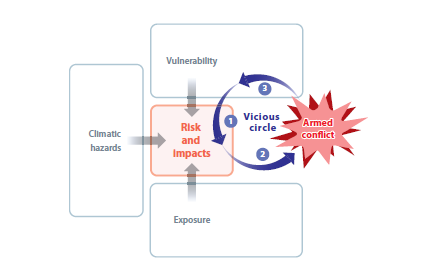
Figure 1. Conceptual diagram illustrating the vicious cycle of violence, climate impacts and armed conflict (Source: Buhaug e von Uexhull 2021)
Among this debate’s shortcomings, in addition to ongoing ambiguity on an empirical level, a strong critique is directed to the nexus’ excessive determinism and one-dimensional approach. A narrow focus on the concern that environment or climate could increase violent conflict not only leads to the stigmatisation of certain world regions and to counterproductive responses (like military investments), but also means that the potential of cooperative responses to environmental challenges to address both conflict and climate risks goes largely ignored. It is primarily as a reaction to these perceived flaws that the field of environmental peacebuilding arises.
Environmental peacebuilding
Starting from the aim of addressing the insufficient attention paid by research to the dimension of peace and its potential connection with the environment, environmental peacebuilding has evolved over the past twenty years into a broad research field, gaining increasing political and academic relevance. It is founded on the thesis that shared natural resources, and environmental challenges can constitute an opportunity to facilitate cooperation between conflict group and, by creating contacts and dialogue, to mitigate hostility and promote negative and positive peace. Peace is understood as a continuum ranging from the absence of violent conflict to the inconceivability of violent conflict.
“Environmental peacebuilding comprises the multiple approaches and pathways by which the management of environmental issues is integrated in and can support conflict prevention, mitigation, resolution and recovery” (Source: Ide et al. 2021)
Fuelled by research as much as by the contributions of practice, the field continues to see a steady increase in literature, projects, and funding. However, there are still significant gaps, and it has not yet grown into a coherent school of though. Nevertheless, the literature offers an emerging theoretical framework, which is useful in order to evaluate both field projects and the conceptual environment-peace nexus.
This theoretical framework unpacks the concept into three building blocks. The first block are the initial conditions that make a context suitable for the application of this approach, identified in the existence of environmental problems and local awareness about them, mutual interests, and as symmetric power relations as possible between the conflict parties. The mechanisms that operate to promote peace constitute the second block: improving the environmental situation through cooperation; building trust; fostering a sense of interdependence and shared identities; establishing institutions for natural resource governance. Lastly, the third block are the outcomes, or more precisely the benefits: reducing environmental problems; increasing trust and cooperation between conflict parties; indirectly, promoting broader forms of peace including social justice and sustainable development. By connecting these elements through causal links, three general environmental peacebuilding trajectories can be traced. Movement along these trajectories happens in a feedback loop thanks to the spillover effect.
- Technical: focused on reducing environmental caused of conflict via coordinated action towards technical solutions;
- Restorative: by creating neutral spaces of interaction and dialogue it aims to build trust and shared identities;
- Sustainable: through common-pool resource management implemented via collective action, it addresses the root causes of conflict and promotes equal distribution and sustainable development.
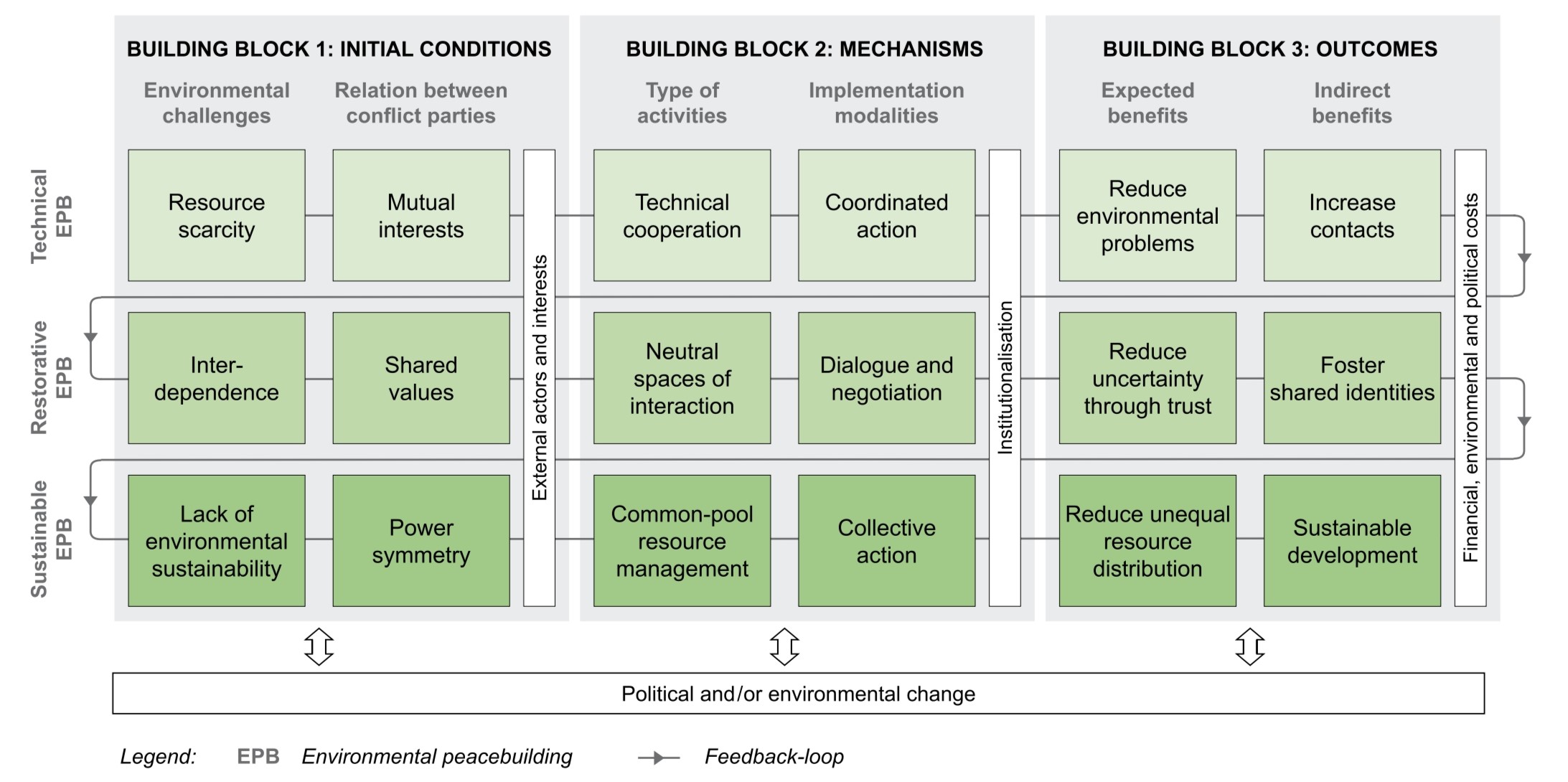
Figure 2. Environmental peacebuilding trajectories (Source: Dresse et al. 2019)
With regards to concrete results in terms of benefits for the environment and peace, empirical analysis allows for some preliminary conclusions to be drawn. In short, when interacting with conducive contextual factors environmental peacebuilding can contribute directly or indirectly to building forms of peace. Specifically, it can promote the absence of violence on intrastate level and the development of trust and shared identities within and between states.
“Dark sides” and gaps in environmental peacebuilding
The environmental peacebuilding approach also presents significant shortcomings. First of all, demonstrating the existence of causal links between environmental cooperation and peace remains challenging, and more robust evidence is needed. Moreover, plenty of topics have not yet been explored in depth. An example is the integration of climate change into environmental peacebuilding, which is essential owing to the interactions between climate impacts, conflict and peacebuilding. This approach could be well-suited to simultaneously address conflict and climate risks through environmental cooperation.
Among under-research topics, one that stands out is the “dark sides” of environmental peacebuilding, namely its potential adverse effects. A critical analysis of these effects is vital for the development of the field, as well as to build a more efficient and inclusive practice. Especially noteworthy is the risk of depoliticisation of conflict and environmental issues posed by environmental peacebuilding tendency to favour scientific and technocratic approaches, overlooking controversial political issues. This approach is in many cases a deliberate strategy implemented to present environmental problems as low politics and thereby neutral entry points for peacebuilding. However, it leads to the neglect of root and structural causes of conflict and environmental issues, such as unequal distribution, socioeconomic gaps, and power asymmetries.
The case of EcoPeace Middle East
Practice plays a crucial role in the evolution of environmental peacebuilding. Field initiatives do not only apply the theories discussed in the literature, but also provide essential information to develop the approach and assess its concrete results. A leading actor in the field is the NGO EcoPeace Middle East, operating across Palestine, Jordan and Israel, in a region that experiences ongoing high levels of conflict, serious environmental stress, and climate vulnerability. The NGO’s primary objective is the concurrent advancement of both sustainable regional development and necessary conditions for lasting peace through cooperative management of resources, specifically water.
Water, and its scarcity, is one of the most pressing environmental and climate issues in the region, but it is also deeply rooted in the structure of conflict because of the existing structural inequalities in access and control over water resources among Israel, Jordan and Palestine. The problem of water is at the hearth of EcoPeace’s flagship initiative, the Good Water Neighbors project. Initiated in 2001, the project identifies the interdependent and transboundary nature of water resources as an opportunity for cooperation and dialogue. The first step is partnering neighbouring Israeli, Palestinian and Jordanian communities that rely on the same water source, in order to involve their adult residents, youth, officials and mayors in various activities:
- environmental education and raising awareness about the local and regional water situation, particularly through the Water Trustee school programme;
- implementation of concrete measures to reduce scarcity and sustainably manage water;
- promoting cross-border meetings and collaboration, like youth summer camps and networks among mayors.
Through these activities the project is able to realise concrete benefits in terms of building local and everyday forms of peace, at least among the select group of participants. Therefore, EcoPeace’s works and particularly the Good Water Neighbors project are regarded as a successful example of environmental peacebuilding in a highly complex ecological and political context.
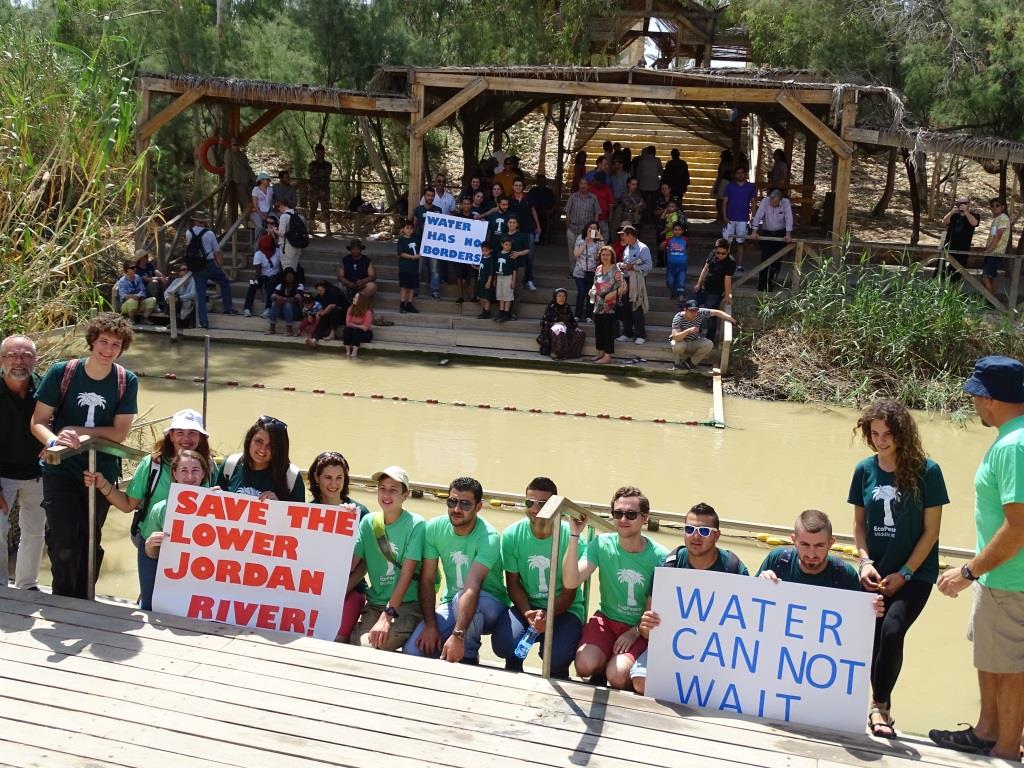
Figure 3. Cross-border activity of Good Water Neighbors Water Trustee alumni for the protection of the Jordan river, at the baptism site of Qasr al-Yahud in 2015. (Source: EcoPeace Middle East 2015, Campaign at Jordan River. Creative Commons License CC BY-SA 4.0).

Nevertheless, it is vital to underscore that the NGO’s approach, illustrative of a more general tendency in environmental peacebuilding, presents significant problematic elements. Criticism is aimed at the excessively narrow focus on environmental issues and the adoption of a technocratic perspective, oriented towards scientific or technical solutions. Controversial political issues such as the Israeli occupation, unequal distribution of resources, or water rights, are instead neglected or actively avoided. Obscuring unequal power relations and structural inequalities, which are key in creating and maintaining water-related problems (particularly for Palestinians), leads to the aforementioned effect of depoliticisation. This fuels accusations of “normalisation” of an unjust status quo and thus resistance among local populations. In addition, this approach prevents actors from addressing root and structural causes of conflict and environmental stress, making it difficult if not impossible to truly strive for a just and sustainable peace.
Conclusion
This article tried to examine the evolution of environmental peacebuilding with the objective of exploring the hypothesis that this approach, based on using environmental cooperation to promote the establishment of peaceful relations, could produce positive outcomes for both the environment and peacebuilding.
Starting from the debate on the natural resource- and climate-conflict nexus, the article outlined the development of this research field, identifying its central thesis, mechanisms, contextual conditions for application and ability to realise concrete benefits. The emerging theoretical framework of environmental peacebuilding allows for assessments of the environment-peace nexus and the evaluation of field operations. Overall, important gaps in empirical evidence remain, as well as considerable problematic issues that need to be addressed, especially the risk of producing depoliticisation or other adverse effects. This approach certainly cannot be viewed as a panacea for conflict, environmental or climate issues. Nevertheless, environmental peacebuilding represents a useful strategy to address these crises and their interaction, as it challenges deterministic narratives about the violent consequences of environmental stress and at the same time makes a real contribution towards a sustainable relationship with the environment and the construction of both negative and positive peace.