


International Criminal Court (ICC): hearings to confirm the charges of war crimes and crimes against humanity against El Hishri
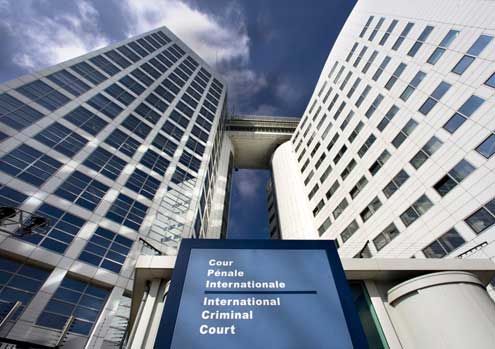
Between 19th and 21st May 2026, the first hearings in the case against former Libyan general Khaled Mohamed Ali El Hishri (also known as “Al Buti”) took place at the International Criminal Court in The Hague, following his arrest in Germany in July 2025 and subsequent surrender to the Court. The former senior official of the Libyan RADA militia (Special Deterrence Force) faces 17 charges of war crimes and crimes against humanity committed between 2014 and 2020 at the Mitiga prison complex, near Tripoli, where he earned the nickname “Angel of death”.
The hearings took place before pre-trial Chamber I (judges Motoc, Alapini-Gansou e Flores Liera) and were devoted to reviewing the evidence gathered by the Office of the Prosecutor, with the participation of representatives of the 64 victims admitted to the proceedings so far. If the pre-trial Chamber deems the evidence sufficient, the accused will be formally charged and the criminal trial may commence. Further victims may join the proceedings at the stage. The decision is expected around 20th July.
Mitiga has played a central role in the investigations into the atrocities committed in Libya during the fall of Muhammar Gaddafi’s regime in 2011. Among others, thousands of refugees and migrants were detained in the prison, including those intercepted by the Libyan coastguard as part of cooperation with the European Union. In its World Report 2026, Human Rights Watch, referring to Libya, documented conditions of severe overcrowding, poor hygiene and widespread violence. According to the Office of the Prosecutor of the International Criminal Court, Mitiga was not merely a place of detention, but part of a system of arbitrary arrests, enforced disappearances, torture, sexual violence and abuses aimed at inducing abortions following rape. It is against this backdrop that the charges against Al Buti are levelled, relating to torture, arbitrary detention, rape, murder, enslavement and persecution.
Germany’s arrest of the former Libyan general represents an important sign of cooperation with the ICC. As is well known, the ICC cannot conduct trials without the physical presence of the accused in the courtroom.
The debate on states’ international obligations to cooperate with the Court was reignited by the Italian case in January 2025, when the Italian authorities arrested and subsequently released and repatriated to Libya General Osama Elmasry (or Almasri) Njeem, who was also accused of running Mitiga prison and was the subject of an ICC arrest warrant. This incident subsequently led, in April 2026, to Italy being referred to the Assembly of States Parties for an alleged breach of the cooperation obligations set out in the Rome Statute.
Although Libya is not a party to the Rome Statute, it is required to cooperate with the ICC pursuant to Security Council Resolution 1970 (2011), which referred to the situation in Libya to the Court, as well as the State’s decision to accept the Court’s jurisdiction for the period 2011-2027. However, cooperation from the national authorities has so far been limited and piecemeal, as has emerged in connection with the case of Elmasry, against whom no investigation has been opened in Libya nor has a trial date been set.
The International Criminal Court was able to initiate proceedings against El Hishri thanks to the cooperation of the German authorities, who arrested the suspect and handed him over to The Hague. This case heightens the regret over the lack of willingness to cooperate shown by the Italian authorities in entirely similar circumstances.