International Day for Mine Awareness and Assistance in Mine Action, 4 April 2026
Every year on 4 April, the international community marks the International Day for Mine Awareness and Assistance in Mine Action. It is a day that often passes quietly, yet it reflects a reality that continues to shape the lives of millions of people worldwide.
Following is the experience of Sara Lina Kamoun, a PhD student in Human Rights, Society, and Multilevel Governance at the University of Padova, whose research focuses on the role of mine action in post-conflict peacebuilding.
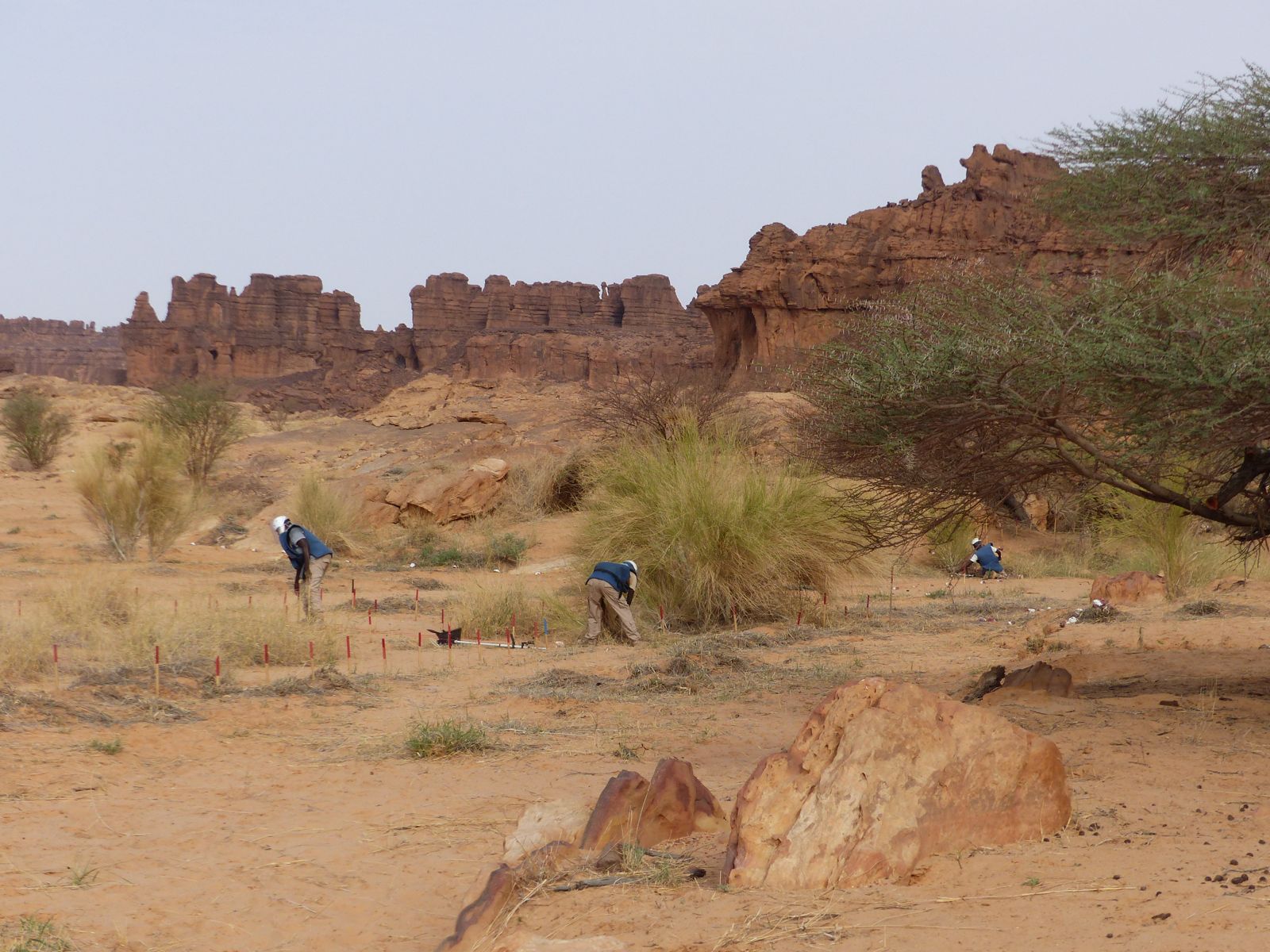
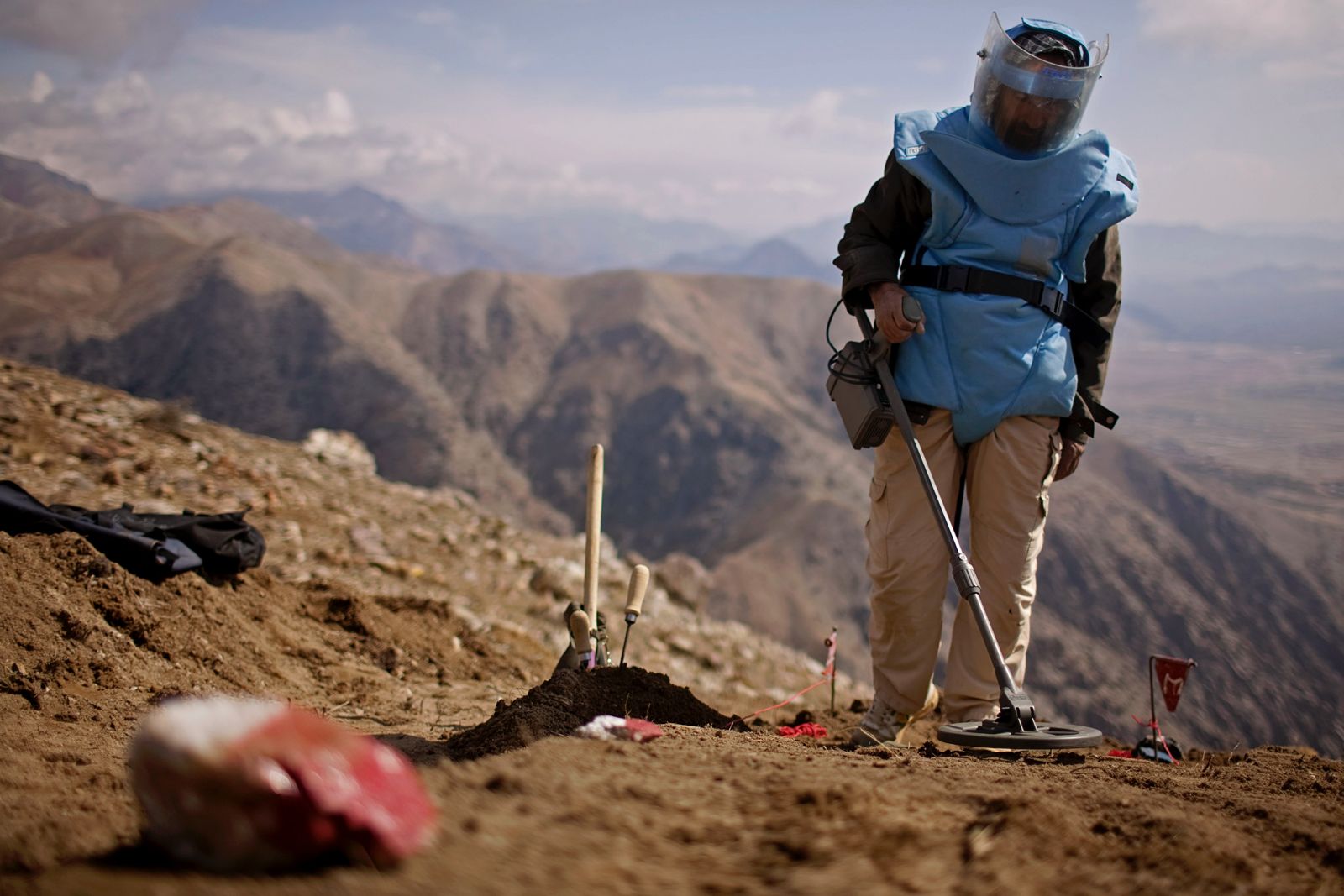
“Mine action” can sound technical. It is often reduced to images of deminers clearing land, but in reality, it is much broader. It includes removing landmines and explosive remnants of war, educating communities on risks, supporting survivors, and helping restore safe access to land, roads, schools, and livelihoods. This day reminds us that long after wars end, their violence remains in the ground.
A reality observed from Geneva
During her work with the United Nations Mine Action Service in Geneva, the role was not in the field clearing mines, but rather focused on coordination, reporting, and strategy. Even from that distance, the scale and complexity of the issue became very real. What stood out most was that mine action sits at the intersection of many processes however is often treated as a separate, technical sector.
The problem: treated as technical, not transformative
A central argument developed in Ms Kamoun’s research is that mine action is still too often narrowed down to its technical activity rather than a core component of peacebuilding. It is seen as something that happens after peace agreements are signed. In reality, it should be part of how peace is built from the beginning. This matters because mine action directly affects:
- reintegration of ex-combatants
- return of displaced populations
- access to land and livelihoods
- community security
However, it often remains disconnected from these processes. This can be described as the “siloed problem”.
Why this matters more than we think
Today, more than 60 countries remain contaminated by landmines and explosive remnants of war. These are not only remnants of the past. In many contexts, new contamination is being created in ongoing conflicts. But beyond the numbers, the impact is deeply human: land that cannot be farmed, roads that cannot be used, and children who cannot safely walk to school.
Nowhere is this more visible today than in Gaza, where contamination is being created at a scale and intensity that is difficult to fully comprehend. Since October 2023, mine action actors have identified close to 700 items of explosive ordnance, and at least 470 people have already been killed or injured by these remnants, although these figures almost certainly underestimate the reality. The wider picture is even more alarming. It is estimated that between 5 and 10 percent of munitions used have failed to detonate, which, given the scale of bombardment, likely means thousands of unexploded bombs scattered across the territory. At the same time, Gaza is now covered by an estimated 37 million tonnes of debris, much of it contaminated, turning entire neighborhoods into hazardous environments where even clearing rubble or returning home becomes life-threatening. In this sense, contamination is not a distant or residual problem, but an immediate and daily risk embedded in the very heart of civilian life.
A similar dynamic can be observed in Ukraine, although unfolding across a much larger geographic scale. Today, around 174,000 square kilometres of land are estimated to be contaminated or at risk, making Ukraine one of the most heavily mined countries in the world. The consequences are already visible, with hundreds of civilian casualties recorded each year from mines and unexploded ordnance, and vast areas of agricultural land becoming unusable, directly affecting livelihoods and food production.
What these contexts make clear is that contamination is not only a security issue or a technical problem to be addressed after a crisis, it sits at the very core of how societies recover from conflict. Mine action, in this sense, is not only about removing explosives, it is about restoring the conditions for everyday life to resume.
As Ms. Kamoun’s research shows, it often becomes one of the very first entry points in post-conflict recovery, shaping whether people are able to return, rebuild and ultimately trust that peace will take place.
A different way to see mine action
What if we stopped seeing mine action as just clearance?
What if we saw it as:
- a confidence-building measure between displaced populations and their land
- a tool for community recovery
- a foundation for local security and legitimacy.
In places like Colombia, we already see glimpses of this. Mine action has been linked to reintegration, where former combatants participate in demining and rebuilding trust with communities. This is where mine action becomes something more than technical, it becomes relational, political, and transformative.
Why 4 April still matters
The International Day for Mine Awareness is not just about awareness it is also about recognizing that
- war does not end when violence stops
- recovery is not possible without safe ground
- peace is not only negotiated, it is made tangible in everyday life.
Mine action is one of the clearest ways we see this.
Final reflection
When reflecting on her experience at UNMAS and her current research, one idea remains central: peace cannot be built on unsafe ground.
Mine action is not only about removing what lies beneath the surface, it is about enabling everything that follows: the return of internally displaced people, the rebuilding of trust, the restoration of livelihoods, and ultimately, peace itself.