


International Day for the Total Elimination of Nuclear Weapons, 26 September
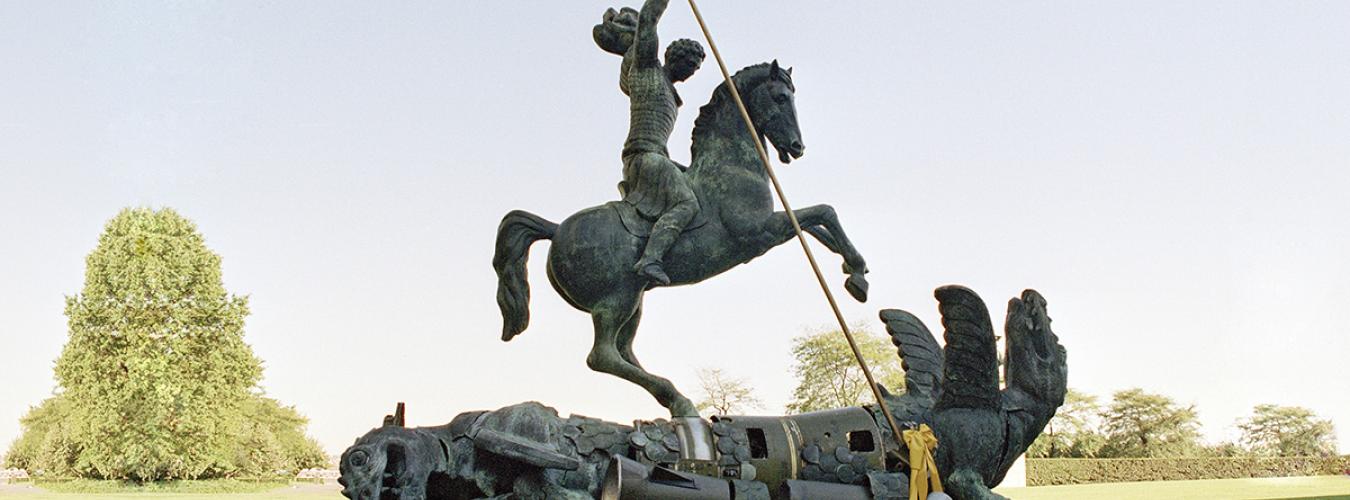
The doctrine of nuclear deterrence entails that the threat of a nuclear counterattack guarantees to stop an enemy from launching an initial strike. But this is only an illusion as until nuclear weapons exist, there exists the possibility for them to be used and the world population remains in a grey zone of constant danger. While the doctrine of nuclear deterrence remains with a position of primacy in security policies, more needs to be done in the nuclear disarmament field and in rethinking how to achieve security goals.
More than 12,000 nuclear weapons have been registered around the world in 2025. Nuclear weapons represent the manifestation of the logic that destroying someone is somehow justifiable when they are a threat or an obstacle in the path toward the realisation of a specific objective.
The United Nations’ General Assembly commemorates 26 September as the International Day for the Total Elimination of Nuclear Weapons, which has the purpose to further the objective of the total elimination of nuclear weapons in accordance with resolution 68/32. This international day represents an opportunity to raise awareness and enhance education about the threat represented by nuclear weapons and the atrocious consequences they have, in terms of humanitarian, social and economic costs, not only their use but their whole existence. It is also an occasion for all stakeholders in the international community to reaffirm their commitment to global nuclear disarmament as a priority in their political agenda and to understand the benefits of eliminating nuclear weapons for all the parties involved.
The two main international legal instruments are the Nuclear Non-Proliferation Treaty (TPN), opened for signature in 1968, and the Treaty on the Prohibition of Nuclear Weapons (TPNW), into force since 2021.
Civil society strongly advocates nuclear weapons to not be a threat for everybody anymore. Non-governmental organizations from all around the world have been promoting adherence to and implementation of the United Nations nuclear weapon ban treaty through the coalition “International Campaign to Abolish Nuclear Weapons” (ICAN). Since 2007, the Campaign has worked to enhance public support for the abolition of nuclear weapons.
Among the italian partners to the Campaign, it is possible to find Associazione Italiana Medicina per la Prevenzione Della Guerra Nucleare, Cormuse, Disarmisti esigenti (Demanding disarmists), Greenpeace Italy, Istituto di Ricerche Internazionali Archivio Disarmo, Mondo senza Guerre e senza Violenza - Argonauti per la Pace, Pax Christi Italia, PeaceLink, Pressenza International Press Agency, Rete Italiana Pace e Disarmo, Senzatomica, WILPF Italia e World Foundation for Peace.
History
Since its first resolution in 1946, the General Assembly appointed nuclear disarmament as one of the first objectives pursued by the United Nations and since then it has consistently worked toward it.
In 1963 the Treaty Banning Nuclear Weapon Tests in the Atmosphere, in Outer Space and Under Water, also known as the Partial Test Ban Treaty, was opened for signature.
Indeed, in 1968 the Nuclear Non-Proliferation Treaty, an agreement by several of the major nuclear and non-nuclear powers, was open to signature.
In 1978 the General Assembly held its first Special Session Devoted to Disarmament and since then Latin America and the Caribbean, South Pacific, South Africa and South Asian became the first nuclear-weapon-free zones around the world.
In 1996, at the request of the General Assembly, the International Court of Justice provided an advisory opinion on the Legality of the Threat or Use of Nuclear Weapons and the Comprehensive Nuclear-Test-Ban Treaty opened for signature. Since then NPT Review Conferences have been held and Central Asia joined the group of nuclear-weapon-free zones.
In 2013 the General Assembly held its first-ever high-level meeting on nuclear disarmament and established 26 September as the International Day for the Total Elimination of Nuclear Weapons.
On 7 July 2017, the Treaty on the Prohibition of Nuclear Weapons (TPNW) was adopted.