


Save the Children: Atlas of Childhood’s 16th edition describes adolescence between loneliness, inequalities and AI in Italy
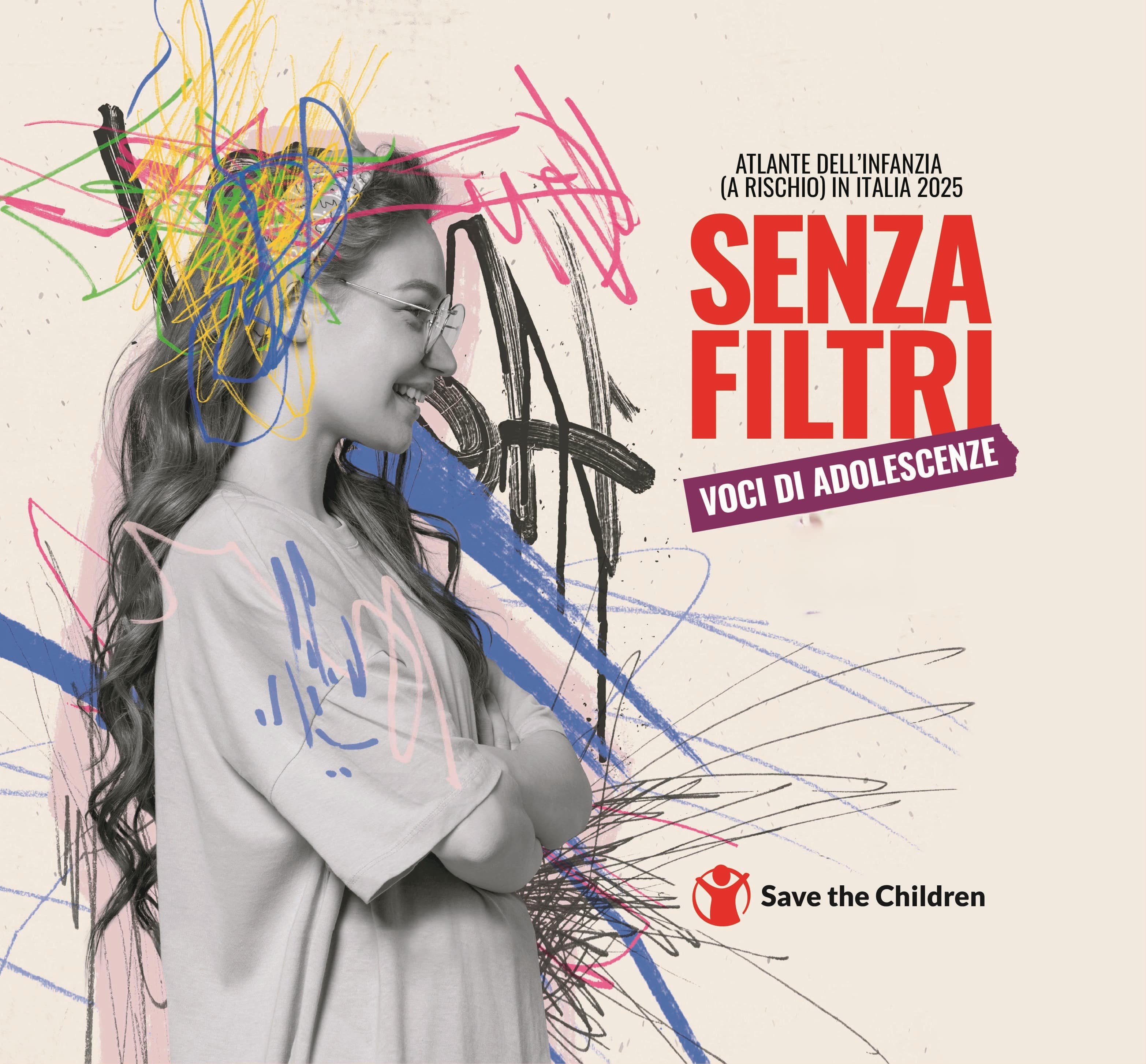
Rome, 19 November 2024, Italian adolescents are turning to artificial intelligence for emotional and practical support at unprecedented levels, according to Save the Children’s 16th Atlante dell’Infanzia a Rischio, titled “Senza filtri”. The report reveals a generation navigating hyper connection, psychological fragility and growing social inequalities.
A new national survey shows that 41.8% of 15–19-year-olds have asked AI tools for help when feeling sad, lonely or anxious, and 42.8% have used them to seek advice about important decisions, from relationships to school and work. Overall, 92.5% of adolescents use AI, more than twice the percentage of adults and almost one in three uses it daily or nearly daily. Adolescents say they appreciate AI because it is “always available,” “non-judgmental” and “understanding”, with 63.5% reporting they sometimes find it more satisfying to talk to AI than to a real person.
The Atlas describes young people living in an environment where the boundary between digital and physical worlds is blurred. 13% show signs of problematic internet use, 38% practice phubbing, and 27% feel nervous without their phone. Cyberbullying has sharply increased: 47.1% of 15–19-year-olds have experienced online harassment, up from 31.1% in 2018. 30% have engaged in ghosting, and 37% access adult pornography sites, with much higher rates among boys.
Despite the emotional refuge offered by AI, the psychological well-being of adolescents remains fragile. Less than half (49.6%) of 15–16-year-olds report feeling mentally well in the previous two weeks. The gender gap is the largest in Europe: only 34% of girls show good psychological balance compared to 66% of boys. Nearly one in ten has voluntarily isolated themselves due to psychological difficulties, and 12% have taken psychiatric drugs without a prescription, with girls again more affected.
The report highlights deep and persistent inequalities. More than one in four adolescents aged 11–15 is at risk of poverty or social exclusion, a figure that rises above 40% in Southern Italy. Many teenagers have limited access to cultural and recreational opportunities: in 2024, half of 13–17-year-olds did not visit a museum or exhibition, 21.2% never went to the cinema and 46.2% did not read a single book beyond school material. 18.1% do no physical activity at all, with much higher rates in the South.
At the same time, Italy’s mental-health care system for adolescents appears severely under-resourced. The country has just over 400 specialized hospital beds in Child and Adolescent Neuropsychiatry units, with several regions lacking any dedicated beds or residential services.
Presenting the report, Raffaela Milano, Director of Save the Children’s Research Unit, warned that economic and social inequalities are “heavily impacting this crucial phase of growth” for a generation that now represents only 6.86% of Italy’s population. She called for stronger mental health services, inclusive schools and more spaces where adolescents can meet, express themselves and find support.