


The United Nations Human Rights Council held its sixty-second regular session from 15 June to 8 July 2026
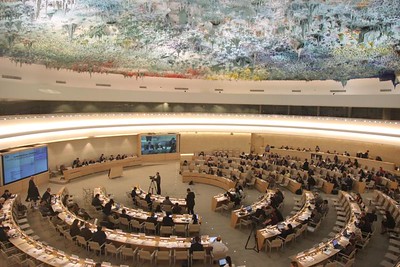
Under the presidency of Ambassador Sidharto Reza Suryodipuro of Indonesia, the UN Human Rights Council concluded its sixty-second regular session on 8 July.
During the session, the Council considered more than 60 reports presented by the UN Secretariat, the High Commissioner for Human Rights, human rights experts, and other investigative bodies, addressing the human rights situations in 20 countries. In total, the Council held 25 interactive dialogues. Furthermore, twenty-eight resolutions were adopted during the session, including the extension of eight country-specific and thematic mandates.
Following an urgent debate, the Council adopted, without a vote, a resolution condemning the escalating violence committed by the Rapid Support Forces in and around El Obeid, Sudan. The Council called on the Independent International Fact-Finding Mission for Sudan to conduct an urgent inquiry into any violations and abuses of international human rights law and international humanitarian law, as well as related international crimes.
Other resolutions adopted addressed the human rights consequences of the obstruction and denial of humanitarian access and threats to the safety of humanitarian personnel in armed conflict; the protection of health care in armed conflict; and human rights and neglected tropical diseases.
Further resolutions concerned the situation of human rights of Rohingya Muslims and other minorities in Myanmar; the enhancement of international cooperation on human rights; the impact of disinformation on the enjoyment of human rights; freedom of opinion and expression; the elimination of discrimination against women and girls; human rights and climate change; discrimination against persons affected by leprosy/Hansen's disease and their families; human rights and the civilian acquisition, possession and use of firearms; women's and girls' human rights in humanitarian situations; and child, early and forced marriage. The Council also addressed the need for technical assistance and capacity-building for South Sudan and for the Community of Portuguese-speaking Countries, as well as institutional matters relating to the Social Forum, the strengthening of voluntary funds for the Universal Periodic Review mechanism, and technical assistance and capacity-building to support women's access to education and work in digital and cybersecurity-related fields.
Several panel discussions were also held, covering climate financing; the empowerment of women and girls in and through sport; domestic violence against women and girls; human rights violations experienced by women, and women's participation in decision-making and diplomacy; and technical cooperation and capacity-building to support States in the full and effective realization of the right to the enjoyment of the highest attainable standard of physical and mental health.
The final outcomes of the Universal Periodic Review of 13 States were adopted, namely those of Micronesia, Lebanon, Mauritania, Nauru, Rwanda, Nepal, Saint Lucia, Oman, Austria, Australia, Georgia, Saint Kitts and Nevis, and Sao Tome and Principe.