


UN General Assembly : the transatlantic slave trade recognized as the gravest crime against humanity
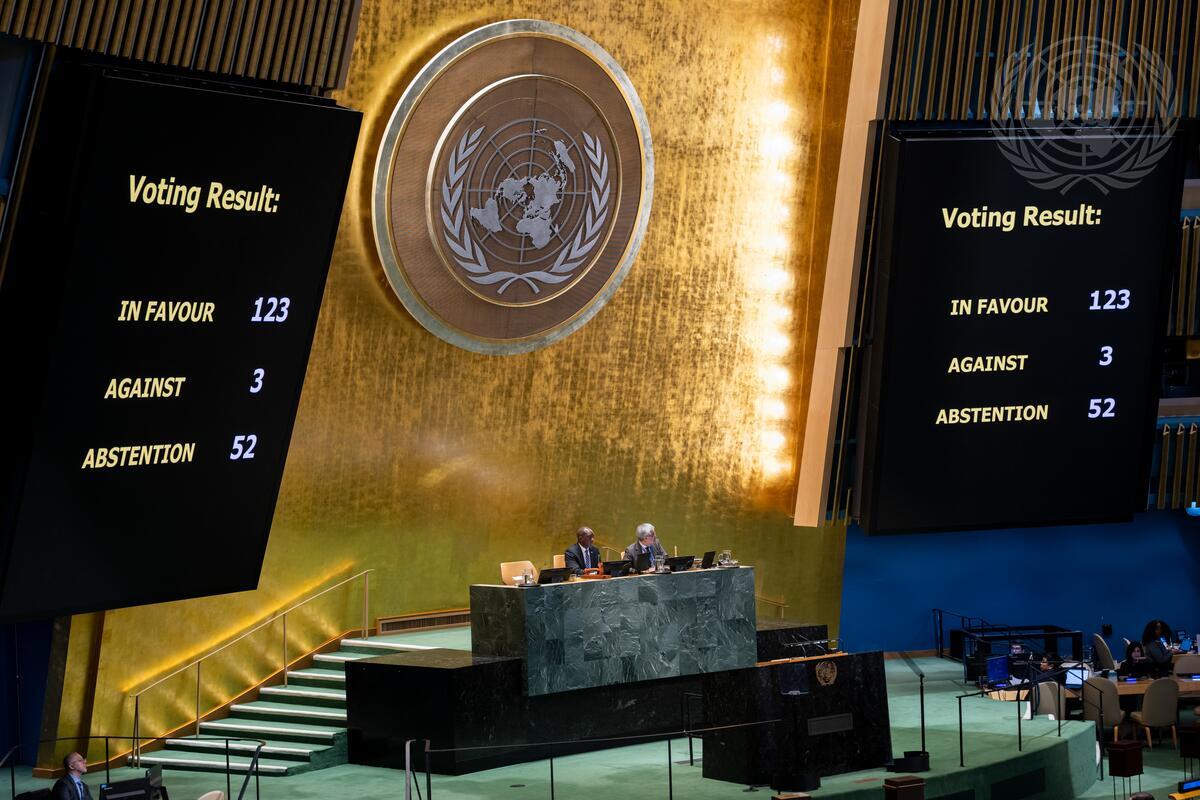
On 25th March 2026, during the commemoration of the International Day of Remembrance of the Victims of Slavery and the Transatlantic Slave Trade, UN Member States adopted a resolution recognizing the transatlantic slave trade the gravest crime against humanity.
The resolution calls for justice, human rights, dignity and healing, emphasising that reparations are a necessary step in order to address historical wrongs affecting African people and people of the diaspora, while confronting the legacies of racism and inequality. The text invites UN Member States to reflect on the possibility of delivering official apologies and contributing to a reparations fund, without specifying a particular amount.
The consequences of the trafficking of enslaved African people continue to shape today’s global inequalities, affecting the lives of many people with African nationality or African origins worldwide. Racism continues to drive inequality in wealth distribution, life opportunities and development processes. The aim is not to blame the present generation or to identify a guilty party, but rather to open a door for reparative justice. It is a matter of seeking to understand how past injustices have shaped today's inequalities in order to address them with honesty and fairness.
“Now we must remove the persistent barriers that prevent so many people of African descent from exercising their rights and realising their potential,” the UN Secretary-General António Guterres said and he continued “We must commit, fully and without hesitation, to human rights, equality, and the inherent worth of every person.”
The resolution was proposed by Ghana, with the support of African Union, Caribbean communities and many countries of the Global South, receiving 123 votes in favour out of 178. Only three countries voted against it, which were Argentina, Israel and the United States. The United States, in particular, didn’t recognise a legal right to reparations for historical wrongs that were not prohibited under international law at the time they occurred. Many European countries abstained from the vote, including Belgium, Croatia, Denmark, Finland, France, Germany, Greece, Iceland, Ireland, Luxemburg, Netherlands, Norway, Poland, Portugal, Slovenia, Slovakia, Spain, Sweden, Switzerland, United Kingdom and Italy.
Gabriella Michaelidou, Deputy Permanent Representative of Cyprus to the United Nations, speaking on behalf of the European Union Member States, justified the abstention of European countries by outlining several shared legal and factual concerns regarding the text. First, the use of the superlative “gravest” was criticised for implying a hierarchy among crimes against humanity. Second, the inclusion of references to regional jurisprudence and the interpretation of historical events was deemed inconsistent with established UN practice and potentially divisive. A further justification for abstention was explicitly put forward by the United Kingdom, which argued that today’s governments cannot be held responsible for the actions of past governments and the principle of non-retroactivity must be strictly upheld.