


United Nations High Commissioner for Human Rights: report on the “Impact of anti-personnel mines on human rights”
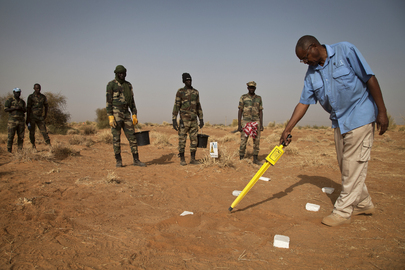
On the 16th of June the United Nations High Commissioner for Human Rights published the report “Impact of anti-personnel mines on human rights” in which the impact of anti-personnel mines on human rights, specifically economic, social and cultural rights, is detailed.
Currently, over 58 States and territories continue to be contaminated with anti-personnel mines, resulting in the death and injury of people. Indeed, in 2024, at least 1,945 people were killed and 4,325 were injured as a result of these weapons, with the highest casualty rates being located in Myanmar, Syria, Afghanistan, Ukraine, Nigeria, Mali, Yemen and Burkina Faso.
The injuries resulting from these weapons include the amputation of limbs, blindness and hearing loss. Furthermore, mine contamination turns areas into “no-go zones”, resulting in the prevention of civilians from entering the area, blocking essential services, humanitarian aid and resulting in food insecurity and economic loss.
In 1997 the Anti-Personnel Mine Ban Convention opened to signatures, and, as of today, 162 States are Parties to the Convention. The Convention represents a conjoined effort to ban anti-personnel landmines and their destruction.
Volter Türk, the UN High Commissioner for Human Rights, has underlined the need for States to “recommit to putting an end to the production, use and transfer of these weapons and redouble their efforts to cooperate in clearing mines already placed” and has urged the States not yet Parties to the treaty to ratify it and those who have recently withdrawn (Estonia, Finland, Latvia, Lithuania and Poland) to rejoin it.