


World Press Freedom Day, 3 May 2026: “Shaping a Future at Peace”
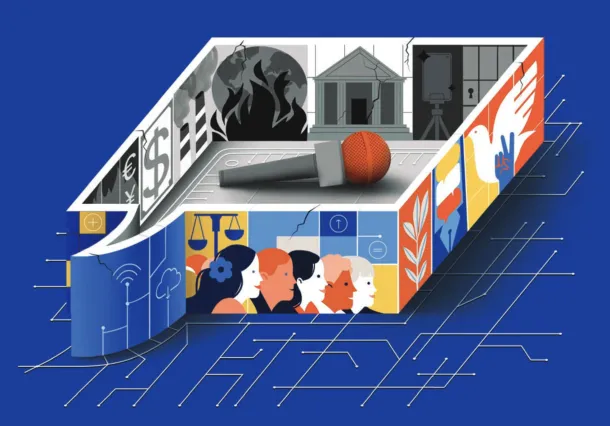
Every year on 3 May, Word Press Freedom Day is celebrated across the globe.
The date offers governments an opportunity to renew their commitment to press freedom and to assess its state worldwide, including its vital role in fostering peaceful relations between political leaders and civil society. It is equally an occasion for media professionals to reflect about issues concerning press freedom and professional ethics. Above all, World Press Freedom Day is a day of solidarity with those media outlets targeted by the suppression or abolition of press freedom, and a solemn commemoration of the journalists who have lost their lives in the pursuit of their work.
The commemoration traces its origins to 1991, when African journalists produced the Windhoek Declaration, a foundational document that prompted a Recommendation adopted during the UNESCO’s General Conference that same year. Two years later, in 1993, the UN General Assembly formally proclaimed World Press Freedom Day.
According to UNESCO’s World Trends Report 2022–2025 a proliferation of attacks against journalists has been occurring in every region of the world. The current decline in press freedom levels is being compared to levels last experienced during the two World Wars and the Cold War. Among the factors driving this decline is the spread of information manipulation, including the malicious use of artificial intelligence, which is eroding trust and threatening national security worldwide. Self-censorship,meanwhile, is pervasive and growing, fuelled by fear of reprisals, online harassment, judicial intimidation and economic pressure.
Against this backdrop, UNESCO together with the Government of Zambia have organised the World Press Freedom Day 2026 Global Conference “Shaping a Future at Peace” to be held on 4-5 May in Lusaka, Zambia. The Conference will provide a space for reflection and dialogue to reaffirm freedom of expression as both a normative and empirical tool for shaping the future of information societies. It will bring together journalists, digital rights advocates, technologists, policy makers, regulators, civil society organizations, academia, researchers, educators, youth leaders and content creators fostering a cross-fertilization of ideas, solutions and approaches, including gender-responsive perspectives. It represents a critical moment to realign journalism, technology and human rights concerns and to reaffirm freedom of expression at the heart of that effort.