


Beyond the Crime Headlines: Dismantling the Structure of Patriarchy
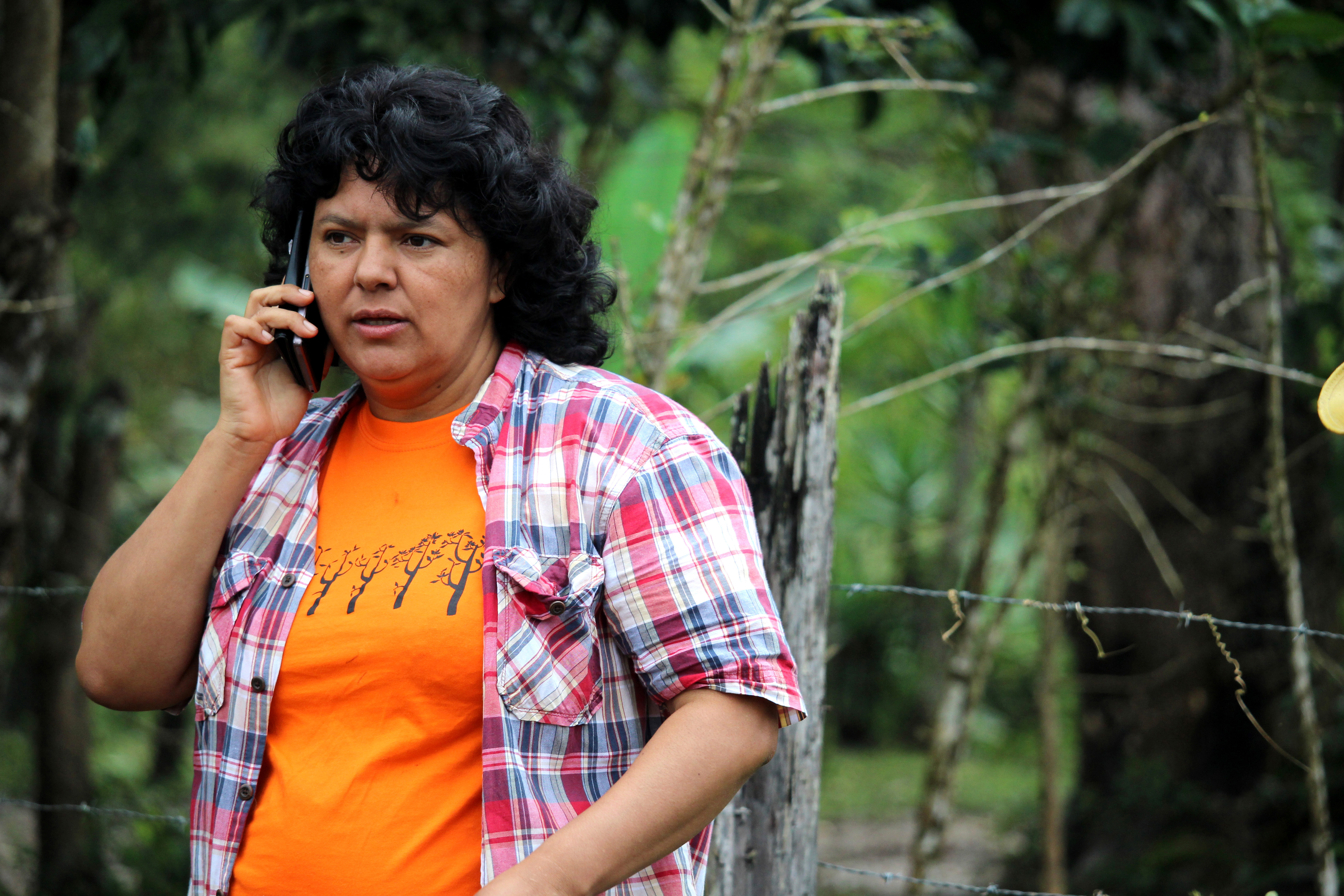
Table of Contents
- Introduction
- Sociological and psychological analysis
- Stories of resistance
- Conclusions
Introduction
Every 25 November, on the occasion of the International Day for the Elimination of Violence against Women, public squares and streets fill with crowds of people, still unfortunately made up predominantly of women, who, whether in silence or making their voices heard, bring a problem that affects the entire world to society's attention, regardless of ethnicity or culture. It is also impossible to avoid being swept up by waves of videos, posts, images and reflections on virtual public spaces such as social media. These, too, carry the same message as their physical counterparts in the streets and squares: remembering all the women who have been murdered. It is a moment of collective solidarity, of turning the world red to remember those who are no longer with us and of raising our voices to highlight how these reports increasingly resemble war bulletins.
However, there is a risk of falling into the language of emergency, of isolated incidents, of the monster who commits the unimaginable, or of an uncontrollable fit of rage that supposedly could not have been prevented. The morbid fascination with which journalists sometimes dissect the victim's life before turning their attention exclusively to the perpetrator tends to strip the events of their human dimension, removing the psychological, sociological and patriarchal foundations underlying them. Gender-based violence is deeply rooted. Femicide cases are not isolated incidents, but clear outcomes of internal power dynamics legitimised by patriarchy. If we fail to focus on the roots of the problem, we will end up looking at every diseased tree as though it were the only one, forgetting that we are actually facing an entire forest whose roots are embedded in contaminated, unhealthy soil that will continue to produce harmful fruit.
Sociological and psychological analysis
The term patriarchy is often dismissed or misunderstood as an outdated concept, as though it belonged exclusively to backward societies. It is avoided, like a bogeyman, a frightening word that 'feminists' supposedly use to bring society to its knees. In reality, in modern societies, this phenomenon no longer manifests itself through formal legal arrangements, such as the exclusive authority of the head of the household, but survives as an invisible and pervasive structure of power relations, inequalities and cultural stereotypes. Through these stereotypes, it is possible to constrain society as a whole, starting from its most fundamental unit: every individual, whether male or female.
From a sociological perspective, patriarchy assigns rigid, hierarchical and seemingly unchangeable roles to both genders. Women are associated with caring responsibilities, subordination, passive empathy and self-sacrifice. Men, on the other hand, are expected to demonstrate strength, cold rationality, self-control, economic competitiveness and an obligation to protect and provide for their families.
This division inevitably carries violence within it. It creates a hierarchy in which masculinity is regarded as the universal standard of value, while femininity is marginalised to the point of complete subordination and passivity. This is where the roots of violence lie. One particularly clear example is psychological and economic violence.
Economic violence takes the form of controlling financial resources, preventing women from working or having their own bank accounts, and even monitoring their spending, whether it is for themselves or for the family. The distinction does not matter: the only thing that counts is establishing power and control over the individual, who will eventually become dependent even when it comes to the most basic expenses, such as grocery shopping.
Psychological violence, on the other hand, takes the form of belittlement and manipulation. It acts as a systematic violation and dismantling of an individual's sense of self: the individual ceases to exist as an independent person and becomes merely an entity expected to conform to a clearly defined role. They must be completely devoted to the other person, with the boundaries between themselves and the couple becoming blurred, or even disappearing altogether.
Naturally, these power dynamics should not be imagined as something so obvious that they would be impossible to overlook. It is important to remember that we are all born into a society governed by unwritten social rules, which themselves stem from stereotypes, cognitive biases and gender norms passed down from generation to generation. These inevitably lead to the implicit normalisation of violence and abuse, which are nevertheless portrayed as normal, necessary or even healthy.
One of the most common misconceptions is that patriarchy benefits men or was created in their favour, when in reality it is a cage that suffocates society as a whole. For women, it represents a constant restriction of freedom and physical and psychological self-determination, as well as, in some cases, a direct threat to their very lives.
For men, on the other hand, it represents an emotional straitjacket, which can also be understood through the concept of so-called toxic masculinity. This form of masculinity is excessively aligned with the gender stereotype of the man as protector and provider for his family. Men are consequently prevented from exploring their own emotions, resulting in an inability or unwillingness to express themselves emotionally that gradually consumes them from within. This is accompanied by an exhausting sense of duty towards society and a general feeling of dissatisfaction and frustration, all mixed with the romanticisation of violence and the notion of possession.
Anyone who does not conform to the stereotype associated with their gender naturally becomes an enemy of patriarchy and of all those men and women who, instead, abide by it. Consider, for example, men who identify as feminists: their masculinity is immediately called into question. The same applies to men who are emotionally expressive or enjoy activities that, according to gender stereotypes, should not appeal to them or fall within their area of competence, such as washing the dishes, wearing make-up or taking care of their appearance.
In this way, these men are stripped of their perceived power and ridiculed, sometimes labelled as homosexual, precisely because any suggestion of 'femininity' represents a threat to gender stereotypes and, consequently, to patriarchy.
Women who do not conform to gender stereotypes are also regarded as a threat. They are labelled as 'frigid' or 'exaggerated'; their financial independence is still attributed to the goodwill of a man; and their decision to find fulfilment outside a relationship is belittled, with suggestions that they are simply too demanding to be with a man. In general, we could say that, in order not to be crushed by patriarchy, one is expected to act in its interests and protect it.
Dismantling patriarchy does not mean descending into a war of everyone against everyone else. On the contrary, it means freeing every individual from gender stereotypes and restoring everyone's freedom to be themselves.
Of course, bringing about change does not mean focusing exclusively on adults. On the contrary, it is essential, for the sake of the future, to give increasing attention to younger generations from the earliest years of childhood, through sex and relationship education projects starting as early as nursery school. Teaching children to recognise their own emotions could, in fact, prove to be the key to unravelling this complex issue.
If future adults are able to describe what they feel, they will no longer experience the frustration associated with being unable to communicate their emotions. Alongside this, communication skills should also be developed to enable both parties to communicate in a functional and healthy way.
Unfortunately, today patriarchy is still celebrated and justified to some extent, both by older and younger generations. This is probably also due to the fluidity of the social world in which we all live. As a result, people feel the need to establish clear and fixed guidelines to which they can turn when all the certainties around them begin to crumble.
Stories of resistance
Resistance to patriarchy takes many different forms, ranging from the defence of common goods to more locally rooted forms of action and territorial control.
Ecofeminism highlights the deep and structural connection between nature, which is dominated by patriarchy, and women's bodies. Both systems of exploitation are founded on the same underlying logic of domination, extraction and hierarchy, which reduces the Earth and women's bodies to mere resources from which profit can be generated.
One of the most powerful examples of this struggle is the story of Berta Cáceres, an Indigenous Lenca activist, environmentalist and human rights defender in Honduras.
This activist co-founded the Civic Council of Popular and Indigenous Organisations of Honduras (COPINH). She led the Lenca Indigenous community in a historic opposition movement and protest against the construction of the 'Agua Zarca' hydroelectric dam on the Gualcarque River, which is sacred to the Lenca people and essential to their survival.
The project had been awarded to the multinational company DESA without first obtaining the consent of the local population, thereby violating international law.
Berta's struggle was not merely environmental: as already mentioned, it also represented a clear challenge to patriarchy. This connection becomes apparent when we consider the feminist and gender-related dimension of her activism. Indeed, she herself emphasised the importance of protecting Indigenous women, who are very often victims of sexual, psychological and economic abuse because of their disadvantaged position within existing power structures.
Her denunciations highlighted how the neoliberal and patriarchal model attacks and tramples on natural resources, exploiting territories without taking their delicate natural balances into account.
Despite receiving death threats and being granted formal protective measures that were never genuinely guaranteed by the Honduran State, Berta was murdered in 2016 by hired assassins sent by the very multinational interests she had been fighting against.
Her sacrifice shocked the international community, leading to the conviction of those who carried out the murder, but leaving numerous questions unanswered regarding corruption and the impunity enjoyed by those at the highest levels who commissioned it.
Today, COPINH continues the struggle. Berta has not died; on the contrary, her legacy has multiplied, perfectly embodying a model of resistance that demonstrates how the liberation of women throughout the world and the liberation of the Earth go hand in hand.
While ecofeminism challenges the systemic and economic roots of oppression on a global scale, anti-violence centres (Centri Antiviolenza, CAV) represent an everyday, political and social point of reference within local communities, supporting women in their efforts to escape economic, psychological and gender-based violence.
Anti-violence centres emerged from the feminist consciousness-raising movements of the 1970s. They are not simply public assistance offices or bureaucratic healthcare facilities, but organisations founded on relationships between women.
Their work is based on confidentiality, unconditional acceptance, self-determination and the provision of free services. One of the truly innovative principles they introduced in the 1970s, and which today forms the backbone of their services, is the recognition of violence not as a private matter but, on the contrary, as a concrete structure founded on specific dynamics and rules. It is precisely for this reason that they firmly believe that this mechanism can be broken.
To understand in greater detail how these valuable centres operate, we need only consider Laura's story (a fictitious name used to illustrate the implementation of the support and independence pathways available to women experiencing violence).
Laura would contact the centre through a telephone helpline, by post or by email. From the outset, her anonymity would be guaranteed, and she would be supported by a trained team of psychologists and other specialists.
She could also access dedicated accommodation for women experiencing violence until, with the help of the centre's internal employment placement service, she found a job and achieved financial independence.
The psychologists would support her recovery, helping her recognise her own worth and emphasising that all those years of deprivation and hatred are finally behind her.
Conclusions
To conclude, patriarchy can be described as a social phenomenon and, as such, just as it came into existence, it can also come to an end. However, for this to happen, everyone must play their part.
As mentioned above, when discussing patriarchy, we often fall into the very same stereotypes we are trying to dismantle. Women are imagined either as victims or as heroines, the latter being those who fight relentlessly against a system determined to oppress them. Men, on the other hand, are often portrayed as though they were the only ones capable of perpetrating violence, while the only men who do not engage in it are assumed to be homosexual.
In reality, as previously highlighted, the situation is much more complex. Everyone plays a fundamental role, whether as a victim or as a perpetrator.
For this reason, it is essential that the State educates its citizens and that families teach their sons and daughters the importance of respect, communication and self-determination.
How to cite this article
Sofia Fraschetti (2026), "Beyond the Crime Headlines: Dismantling the Structure of Patriarchy", in Inclusion and Eco-Social Justice, ISSN 3035-5265, https://unipd-centrodirittiumani.it/en/topics/beyond-the-crime-headlines-dismantling-the-structure-of-patriarchy (consulted on 24/11/2026).
