


Cohousing, Inclusion, and Environmental Sustainability
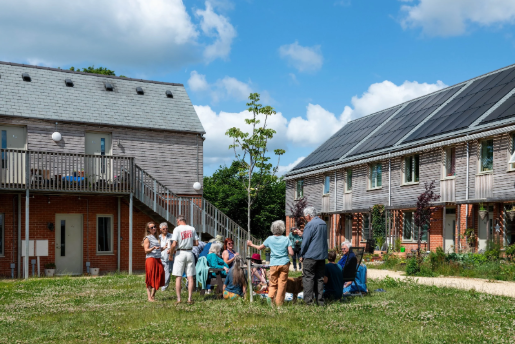
The global housing crisis, characterised by rising housing costs, a shortage of affordable dwellings, increasing urban densification, and social isolation, has renewed interest in cohousing as an alternative housing model. Rising land prices, high construction costs, real estate speculation, inefficient land use, and often outdated urban planning regulations are making access to stable and sustainable housing increasingly difficult for many people. These factors are compounded by demographic changes such as population ageing, the growth of single-person households, and a growing sense of loneliness in cities.
Within this context, cohousing has emerged as a possible innovative, community-oriented response. It is a housing model that integrates autonomous private units with a range of shared communal spaces—such as kitchens, living rooms, workshops, gardens, laundries, and areas for collective activities—designed to foster social interaction, mutual support, and everyday cooperation. Its defining strength lies in intentionality: cohousing is not merely about living in proximity, but about building a community that shares a sense of belonging, values, resources, and responsibilities, while promoting active participation.
Today, the diffusion of cohousing varies significantly across European countries and is particularly widespread in Scandinavian nations, where it has been a well-established practice since the 1960s. In Denmark and Sweden, between 1% and 2% of the population lives in cohousing communities. Over time, the model has also expanded in Germany, the Netherlands, and France, where it is perceived not only as a housing choice but as a lifestyle characterised by mobility, flexibility, and a strong cooperative culture.

https://internationalresidential.jll.com
In Italy, by contrast, cohousing remains relatively limited, with approximately thirty active projects concentrated mainly in Northern Italy (Milan, Turin, Bologna, and, more recently, Padua). Nevertheless, interest is growing, and it is estimated that if even just 1% of the Italian population were to adopt cohousing, more than 130,000 buildings could be regenerated, generating significant economic and social benefits.

The advantages of cohousing are manifold and span economic, social, environmental, and governance dimensions.
- From an economic perspective, sharing infrastructure reduces housing costs and enables the optimisation of overall expenses; cooperative models and community land trusts further enhance affordability.
- From a social perspective, cohousing counteracts isolation by strengthening support networks, creating intergenerational and intercultural systems of everyday mutual aid, and facilitating shared and inclusive forms of care.
- Many projects also integrate principles of environmental sustainability, such as the use of renewable energy, compact design, and efficient land use, as well as energy self-production (energy communities) and shared resource management systems (e.g., spaces, gardens, transport, and facilities). These practices reduce residents’ ecological footprint and promote a circular economy.
- Participatory governance is another key strength, as it fosters empowerment, a sense of responsibility, and collective care for shared spaces.
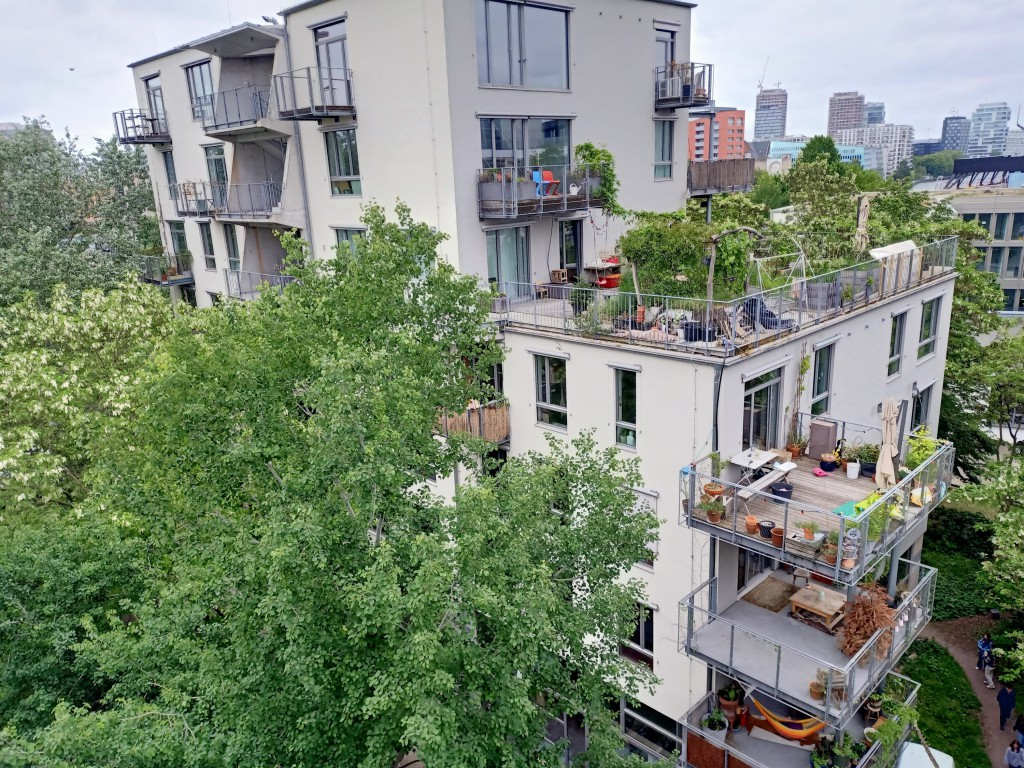
(Berlino, Germania)
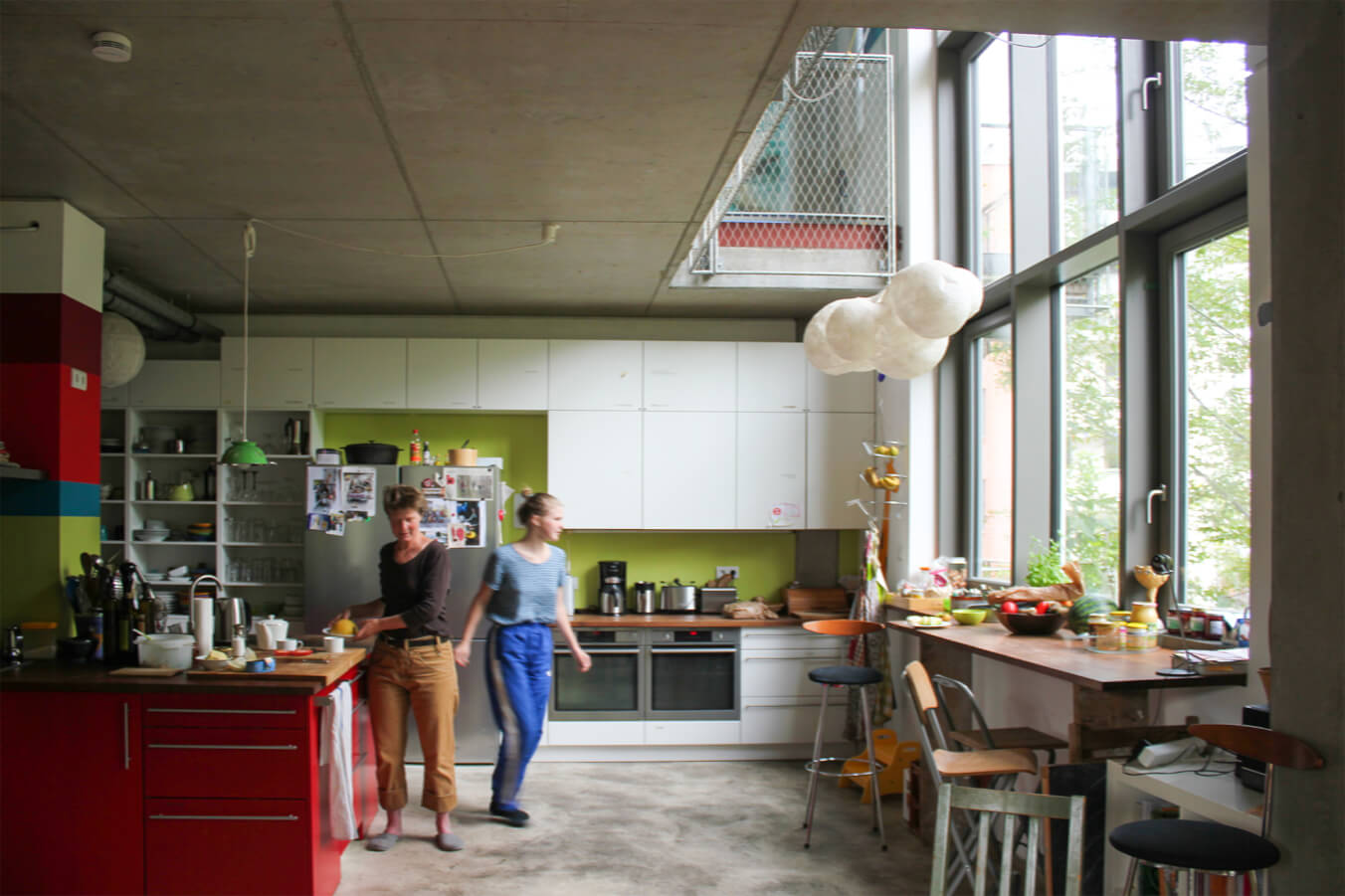
Cohousing interacts directly with the main drivers of the housing crisis.
Economically, the sharing of land and infrastructure reduces per capita costs, improves affordability, and removes part of the housing stock from speculative dynamics, particularly in cooperative or limited-equity models.
Socially, cohousing strengthens relational capital, intergenerational exchange, and collective forms of care, counteracting the isolation typical of contemporary urbanisation.
From an urban planning perspective, it represents a “medium-density” solution, positioned between single-family housing and large collective residential complexes, optimising space while supporting densification without sacrificing quality of living. Many cohousing communities also contribute to stimulating revisions of urban planning regulations, which are often ill-suited to housing models that include mixed private and shared spaces, communal kitchens, or cooperative ownership arrangements.

Naruse Inokuma Architects. © Masao Nishikawa
However, cohousing also presents certain challenges.
- From a social perspective, the high level of participation required can be demanding and may generate conflict. Participatory governance processes can be slow and burdensome, the distribution of shared tasks may become uneven, and effective management requires skills that residents do not always possess. Without specific attention, there is also a risk of social homogeneity, resulting from self-selection into communities that may become insufficiently inclusive or even elitist.
- From an economic standpoint, entry costs can be high, particularly in urban areas where land values are elevated or where few projects are available. Moreover, many banking institutions are unfamiliar with cooperative models, which can complicate access to credit.
- Planning and urban development challenges include the scarcity of suitable land in cities and regulatory frameworks that are often unprepared for the hybrid spaces characteristic of cohousing.
These challenges can, however, be mitigated through inclusive design approaches (e.g. flexible spaces that balance privacy and sharing, mandatory social mix in terms of age, income, and background), the promotion of dedicated public policies (e.g. tax incentives and funding for affordable cohousing, quotas of subsidised housing within projects), regulatory simplification (e.g. updating urban and condominium legislation, developing national guidelines for cohousing), and governance support (e.g. training in conflict management and decision-making processes, and the involvement of professional facilitators in the early stages).
Cohousing is increasingly regarded as part of a broader set of strategies to address the housing crisis, alongside cooperative ownership models, non-profit housing, community land trusts, anti-speculative policies, and urban planning reforms focused on medium-density development.
While it does not represent a universal solution, cohousing constitutes a promising component in responding to the economic, social, and environmental challenges of contemporary living. Its strength lies in its ability to combine affordability, community, sustainability, and quality of life, offering a more humane, inclusive, and resilient housing model.
Keywords
How to cite this article
Claudia Lambini (2026), "Cohousing, Inclusion, and Environmental Sustainability", in Inclusion and Eco-Social Justice, ISSN 3035-5265, https://unipd-centrodirittiumani.it/en/topics/cohousing-inclusion-and-environmental-sustainability (consulted on 02/10/2026).
