


Committee of Ministers of the Council of Europe: oversight of the implementation of judgments against Italy on environmental issues, migration, and fundamental rights
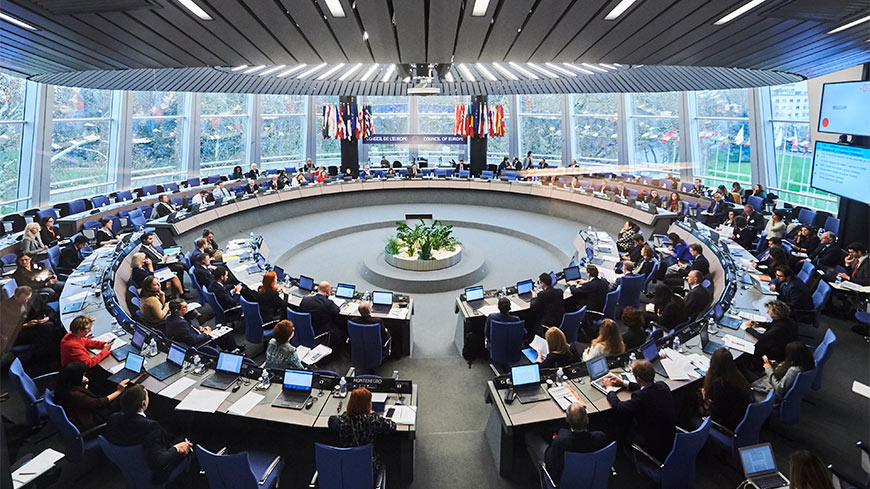
Table of Contents
- Introduction
- Cannavacciuolo and Others v. Italy
- J.A. and Others v. Italy Group and Sadio v. Italy
- Conclusion
Introduction
From 9 to 11 March 2026, the Committee of Ministers of the Council of Europe (the Committee) convened in Strasbourg for its quarterly meeting within the framework of its supervisory role concerning the execution of judgments of the European Court of Human Rights. Pursuant to Article 46 of the European Convention on Human Rights, the Court’s judgments are legally binding upon the States Parties, and their proper implementation is subject to the supervision of the Committee of Ministers.
The assessment of the progress achieved by States in the execution of judgments is based on information submitted by a plurality of actors, including national authorities, applicants, civil society organisations, national human rights institutions, and other relevant stakeholders.
During the meeting, the Committee also examined several cases concerning Italy, including Cannavacciuolo and Others v. Italy, J.A. and Others v. Italy, and Sadio v. Italy. In particular, the case of Cannavacciuolo and Others was subject to a separate review, while the group of cases J.A. and Others was examined jointly with Sadio in a second report.
Cannavacciuolo and Others v. Italy
The judgment in Cannavacciuolo and Others v. Italy concerns the failure of the Italian authorities to adopt all necessary measures to protect the right to life of individuals residing in the so-called “Terra dei Fuochi” area in the Campania region, who had been exposed to persistent and widespread pollution resulting from the unlawful disposal, burial, and burning of waste. In this judgment, the Italian State was found responsible for failing to act with due diligence in addressing a systemic, widespread, and long-standing phenomenon relating to the prevention and management of serious environmental risks.
This judgment is of particular significance insofar as it constitutes a “pilot judgment” adopted by the European Court of Human Rights in the presence of a structural, rather than merely individual, problem, characterised by its widespread scope, prolonged duration, and systemic shortcomings attributable to the State. In this context, the Court considered it necessary to require the adoption of reforms aimed at addressing the root causes of the violations identified and at comprehensively restructuring the relevant system.
To this end, the Court provided highly detailed indications regarding the measures to be adopted. First, it required the implementation of a coordinated national strategy, including the mapping of contaminated areas, the analysis of environmental matrices (soil, water, and air), risk management, the assessment of health impacts, and the prevention of unlawful activities such as illegal waste disposal. Such a strategy was required to include clear timelines, the allocation of adequate resources, and the involvement of both civil society and the competent authorities.
Secondly, the Court required the establishment of an independent monitoring mechanism entrusted with verifying the implementation of the measures adopted and compliance with the prescribed deadlines, endowed with adequate guarantees of independence and open to the participation of actors external to the State apparatus.
Finally, the Court indicated the need to create a single public platform capable of collecting, in an accessible, structured, and continuously updated manner, all relevant information concerning the “Terra dei Fuochi” and the measures adopted or envisaged.
The Court also established strict deadlines, requiring that all the above-mentioned measures be adopted within two years from the date on which the judgment became final. In this regard, it decided to adjourn the examination of similar pending applications in order to allow the Italian State to remedy the structural shortcomings identified, thereby avoiding repetitive litigation and fostering a systemic solution to the problem.
Overall, the Committee positively assessed the actions undertaken by the Italian authorities to remedy the violations established in the Court’s judgment. On the one hand, it took note of the payment to the applicants of the sums awarded in respect of costs and expenses. On the other hand, with regard to compensation for non-pecuniary damage, the Committee reserved its position for a later stage, observing that the individual measures necessary to protect the applicants from the effects of environmental pollution are closely linked to the adoption and effective implementation of the general measures required.
With regard to the latter, the Committee acknowledged the adoption by Italy of a comprehensive and integrated strategy aimed at addressing the multiple dimensions of the structural problem relating to environmental remediation and the securing of the affected areas. In this context, particular appreciation was expressed for the appointment of a Special Commissioner entrusted with coordinating and supervising the implementation of the envisaged measures.
Despite the progress achieved, the Committee noted the persistence of episodes of illegal waste disposal and waste burning. In response to these phenomena, the Italian Government adopted, inter alia, legislation in 2025 aimed at strengthening the sanctioning regime for environmental crimes. Among the most significant innovations are the reorganisation of waste-related offences, the introduction of new offences differentiated according to the hazardous nature of the waste involved, and the increase in penalties for unauthorised waste management, illegal trafficking, and unlawful waste burning.
Furthermore, the Italian Institute for Environmental Protection and Research (ISPRA) was entrusted with the task of monitoring the implementation of the measures envisaged under the aforementioned global strategy. The Committee emphasised the importance of ensuring the independence of this monitoring mechanism and recommended the involvement of actors external to the State authorities.
The adoption of a comprehensive communication strategy was also positively assessed, together with the ongoing establishment of a public platform aimed at providing updated and accessible information regarding the situation on the ground, in order to ensure effective and easy access to information. The Committee therefore encouraged the swift completion of this initiative.
The examination of the case will continue during the meeting scheduled for March 2027. In preparation for that meeting, the Italian authorities were invited to submit an update on the state of implementation of the measures by 15 December 2026.
J.A. and Others v. Italy Group and Sadio v. Italy
The cases examined by the Committee of Ministers in the present supervisory procedure concern violations that occurred between 2016 and 2019 relating to unlawful detention and inadequate living conditions in the “hotspots” of Lampedusa and Taranto, as well as in the reception centre of Cona (Venice), in addition to the collective expulsion of some of the applicants. The violations established by the Court also included inhuman or degrading treatment suffered during arrest, as well as inadequate material conditions both during detention and during transfer procedures. Finally, the Court found the absence of effective judicial remedies through which applicants could challenge living conditions deemed incompatible with Convention standards.
With regard to the J.A. and Others v. Italy group of cases and Sadio v. Italy, concerning individual measures, the Committee considered that no further supervision was required, taking note of the payment by the Italian State of the amounts awarded to the applicants by way of just satisfaction.
As regards general measures, the Committee of Ministers of the Council of Europe noted several initiatives undertaken by the Italian authorities aimed at improving living conditions in the hotspot facilities, in particular the renovation works carried out in the centres of Taranto and Lampedusa, as well as the reduction in the duration of stays in the latter facility.
Further positive developments were identified with reference to the domestic legal framework. In particular, the Committee highlighted the prohibition of detention of unaccompanied minors and the provision of adequate reception conditions; the prohibition of collective expulsions, accompanied by broader safeguards under domestic legislation; as well as the obligation to provide migrants with adequate information concerning asylum procedures.
The Committee also noted the discontinuation of the practice of long-distance coercive transfers of migrants pending expulsion, for which Italy had been condemned by the European Court of Human Rights in 2023 in the case of A.E. and Others v. Italy.
Finally, in view of the entry into force, in June 2026, of the New Pact on Migration and Asylum, which also provides for the establishment of an independent monitoring mechanism, the Committee invited the Italian authorities to provide information regarding the impact of the new European Union legislation on the domestic legal framework. In particular, it requested assurances that the measures adopted would not result in a lowering of the level of protection of fundamental rights, which must remain consistent with the standards established by the European Court of Human Rights and its case law.
With specific reference to Sadio v. Italy, the Committee decided to close the supervisory procedure through the adoption of a final resolution. By contrast, it requested further information, to be submitted by 15 December 2026, concerning the adoption of the general measures required by the other judgments.
Conclusion
Overall, during its latest quarterly meeting, the Committee expressed a positive assessment of Italy’s compliance with the obligations arising from the judgments of the European Court of Human Rights. In particular, with regard to the “Terra dei Fuochi” issue, the Committee observed that the measures adopted appear to be progressing adequately towards addressing the shortcomings identified by the Court, in line with the roadmap outlined in the judgment itself.
In this context, significant progress has been recorded, attributable both to the adoption of a more structured and coordinated approach and to the degree of detail of the measures prescribed by the Court, which reflects a more assertive stance towards phenomena characterised by systemic deficiencies, typical of pilot judgments.
Against this background, Cannavacciuolo and Others v. Italy represents a significant turning point for Italy, which is now required to address in a systemic and structured manner the critical issues affecting a territory that, for decades, has been exposed to unlawful toxic waste disposal practices, with serious consequences for the health of the local population. Several studies have highlighted an increased incidence of certain oncological diseases compared to the national average, albeit in the absence of a fully established direct causal link between the phenomena under consideration.
Nevertheless, in the subsequent stages of supervision by the Council of Europe, the continuation of the implementation of the prescribed measures will remain of central importance, particularly with regard to compliance with the deadlines established by the judgment, which require the adoption of the reforms within a maximum period of two years. It will also be necessary to assess the suitability and concrete effectiveness of the measures adopted, taking into account the complexity of the phenomenon, including the involvement of organised criminal activities, which may affect the full achievement of the intended objectives.
With regard to the group of cases concerning the protection of migrants against inhuman and degrading treatment, the Committee identified certain improvements, particularly in relation to living conditions in the hotspots of Taranto and Lampedusa. Overall, the Committee’s report presents a generally positive picture; however, these developments appear to remain limited to specific facilities and do not necessarily indicate a systemic improvement.
A particularly noteworthy development is the discontinuation of the practice of long-distance coercive transfers, which constitutes a significant advancement. Similarly, the domestic legal framework received a positive assessment from the Committee. Nevertheless, these developments do not yet appear to have translated into a substantial and widespread improvement in the actual treatment conditions of migrants, thereby revealing a possible gap between the normative framework and its practical implementation.
In June 2026, the New European Pact on Migration and Asylum, definitively approved in 2024, will enter into force. The Pact will replace the previous Dublin system, with the objective of rendering the system more uniform, efficient, and based on greater responsibility-sharing among Member States. It seeks to streamline procedures, particularly with regard to certain asylum applications and return procedures, through preliminary identification, security, and vulnerability screenings. This is complemented by a new data-registration system designed to improve the monitoring of movements and reduce irregular secondary movements between EU Member States. Furthermore, the Pact envisages a stronger external dimension, based on partnerships with third countries.
However, significant criticism has also emerged, particularly concerning the risk that such procedures — especially accelerated border procedures — may undermine individual guarantees, notably for persons requiring a careful assessment of their individual circumstances.
In this context, Italy occupies an ambivalent position: on the one hand, it may benefit from a greater sharing of responsibilities at the European level; on the other hand, as a country of first entry, it is likely to bear a considerable administrative and operational burden in implementing the new procedures. From this perspective, the Committee has insisted on the necessity of implementing the Pact in a manner that does not, under any circumstances, compromise the effective level of protection of the rights of migrants arriving on Italian territory.
Overall, the analysis of the cases demonstrates a gradual adaptation of the Italian legal system to the obligations arising under the European Convention on Human Rights, notwithstanding the persistence of certain critical issues, particularly with regard to their effective implementation. Consequently, in future stages of supervision, verifying the effectiveness of the measures adopted and their capacity to ensure substantial and durable protection of fundamental rights will remain decisive. The central role played by the supervisory function exercised by the Committee of Ministers of the Council of Europe therefore clearly emerges as an essential mechanism for ensuring the effective execution of the judgments of the European Court of Human Rights.
Links
How to cite this article
Federica Napoleoni (2026), "Committee of Ministers of the Council of Europe: oversight of the implementation of judgments against Italy on environmental issues, migration, and fundamental rights", in Italian Yearbook of Human Rights, ISSN 3035-5435, https://unipd-centrodirittiumani.it/en/topics/committee-of-ministers-of-the-council-of-europe-oversight-of-the-implementation-of-judgments-against-italy-on-environmental-issues-migration-and-fundamental-rights (consulted on 13/10/2026).
