


Directive (EU) 2024/1069: new European standards for combating strategic litigations against public participation (SLAPPs) and their implementation in Italy
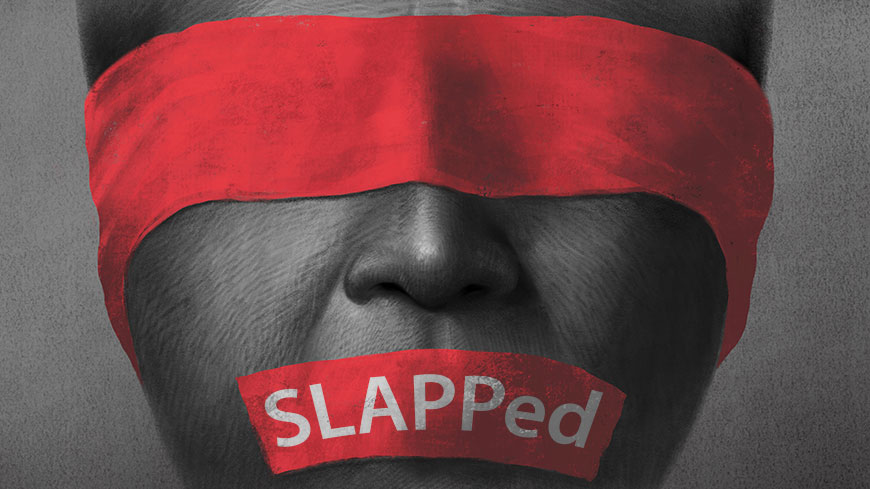
Table of Contents
- Background and previous regulatory framework
- Directive (EU) 2024/1069: scope of application, key definitions and innovative tools
- The Italian transposition
- Implication and challenges
- Conclusion
Background and previous regulatory framework
In recent years, the increasing prevalence of strategic lawsuits against public participation (SLAPPs) has become a major threat to freedom of expression, democratic accountability and the rule of law within the European Union. In response, European institutions have addressed the issue in line with the Action Plan for Democracy (2020), which identifies the strengthening of media freedom, the protection of journalists and civil society, and the countering of threats to democratic participation as policy priorities.
Directive (EU) 2024/1069 of the European Parliament and of the Council of the European Union aims to protect individuals engaged in public participation (including activists, journalists, NGOs, human rights defenders but also ordinary citizens) from manifestly unfounded claims or abusive legal proceedings (Art.1). SLAPPs are lawsuits, sometimes frivolous or seeking clearly excessive damages, intended to intimidate, discredit and harass their targets with the aim of silencing them. Two key elements stand out in this context: the imbalance of power and economic resources between the plaintiff and the defendant, and the intent to intimidate individuals who have taken a stand on a matter of public interest.
Before the Directive was adopted, the European framework for tackling SLAPPs was fragmented and relied mainly on case law from the European Court of Human Rights (ECtHR), as well as on recommendations and other soft-law instruments from European institutions. Freedom of expression is protected by Article 10 of the European Convention on Human Rights (ECHR), and the ECtHR has repeatedly addressed phenomena comparable to SLAPPs, albeit indirectly. In the Steel and Morris v. United Kingdom case (2005), the Court criticised a legal proceeding that was disproportionate and likely to have a “chilling effect” on public debate, initiated against a worker who had denounced precarious working conditions in the fast-food sector. However, prior to the Directive, there were no specific rapid protection measures, such as mechanisms for the early dismissal of abusive lawsuits or uniform measures to protect SLAPPs victims.
Following the murder of Maltese journalist Daphne Caruana Galizia in 2017, the European institutions intensified their focus on the phenomenon of SLAPPs. This case highlighted how the systematic use of intimidating legal action can undermine press freedom and democratic debate. Indeed, prior to her death, the journalist had been subjected to numerous defamation lawsuits. Against this backdrop, the European Commission adopted Recommendation (EU) 2022/758 in response to the European Parliament’s call for the introduction of European anti-SLAPP legislation (see the Resolution of 11th November 2021). The recommendation calls on member states to introduce safeguards against manifestly unfounded or abusive legal actions, such as fast-track dismissal mechanisms, exemption from court costs, and sanctions against abusive plaintiffs. While not legally binding, the recommendation is the EU’s first comprehensive measure dedicated specifically to SLAPPs lawsuits.
Directive (EU) 2024/1069: scope of application, key definitions and innovative tools
The Directive clearly defines the conditions under which safeguards against abusive proceedings are applicable. This protection only applies to “civil or commercial matters with cross-border implications brought in civil proceedings” (Art.2). Criminal matters are therefore excluded, as they remain one of the most commonly used tools for intimidating and silencing journalists in many EU member states.
Chapter I of the Directive provides definitions of certain key concepts. “Public participation” is defined broadly to encompass all activities through which a person exercises their freedom of expression, information, art or scientific research in order to address issues of public interest. “Matters of public interest” refers to all issues that may legitimately concern the public. This includes “a) fundamental rights, public health, safety, the environment, or climate; b) the activities of a natural or legal person who is a public figure in the public or private sector; c) matters under consideration by a legislative, executive, or judicial body, or in any other official proceeding; d) allegations of corruption, fraud, or any other criminal or administrative offence in connection with such matters; e) activities aimed at protecting the values enshrined in Article 2 of the Treaty on European Union. This includes the protection of democratic processes from undue interference, particularly through the combatting of disinformation” (Art. 4.2). Proceedings against public participation are “abusive” when they are not genuinely intended to exercise a right, but rather to obstruct public debate through unfounded claims (Art. 4.3).
To combat these phenomena, the Directive introduces innovative procedural and substantive measures that member states should adopt. Among the most significant are the following:
- Early dismissal (Art. 11): allows the court to swiftly dismiss the case if the action is manifestly abusive.
- Reversal of the burden of proof (Art. 12): The plaintiff bears the burden of proving the merits of the case if the defendant requests early dismissal.
- Economic measures (Arts. 14–15): These include ordering the full payment of legal fees and imposing deterrent sanctions on those who file SLAPPs.
- Support and safeguards (Arts. 9–10): provide for the active role of NGOs and labor unions and the possibility of requiring the plaintiff to post a bond.
The effectiveness of this framework will depend on the speed and vigor with which national judicial systems are able to adopt and apply these rules.
The Italian transposition
The Directive aims to establish a uniform framework for the protection of those involved in “gag lawsuits" across all EU member states, while preserving the right to access to justice for all. The Directive is based on Art. 81.2.f) of the Treaty on the Functioning of the European Union (TFEU), which gives the EU the power to intervene in national civil procedure if differences in legal systems could prevent cross-border judicial cooperation from functioning properly.
In Italy, Directive (EU) 2024/1069 was transposed into national law by Law no. 36/2026. Through this law, Parliament delegated to the Government the task of transposing various European directives concerning fundamental rights, the protection of public participation and judicial cooperation. While the law does not immediately introduce a fully operational national anti-SLAPP framework, it does establish the legal basis for subsequent legislative decrees to give effect to European obligations. However, the deadline for transposing the Directive expired on 7th May 2026 without the implementing legislative decree having been issued yet, which exposes Italy to potential infringement proceedings by European institutions. The NGOs that have worked hardest to keep the spotlight on the national transposition phase belong to the CASE coalition (Coalition Against SLAPPs in Europe). They sent a letter to the Minister of Justice Carlo Nordio, requesting not only faster transposition of the Directive, but also its extension to domestic cases, as well as cross-border ones. This call has also been made by the European Commission and has already been heeded by Romania, Poland and Belgium. The CASE coalition is willing to contribute to a potential dialogue between the government and civil society before the adoption of the legislative decree.
The 2026 CASE report, prepared by the Daphne Caruana Galizia Foundation, found that the number of strategic lawsuits aimed at suppressing public participation remains high across all EU countries. Italy recorded the highest number of SLAPPs for the second consecutive year. Given the high number of SLAPPs in domestic disputes, transposing the Directive to apply only to cross-border cases could significantly reduce its effectiveness in Italy, leaving many people exposed to abusive domestic proceedings without adequate protection.
Implication and challenges
Some legal scholars have expressed concerns about the decision to base the legal foundation of the Directive on the Art. 81.2.f) TFEU, particularly regarding whether the measure falls within the Union’s competences in the area of judicial cooperation in civil matters.
The EU uses civil judicial cooperation to regulate not only cross-border procedural aspects, but also to promote the protection of fundamental rights, such as freedom of expression and public participation. The proposal also has a specific policy objective: to prevent and deter abuse, and to protect a collective interest. Article 81 TFEU applies only to disputes with cross-border implications. One way to overcome this obstacle would be to adopt a very broad concept of transnationality. While this would strengthen protection against SLAPPs, it could lead to uncertainties in interpretation and potential challenges regarding the appropriateness of the chosen legal basis.
Despite these limitations, the Directive contains progressive provisions that seek to overcome the “mosaic theory”, a concept developed by the case law of the Court of Justice of the European Union. This theory fragments defamatory or personality rights-infringing acts into multiple jurisdictions(the court of the place where the event giving rise to the legal action occurred, that of the place where the plaintiff has interests, or that of the place where the harm manifested itself, applicable when public manifestations occur online). This approach enables plaintiffs to initiate multiple, parallel legal proceedings against journalists or activists for the same incident. This scenario provides ideal conditions for the practices of "forum shopping” and “libel tourism”. The former refers to the practice whereby the plaintiff in a legal case chooses to initiate proceedings in a jurisdiction deemed most favourable to their interests, while the latter is a specific and aggressive form of forum shopping whereby proceedings are initiated in a state known to be particularly hostile to freedom of expression. To counter these phenomena, Articles 16 and 17 of the Directive introduce specific countermeasures aimed at neutralising this procedural strategy, but these apply only to non-EU countries. In fact, without amending the so-called “Brussels I bis” Regulations (on jurisdiction) and “Rome II” Regulations (on applicable national law), the structural problems that the “mosaic theory” brings with it will not be resolved.
The Directive also presents a number of undefined grey areas that could negatively impact its effectiveness in combatting SLAPPs. Key definitions such as “public interest” and “abuse of process” are considered by scholars to be too broad and vague. This could lead to divergent interpretations among judges. Furthermore, although early dismissal is reserved for “manifestly unfounded claims”, the lack of objective criteria in the Directive gives judges excessive discretion and increases the risk of inconsistent application at national and European levels.
Conclusion
Although Directive (EU) 2024/1069 marks a historic step forward, it is not a definitive solution. Its success will depend on individual member states’ ability to extend protection to domestic as well as cross-border cases, and to address current gaps in interpretation. Furthermore, while lawmakers are focusing on civil SLAPPs, threats are evolving; some individuals and organisations are already diversifying their tactics and exploiting not only criminal defamation laws, but also the criminal provisions of the General Data Protection Regulation and intellectual property laws to remove unwelcome content produced by investigative journalism. By focusing on civil matters, Directive (EU) 2024/1069 risks leaving journalists, human rights defenders and ordinary citizens defenseless against more sophisticated strategies. Constant monitoring will be necessary to effectively protect freedom of expression and civic participation.
Links
How to cite this article
Lisa Cerchi (2026), "Directive (EU) 2024/1069: new European standards for combating strategic litigations against public participation (SLAPPs) and their implementation in Italy", in Italian Yearbook of Human Rights, ISSN 3035-5435, https://unipd-centrodirittiumani.it/en/topics/directive-eu-20241069-new-european-standards-for-combating-strategic-litigations-against-public-participation-slapps-and-their-implementation-in-italy (consulted on 22/10/2026).
