


Mauro Palma presents his book "Caro Parlamento", collecting the reports of the Italian Guarantor of the rights of persons deprived of liberty, 2016-2023"
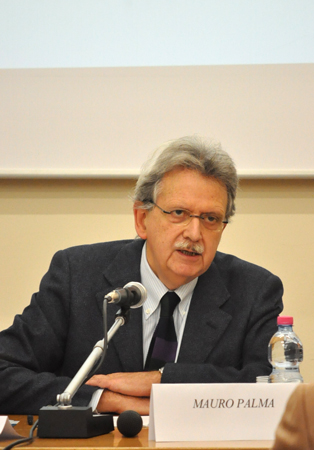
On October 2, 2026, the book “Caro Parlamento” (“Dear Parliament”) was presented at the headquarters of the Unified Army Club in Padua. The volume was written by Mauro Palma (former President of the National Guarantor for the Rights of Persons Deprived of Personal Liberty - GNPL), Daniela De Robert (journalist and former GNPL member), and Emilia Rossi (criminal defence lawyer and former GNPL member). The book collects the official Reports submitted by the National Guarantor to the Italian Parliament between 2016 and 2023.
The event was organised by the Padua Bar Council and moderated by Annamaria Alborghetti, member of the National Forensic Council (CNF). Alongside the authors, the speakers included Paolo De Stefani, Professor of International Law at the University of Padua and collaborator at the University Human Rights Centre, and Paola Cameran, former Prosecutor at the Court of Venice and newly appointed guarantor for persons deprived of liberty for the Municipality of Padua.
The debate, introduced by Francesco Rossi, the current President of the Padua Bar Council, and Leonardo Arnau, a CNF Board Member, focused on the role of the Guarantor and its board members in monitoring facilities and institutions responsible for the custody of individuals deprived of their personal liberty. These include not only adult and juvenile correctional facilities, but also Residences for the Execution of Security Measures (REMS), security rooms at law-enforcement premises, migrant detention centres (including repatriation centres - CPR), psychiatric wards (SPDC), and residential facilities for the elderly or persons with disabilities.
Specifically, a key function of the Guarantor is to conduct inspections (even without prior authorisation) of the aforementioned facilities and to freely interview occupants to identify potential regulatory violations, irregularities, unlawful practices, or ambiguities, and subsequently document these findings in formal reports. Annual reports to Parliament are established by law to draw the attention of the highest state officials to issues arising from monitoring practice and to foster a political culture and policy attentive to the rights of individuals deprived of personal liberty. While these reports were submitted regularly until 2023, changes in the GNPL board's composition caused a temporary interruption, resulting in the publication of the 2024 report in April 2026.
The introduction of new criminal offences and the recent trend towards harsher penalties have led to a significant increase in the number of people detained in various facilities used for the deprivation of liberty. Reports submitted to Parliament provide the tangible consequences of re-emerging overcrowding in Italian prisons, which manifests as violations of fundamental rights and, in some instances, conditions amounting to inhuman and degrading treatment. Interventions by the National Guarantor can help resolve extreme situations, as demonstrated by the 2021 closure of the "Ospedaletto" section at the Turin CPR following inspections that revealed instances of inhuman and degrading treatment.
Enriched by firsthand testimony from the speakers, the discussion also highlighted an alarming tendency toward the "infantilization" of persons detained or hosted in certain contexts. This phenomenon manifests both in overly regressive, infantile activities conducted within facilities and in the manner in which operators interact with detainees. Such practices induce self-devaluation among individuals, inevitably impairing the re-education process that should ideally lead to reintegration into society, which is the ultimate aim of detention measures as provided for by art. 27 of the Italian Constitution.
The book’s title emphasises the significance not only of the Annual Report to Parliament, but also of the formal moment of its presentation to the Legislator as a channel of dialogue with the country’s primary democratic institution, capable of advancing legal and human rights awareness. Paolo De Stefani’s intervention stressed how GNPL reports and recommendations contribute to international bodies such as the United Nations Committee Against Torture (CAT) and the European Committee for the Prevention of Torture (CPT) in shaping international standards. Furthermore, these observations and recommendations are used by the European Court of Human Rights (ECtHR) when adjudicating human rights violations in Italy.
However, speakers noted a persistent delay among Italian policymakers in translating many of the GNPL's observations and recommendations - including those compiled in the volume - into concrete legislative acts and actions. Indeed, the publication of the 2016 to 2023 reports to Parliament attests to the enduring gap between law as proclaimed and law as applied in daily practice. Observations shared by the newly appointed Guarantor for the Municipality of Padua, gained through her work as a volunteer in the local prison, as well as through her career as a former magistrate, further illustrated this issue.
In his closing remarks, Mauro Palma reaffirmed the importance of anchoring all actions by the Parliament and the Executive that affect criminal matters and personal freedom in constitutional principles, with particular reference to migration. Specifically, he called for safeguarding the integrity of Article 27 of the Constitution - which stipulates that punishment must respect human dignity and aim at the rehabilitation of the convicted person - against reform proposals seeking to restrict its scope by placing excessive emphasis on the concepts of social dangerousness and public safety, which are already intrinsic to the notion of punishment itself.
The meeting in Padua served as an important opportunity for reflection on the role of independent human rights monitoring bodies, and on the urgent need for Italian decision-making institutions to absorb the findings of the GNPL more effectively, thereby ensuring the meaningful protection of the rights and dignity of persons deprived of personal liberty.
(Report by Roberta Squintu and Emanuele Tuteri, MA students in Human Rights and Multilevel Governance, University of Padova)
Keywords
Paths
How to cite this article
(2026), "Mauro Palma presents his book "Caro Parlamento", collecting the reports of the Italian Guarantor of the rights of persons deprived of liberty, 2016-2023"", in Italian Yearbook of Human Rights, ISSN 3035-5435, https://unipd-centrodirittiumani.it/en/topics/mauro-palma-presents-his-book-caro-parlamento-collecting-the-reports-of-the-italian-guarantor-of-the-rights-of-persons-deprived-of-liberty-2016-2023 (consulted on 18/10/2026).
