


No Impunity in Gaza: an OSINT-Based Law Clinic calls for redress and accountability for the families of the World Central Kitchen Humanitarian workers killed in 2024
The principle of distinction and its systematic violation in Gaza
Distinction is a pivotal concept at the heart of international humanitarian law. In this era of widespread conflict, the differentiation between combatants and non-combatants is fundamental to the respect and protection of the civilian population, including humanitarian workers. International law regulates this protection through the Geneva Convention IV of 1949, Additional Protocol I of 1977, and customary international law, all grounded in the principle that even in times of war, the protection of human life transcends all other interests.
Beyond protecting civilians and humanitarian personnel, international humanitarian law also safeguards relief operations, that is, the use of all available means by parties to a conflict to ensure the delivery of essential supplies such as food and medicine. This framework aims to provide holistic protection, not merely to restrict attacks on civilians and humanitarian workers, but to guarantee the basic needs of individuals during wartime.
However, since the attack on October 7, 2023, the state of Israel has acted in deliberate violation of these rules, targeting the civilian population and humanitarian workers under the pretext of striking key Hamas personnel. Open source information indicates that, since October 2023, more than 72,742 Palestinians have been killed; hospitals, schools, shelters, and humanitarian relief corridors have all been targeted. These actions form part of a widespread and systematic strategy by the Israeli government to blockade and disrupt the Palestinian population. Hundreds of cases have been documented, each sharing a common feature: the international failure to distinguish between active combatants and civilian or humanitarian personnel. The attacks have been carried out against women, children, and men alike. Targeted strikes on shelters, hospitals, schools, and humanitarian convoys reflect a deliberate decision to attack the civilian population directly, in wilful violation of the principle of distinction.
A UN Human Rights Office report released in February 2026 detailed the continued killing and maiming of civilians at unprecedented levels throughout the reporting period by Israeli forces, the spread of famine, and the destruction of remaining civilian infrastructure, imposing on the Palestinian population conditions of life increasingly incompatible with their continued existence in Gaza as a group.
Beyond its findings, the report highlighted that the systematic character of the deadly strikes documented in Gaza gave rise to well-founded concerns that Israeli forces had acted with intent to strike civilians and civilian objects, carrying out operations with full awareness that the human cost to the civilian population would be wholly disproportionate to the military advantage sought. The report emphasised that such conduct meets the threshold for war crimes.
In a World that has already witnessed the full range of human cruelty and the lengths to which state policy can reach, the protection of civilians and humanitarian relief is not merely a legal obligation; it is a moral imperative. So too is the fight for accountability and justice for victims and their families. It can not be acceptable that, under the justification of combating and eliminating a terrorist group, the lives of thousands of civilians are taken or placed at risk; reparations and genuine accountability must be ensured for all victims.
The World Central Kitchen attack: open-source evidence and institutional failures
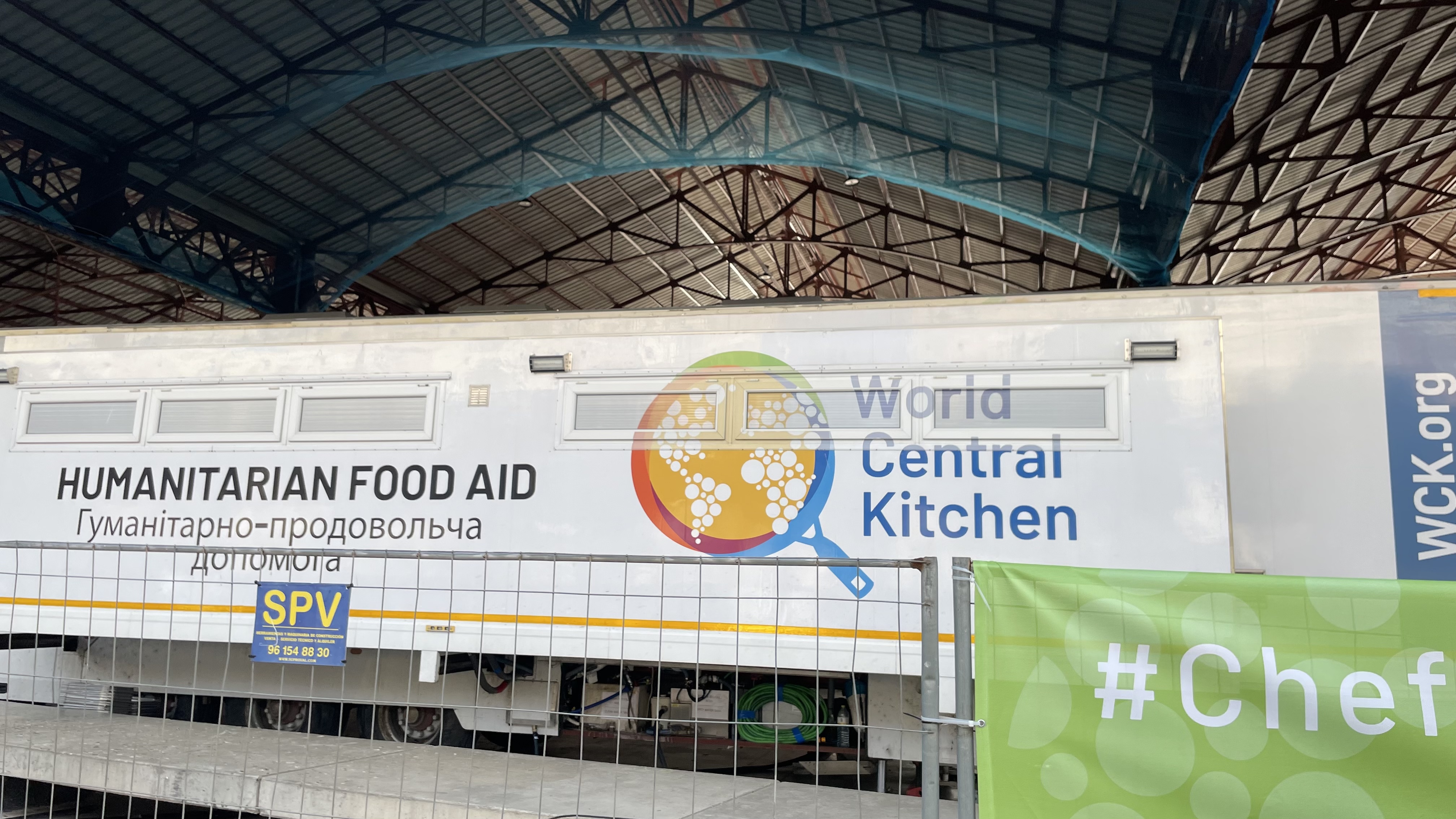
Among the hundreds of cases that compose this pattern, one stands out for the clarity with which it exposes the deliberate disregard for the principle of distinction: the killing of seven World Central Kitchen (WCK) humanitarian workers on 1 April 2024, in a strike against a food relief convoy that had been formally coordinated with the IDF in advance.
One of the victims of the tragic event against the WCK personnel was Zomi Frankcom. She was an Australian national who devoted her life to humanitarian work. After joining WCK in 2018 as a volunteer, she rose to serve as Operations Manager and Senior Manager for Asia Operations, deploying to crises across four continents. Her colleagues described her as the heart of WCK. On 25 March 2024, she was deployed to Gaza as an operations and logistics coordinator, based at a new WCK facility in Deir el-Balah.
On the night of 1 April 2024, Ms Frankcom was travelling in a WCK convoy of three vehicles along the Al Rasheed coastal road in central Gaza. The operation had been formally coordinated in advance with the IDF through its Coordination and Liaison Administration for Gaza, using an agreed deconfliction protocol that included vehicle details and a planned route. The vehicles were clearly marked with WCK logos on their roofs and windshields. Between 23:09 and 23:13 local time, the IDF launched three sequential drone strikes against the convoy, each targeting a separate vehicle individually and in quick succession along a pre-approved route for humanitarian movement. Ms Frankcom was found dead in the third vehicle. In total, seven humanitarian workers were killed within four minutes.
What makes this case particularly significant is the evident failure of the principle of distinction and the direct tactics of the Israeli state targeting humanitarian aid personnel, followed by the overwhelming evidence that the convoy’s protected status was both visible and known. The investigative team of the OSINT Law Clinic, through its own assessment and through critical comparison with open-source investigations conducted by Bellingcat, Al Jazeera Sanad’s Verification Agency, and BBC Verify, reached convergent conclusions on this point. Bellingcat established that the WCK markings on the vehicle roofs were likely visible from above at the time of the attack, and that only the IDF possesses the capability to conduct this type of precision strike among the parties to the conflict. Al Jazeera's Sanad Verification Agency concluded that the strikes were intentional, given that WCK had strictly complied with all deconfliction protocols. BBC Verify confirmed that the convoy's movements had been coordinated with the IDF in advance, and found that this coordination information had not been shared with the drone operators tracking the vehicles. These findings, corroborated by the Clinic's own investigative assessment based on publicly available information, satellite imagery and geolocation analysis, establish that the failure to distinguish between a protected humanitarian convoy and a legitimate military target was not the product of an absence of information, but of a failure to use it.
Two formal investigations were conducted into the attack. The IDF’s Internal Fact-Finding and Assessment Mechanism concluded that IDF operators had misidentified the convoy as carrying Hamas operatives on the basis of UAV surveillance footage alone, without cross-referencing the pre-coordinated WCK movement plan. Crucially, it found that the continuation of strikes on the second and third vehicles constituted a separate and distinct violation of IDF Standard Operating Procedures, as no new identification process was carried out before each subsequent strike. The disciplinary response consisted of two dismissals and three formal reprimands, none of which were framed by reference to the victims' status as humanitarian workers protected under international humanitarian law. The Australian Government appointed Air Chief Marshal Mark Binskin AC as Special Adviser to assess the adequacy of this response. The Binskin Report, published on 2 August 2024, identified deeper institutional failures underlying the misidentification: coordination information had not reached the brigade or drone operators, and the absence of real-time communication between WCK and the IDF prevented the confusion from being resolved before the strikes were carried out. The Report characterised the decision to continue targeting the second and third vehicles as an incorrect interpretation of an explicit command by the Division Commander to halt strikes around humanitarian convoys that night. These failures of coordination and identification are exactly the types of harms that the principle of distinction under international humanitarian law is designed to prevent.
Critically for the purposes of accountability, the Binskin Report found that the families of the victims did not consider the public acknowledgements of responsibility to have been made at an appropriate level or by the appropriate authority, and the Special Adviser accordingly assessed that a formal government-level apology, accompanied by an offer of compensation, was warranted. As of May 2026, neither has been provided. Nor has the Military Advocate General issued any public decision on whether to refer the matter for criminal prosecution, nearly two years after the attack. This prolonged institutional silence, taken together with the disciplinary record, confirms what the open source evidence already suggested: that the response to the killing of Ms Frankcom has been governed by the logic of damage limitation rather than by the standards of international law.
Accountability, reparations, and the case for civil litigation
Following this case, we should wonder: where does a state's responsibility end regarding accountability and damages for victims in times of war? The obligation to protect civilians, including humanitarian personnel, does not end when the violence stops; it goes beyond reparations. Under International law, victims and their families are entitled to effective remedies and reparations, a right enshrined across the foundational instruments of both international human rights law and international humanitarian law.
This entitlement finds expression in a broad framework of legal guarantees, such as Article 8 of the Universal Declaration of Human Rights, Article 2 of the International Covenant on Civil and Political Rights, Article 14 of the Convention against Torture, and Article 39 of the Convention on the Rights of the Child, among others. Within international humanitarian law, the same obligation is reflected in Article 3 of the Hague Convention IV of 1907, Article 91 of Additional Protocol I of 1977, and Articles 68 and 75 of the Rome Statute of the International Criminal Court. Synthesising these instruments, the UN Office of the High Commissioner for Human Rights adopted in 2005 the Basic Principles and Guidelines on the Right to a Remedy and Reparation for Victims of Gross Violations of International Human Rights Law and Serious Violations of International Humanitarian Law, a landmark document consolidating the international community’s commitment to justice for victims.
Reparation, as defined under international law, encompasses measures designed to redress human rights violations by providing material and symbolic benefits to victims, their families, and affected communities. It must be adequate, effective, prompt, and proportional to the gravity of the violations and the harm suffered. International law identifies five distinct yet complementary forms of reparation, such as restitution, compensation, rehabilitation, satisfaction, and guarantees of no repetition. In the context of the violations documented in Gaza, these are not abstract legal categories; they are concrete obligations. States and responsible parties bear the duty to provide full redress, ensuring both procedural justice and substantive restoration. The victims of these attacks, and their families, are not merely subjects of humanitarian concern; they are rights-holders entitled, under international law, to accountability, recognition, and repair.
As mentioned above, the International framework does provide protection and mechanisms for victims and their families to seek redress in times of war. However, as the analysed case makes evident, those mechanisms are rendered ineffective when a responsible State demonstrates a clear unwillingness to comply with its obligations under international law. This raises a fundamental question: what steps should States, civil society, and victim families take when the responsible State refuses to honour its commitments under International Human Rights Law and International Humanitarian Law?
As established throughout this article, the right to seek reparations and justice belongs to the victims and their families; nevertheless, when the traditional mechanisms provided by the international human rights framework fail to compel compliance from a responsible State, it becomes necessary to look beyond conventional avenues, to explore deeper solutions and open new conversations about alternative paths to justice.
With that purpose in mind, civil litigation emerges as a transformative and innovative pathway in the pursuit of justice and meaningful reparation, one capable of setting a significant precedent in cases where States refuse to engage with their respective obligations. Pursuing this avenue necessarily requires careful analysis of complex legal questions. Yet, it is precisely in those moments that law, informed by jurisprudence and doctrine, must serve as a powerful instrument of change, capable of shifting paradigms and redefining what accountability looks like in practice.
How to cite this article
Sara Comba, Silvia Juliana Vega Santa (2026), "No Impunity in Gaza: an OSINT-Based Law Clinic calls for redress and accountability for the families of the World Central Kitchen Humanitarian workers killed in 2024", in Human Rights Centre "Antonio Papisca", University of Padova, https://unipd-centrodirittiumani.it/en/topics/no-impunity-in-gaza-an-osint-based-law-clinic-calls-for-redress-and-accountability-for-the-families-of-the-world-central-kitchen-humanitarian-workers-killed-in-2024 (consulted on 17/10/2026).
