


The Olympic "Trojan Horse": Neocolonialism and Ecological Impact in Tēahupo’o
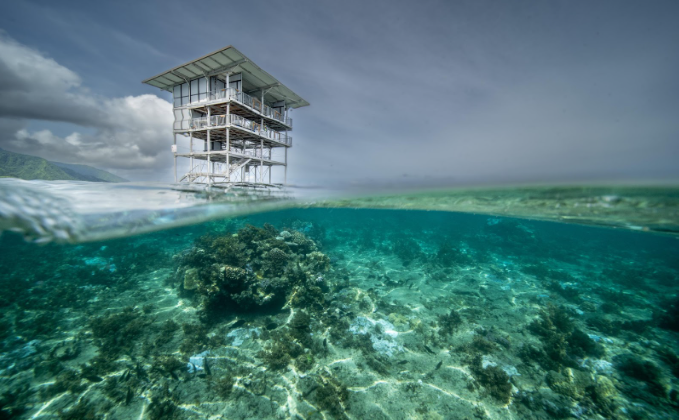
Table of Contents
- The Colonial Legacy: From the “Noble Savage” to Nuclear Testing
- A Phenomenon of Ripples: The Strategic Selection of Tēahupo’o
- The ‘Aluminum Tower’ Controversy: Mana vs. Market
- The ‘Kook’ Conundrum: Top-Down Planning meets Grassroots Resistance
- Conclusions: A 2025 Retrospective
In the fall of 2023, a video of the local Tahitian surfer Matahi Drollet pleading for the protection of the Tēahupo’o coral reef went viral, echoing Tahiti’s long colonial past. The Paris 2024 Organizing Committee’s decision to host the surfing events in the village of Tēahupo’o, Tahiti, a former French colony 10,000 miles away from the metropole, was marketed as a tribute to the sport’s Polynesian roots. However, this strategic choice unmasked a profound disconnect between the Committee’s sustainability rhetoric and the stewardship of the Mā’ohi people. Examining the controversial construction of the aluminum judges' tower and the exclusion of Mā’ohi voices, it is unveiled how elite sporting spectacles can operate as modern vehicles for environmental appropriation and the perpetuation of colonial power asymmetries.
.jpg)
The Colonial Legacy: From the “Noble Savage” to Nuclear Testing
France’s presence in Tahiti is not a recent phenomenon but a long history of imposition dating back to the 18th century. When Louis-Antoine de Bougainville reached the island in 1768, he constructed the myth of “New Cythera”, describing an exotic paradise and establishing the stereotype of the “noble savage.” This idealized image served as a veil for the formal annexation of the islands in 1880. Colonial dominance culminated during the Cold War with the operation of the Centre d’Expérimentations du Pacifique. Between 1966 and 1996, France conducted 193 nuclear tests on the Moruroa and Fangataufa atolls. This era of “nuclear colonialism” left behind an indelible legacy of environmental destruction and uncompensated cancer cases, transforming “paradise” into a laboratory for geopolitical experiments –a dynamic that resonates to this day in the organization of the Paris 2024 Olympic Games.
A Phenomenon of Ripples: The Strategic Selection of Tēahupo’o
From the very inception of the Olympic events, the Paris 2024 official press release presented the choice of Tēahupo’o as the surfing venue for the 2024 Paris Olympics as a romantic return to the sport's Polynesian roots. However, beneath the logistical arrangement, one could discern a latent strategic reaffirmation of the French global status quo. The incorporation of "overseas territories" into the Olympic fold, served, inter alia, to reinforce the narrative of national unity across its entire republic. Yet, this selection revealed a profound "communication gap". A subsistence fishing village was viewed as a stage for a global brand and the "Wave of Tēahupo’o" was leveraged to bolster the Olympic brand disconnected from the ancestral tradition of those who live there. However, for the local community, what the organizers perceived as a ‘natural stadium’ is not a commodified asset; it remains, conversely, to this day a ritual space where the Fenua (land) and Moana (sea) are held sacred.
-(1).jpg)
The ‘Aluminum Tower’ Controversy: Mana vs. Market
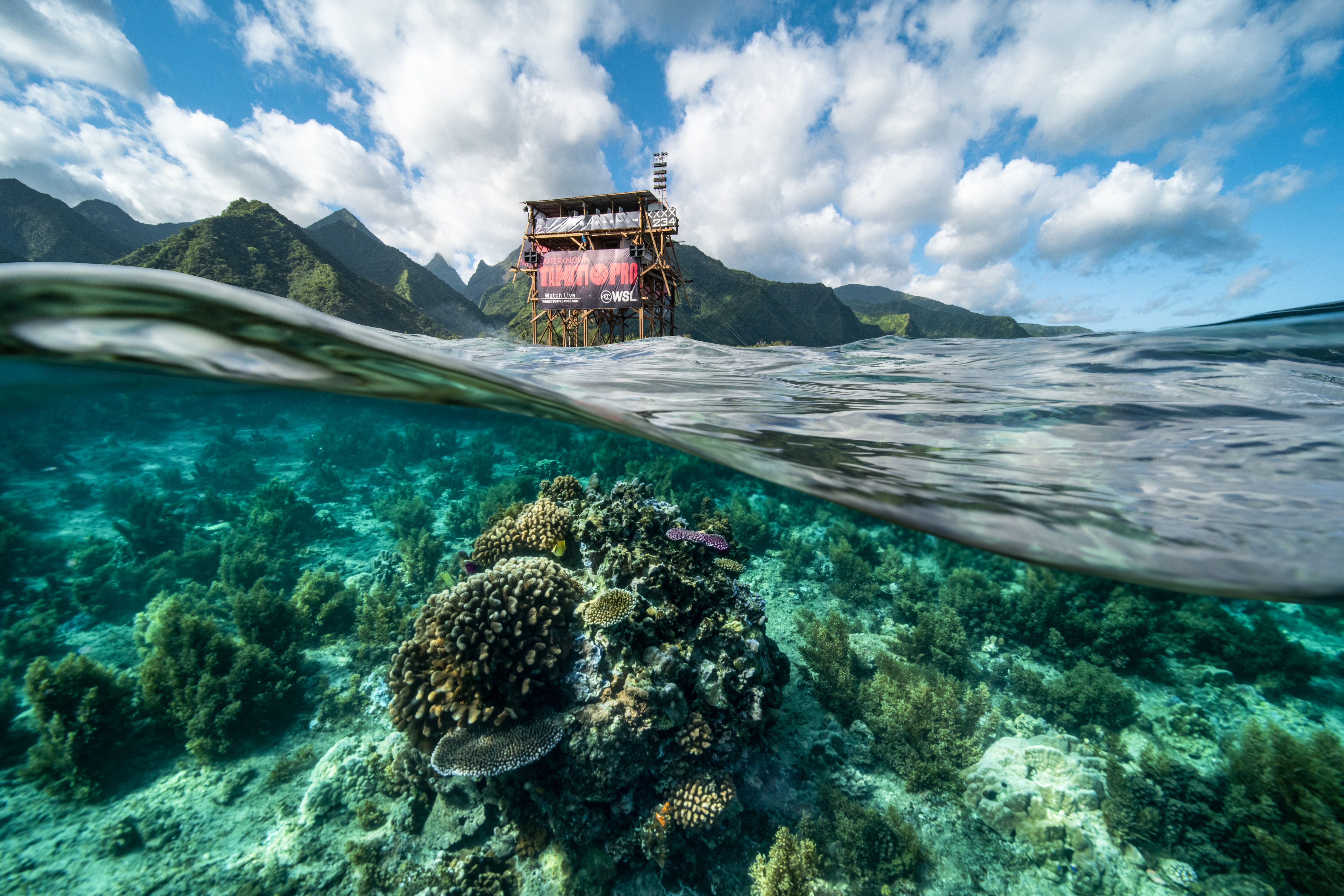
The most polarizing symbol of the Paris 2024 surfing events was the decision to replace a traditional wooden judging structure with an aluminum tower. While organizers cited safety and technical requirements –including air conditioning and high-speed internet– scientific assessments using 3D photogrammetry revealed a staggering ecological price tag. Research from the University of Hawai‘i and the MEGA Lab identified over 1,000 coral colonies from 20 different species directly in the tower's footprint. The project necessitated drilling 133 holes into the pristine reef and dredging 2,500 square meters for barge access, risking an ecological damage of an already fragile ecosystem; Beyond direct physical destruction, experts warned of a "shadow effect" that could disrupt coral photosynthesis and the dreaded risk of ciguatera, a toxic outbreak triggered by reef necrosis that threatens local food security. For the Tēahupo’o community, the tower was not a technical necessity but an invasive "metropolitan" imposition that ignored indigenous knowledge, potentially altering the very wave geomorphology that makes the "Place of Skulls" a global heritage site and reproducing patterns of past nuclear testing, which confirm the treatment of Polynesian territories as expendable resources for the metropole.
The ‘Kook’ Conundrum: Top-Down Planning meets Grassroots Resistance
Decisions regarding the 2024 Olympic surfing events in Tēahupo’o were cemented in Paris long before they reached the shores of Tahiti, with the official bid validation occurring in 2020 without the prior consultation of residents or key local stakeholders. This institutional opacity created a fertile ground for mistrust, fueled by a complex governance structure that required precarious cooperation between diverse entities. The process involved the International Olympic Committee (IOC) and the International Surfing Association (ISA) at the global level, while at the national and territorial level it necessitated a delicate balance between the French Institutional actors (Haut Commissariat), the Government of French Polynesia, and the local Municipality of Teahupo’o/Taiarapu-Ouest.
Despite this multi-layered framework, power remained highly centralized. Within this hierarchy, Paris 2024 (COJOP2024) held the final authority on the implementation of the tower, while the Government of French Polynesia retained the final authority on the legality of the construction. This top-down approach effectively sidelined local Tahitian Environmental Associations (precisely VAOT) from the core of the planning phase. The late establishment of a Paris 2024 office in Pape’ete did little to bridge the "transparency gap," leaving the community to face a fait accompli characterized by rumors and uncertainty.
The tipping point arrived in September 2023, when the aluminum tower was presented not as a shared vision, but as a non-negotiable architectural seal of Olympic legacy. The blatant exclusion of the local community and local environmental organizations from the decision-making process –accompanied by irreversible environmental consequences– sparked a powerful local pushback, culminating in the mobilization of October 15, 2023. By labeling the distant organizers as "kooks" –a term borrowed from surf slang to describe those who lack fundamental understanding and respect for the environment– the Mā’ohi people backed by the Vai Ara O Teahupo’o (VAOT) association reclaimed their own narrative launching a petition, which has garnered a total of 258.392 verified signatures to date (with the most recent entry recorded on April 9, 2026).
Their resistance, manifested through human chains and sacred "tapu" offerings, was not merely about a tower; it was a defense of indigenous sovereignty against a neocolonial "extractive logic" that prioritized metropolitan broadcast requirements over ecological wisdom. This local defiance gained momentum following the ill-fated incident of December 1, 2023, when a barge partially damaged the reef during tests, serving as a catalyst that forced the local authorities to halt preconstruction tests and reassess the damage. Ultimately, this unwavering mobilization, amplified by the December accident, compelled ‘Paris 2024’ to downsize and modify the aluminum tower's design.
Conclusions: A 2025 Retrospective
The modification of the aluminum judges’ tower may have averted an imminent “ecocide” of the sacred reef –preventing, in other words, a localized ecological collapse and the irreversible destruction of a vital ecosystem that was knowingly risked for a temporary event. However, the socio-political remnants of the 2024 Olympics continue to wash ashore. In the absence of published empirical data on the tower’s ecological footprint due to time proximity, we are left with a clear lesson: The ‘Tēahupo’o Olympic saga’ itself served as a stark reminder that sustainability rhetoric, devoid of indigenous epistemological sovereignty, is merely a sophisticated form of “greenwashing”.
Despite the reef’s resilience –bolstered by the ancestral rāhui– the scars of territorial dispossession persist, rooted in Tahiti’s unresolved status as a French Overseas Collectivity. Under this administrative framework, while some local autonomy exists, land rights remain precariously entangled in a colonial legal architecture where the French State retains ultimate jurisdiction over strategic developmental decisions. More precisely, the Tēahupo’o case reveals how global spectacles may function as a neocolonial “Trojan Horse”, where metropolitan interests infiltrate indigenous environments under the guise of global unity, bypassing the genuine self-determination of a territory still classified by the UN as non-self-governing.
The local community-led modification of the tower was a vital win, yet Mā’ohi land rights –still subject to decisions handed down from Paris– underscore a broader, sobering lesson for all colonized territories: native land rights are never fully secure when they are "granted" as concessions rather than recognized as inherent sovereignty. Τhe preservation of autochthonous natural heritage requires more than fleeting, case-by-case compromises; it demands a fundamental shift in neocolonial power structures to ensure that land is governed by those who belong to it, rather than those who merely manage it from afar.
“These are things they cannot comprehend from their offices in Paris.” (Tahurai Henry, world famous local surfer).
Resources
Paisi, E. (2025). Neocolonialism and Environmental Impact in Tahiti. University of Padova. https://thesis.unipd.it/handle/20.500.12608/98658
Anne-Charlotte Lehartel, “Hébergement à Teahupo’o, un an après les JO”, Tahiti Infos, July 23, 2025.
https://www.tahiti-infos.com/%E2%80%8BHebergement-a-Teahupo-o-un-an-apres-les-JO_a231806.html
UN Special Committee on Decolonization: Working Papers on French Polynesia https://news.un.org/en/story/2013/05/440012-general-assembly-adds-french-polynesia-un-decolonization-list
Miriam Kahn, Tahiti Beyond the postcard, (University of Washington Press, 2011).
Marie Delaplace and Pierre-Olaf Schut, Planning the Paris 2024 Olympic and Paralympic Games (Singapore: Palgrave Macmillan, 2024).
Links
How to cite this article
Elpiniki Paisi (2026), "The Olympic "Trojan Horse": Neocolonialism and Ecological Impact in Tēahupo’o", in Inclusion and Eco-Social Justice, ISSN 3035-5265, https://unipd-centrodirittiumani.it/en/topics/the-olympic-trojan-horse-neocolonialism-and-ecological-impact-in-teahupoo (consulted on 23/10/2026).
