


UN Special Rapporteurs’ Communication to Italy on immigration, international protection, and the implementation of the European Pact on Migration and Asylum (Bill No. 1869)
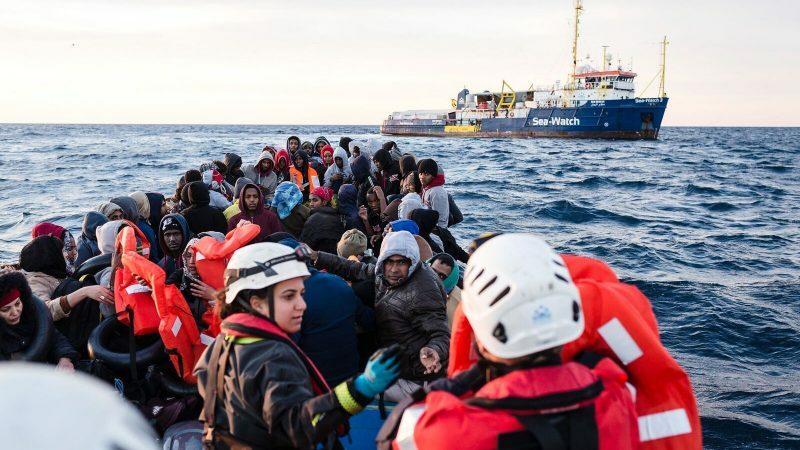
Table of Contents
- The Communication and Its Signatories
- The Content of Article 2 of Bill 1869
- The data referred to in the communication
- Obligations regarding rescue at sea under international law
- Transfers to third countries
- Freedom of association for search and rescue organizations
- The right to health and the proportionality of sanctions
- Requests to the Italian Government
The communication and its signatories
On 6 July 2026, six United Nations special procedures mandate holders sent a joint communication, reference OL ITA 1/2026, to the Italian Government, represented by the Deputy Prime Minister and Minister for Foreign Affairs, Antonio Tajani. The document focuses on Bill No. 1869, which concerns immigration and international protection legislation, as well as provisions for the implementation of the European Union Pact on Migration and Asylum, tabled on 14 April 2026 and currently under consideration by Parliament. The communication draws particular attention to Article 2 of the draft bill, highlighting the potential consequences of the new legislation on rescue at sea, the disembarkation of rescued persons in safe locations, and the activities of civil society organisations involved in search and rescue (SAR) operations.
The statement is signed by the Special Rapporteur on trafficking in persons, especially women and children, Siobhán Mullally; the Special Rapporteur on the rights to freedom of peaceful assembly and of association, Gina Romero; the Special Rapporteur on the right to health, Tlaleng Mofokeng; the Special Rapporteur on the situation of human rights defenders, Andrea Bolaños Vargas; the Independent Expert on human rights and international solidarity, Cecilia M. Bailliet; and the Special Rapporteur on the human rights of migrants, Gehad Madi.
The letter refers to eleven previous communications sent to Italy between 2019 and 2025, as well as three communications relating to the European Pact on Migration and Asylum of 14 May 2024.
Communications from special procedures do not have legally binding force: they serve as a means by which mandate holders bring to a government’s attention information received regarding possible human rights violations, requesting clarification and comments within a specific timeframe. In this context, the communication concerning Bill 1869 examines various aspects, ranging from the right to life and the duty to provide assistance to the principle of non-refoulement, and extending to freedom of association and the right to health. All these elements centre on a single fundamental point: border control and public order measures must respect the safeguards provided for under international law for people in distress at sea and for those who assist them.
The content of Article 2 of Bill 1869
Article 2 of the Bill allows the Council of Ministers, on the proposal of the Minister of the Interior, to temporarily prohibit entry into Italian territorial waters in the event of a ‘serious threat to public order or national security’. The communication describes the provision as a further extension of the regulatory framework and practices already introduced by Decree-Law 15/2023, including with regard to the designation of ports of disembarkation situated some distance from the location of rescue operations. According to decision-makers, it is primarily through this provision that security and border control requirements may influence the completion of rescue operations and the ability to bring those rescued to a place of safety.
Article 2.1.3 sets out four conditions that may justify the ban: a genuine risk of terrorist acts or the infiltration of terrorists into the national territory; exceptional migratory pressure that compromises the secure management of borders; serious health emergencies of international significance; and high-profile international events requiring extraordinary security measures. The ban has a maximum duration of thirty days, extendable once for a further thirty days and, in any event, for no longer than six months in total. The article also provides for penalties, including fines and, in the event of a repeat offence, the confiscation of the vessel.
In the communication, the four conditions are described as being formulated in broad terms and lacking precise defining criteria. The text notes that the assessment of the terrorist risk does not specify which sources of information should be used and may be based on classified information; it also notes that the concept of ‘exceptional migratory pressure’ is not accompanied by quantitative or objective parameters. In this regard, the communication cites the judgment of the European Court of Human Rights in the case of Hirsi Jamaa and Others v. Italy, according to which difficulties in managing migration flows cannot justify the use of practices incompatible with the State’s obligations under the European Convention on Human Rights.
The data referred to in the communication
The communication sets out its observations in the context of the conditions under which rescue operations take place in the central Mediterranean. According to the International Organisation for Migration’s Missing Migrants Project, at least 26,760 deaths and missing persons have been recorded along this route since 2014, with indications that the actual figure is likely to be higher. The data is available on the project’s website, updated as of 11 June 2026, the date specified in the communication itself. The text also states that, since February 2023, fifteen vessels belonging to non-governmental organisations dedicated to search and rescue have been subject to administrative detention on 41 occasions, amounting to a total of over 1,000 cumulative days of vessel detention. These facts form the factual background against which the communication assesses the possible impact of the new measures on the operational capacity of those engaged in rescue activities.
Obligations to provide assistance at sea under international law
The communication refers to Article 98 of the United Nations Convention on the Law of the Sea (UNCLOS, 1982), which imposes an obligation on the master of every ship to assist anyone in distress at sea and to act promptly to rescue persons in distress. This customary obligation applies, as stated in the communication, to all ships, including private vessels and those belonging to non-governmental organisations. It is further detailed in the SOLAS Convention and the SAR Convention, both of which have been ratified by Italy. In this context, rescue is not limited to recovering people from the water but includes completing the operation in accordance with the regulations governing their transfer and disembarkation.
The text also refers to the International Maritime Organisation’s guidelines MSC.167(78), which define a ‘place of safety’ as the point at which the rescue operation can be considered complete: where the survivors’ lives are no longer threatened and their basic needs: food, shelter and medical care, can be met. According to the communication, before disembarking at a place of safety, the people on board must be classified, in legal terms, as shipwrecked persons and not as ‘migrants’, since the regulations on irregular immigration do not apply until the rescue operation has been completed. It is on this point that one of the mandate holders’ main concerns centres: regulations governing entry into territorial waters that hinder or delay disembarkation may, in practice, affect the proper completion of the rescue operation.
Transfers to third countries
Article 2.1.6 of the draft bill provides for the transfer of individuals from vessels subject to interdiction to third countries, other than their country of origin, on the basis of agreements concluded with Italy to manage their reception, assistance or detention in designated facilities, including for the purposes of return. However, the communication highlights that this provision raises questions regarding its compatibility with the principle of non-refoulement and the prohibition of collective expulsions established by Article 4 of Protocol No. 4 to the European Convention on Human Rights, once again referring to the Hirsi Jamaa judgment, in which Italy was found to have engaged in a practice of refoulement to third countries. This observation forms part of broader concerns that measures to manage arrivals and disembarkations should not result in transfers that disregard an individual assessment of the personal risks to which these people might be exposed.
The communication points out that the prohibition of refoulement under international human rights law has a broader scope than that provided for under refugee law, extending to anyone who risks irreparable harm in the event of return, irrespective of whether they have been granted refugee status. In this regard, the text refers to Article 3 of the Convention against Torture and Articles 2 and 6 of the International Covenant on Civil and Political Rights, as interpreted by the United Nations Human Rights Committee in General Comments Nos. 31 and 36. The communication also emphasises the importance of procedural safeguards and effective review, including the possibility of a prompt and individual assessment of the risks associated with any transfer.
Freedom of association for search and rescue organisations
The communication devotes a specific section to the penalties provided for in Article 2: fines and, in the event of a repeat offence, confiscation of the vessel, insofar as they relate to non-governmental organisations engaged in sea rescue. The text notes that such organisations, as private, non-profit associations pursuing a lawful purpose, fall within the scope of protection afforded by Article 22 of the International Covenant on Civil and Political Rights, which guarantees not only the right to form an association but also the right to carry out their statutory activities. The communication cites, in support of this, the decision of the Human Rights Committee in the case of Viktor Korneenko and Others v. Belarus. This issue concerns not only the position of individual organisations, but also the impact that restrictions may have on the ability to carry out activities aimed at protecting life and assisting people in danger.
The communication emphasises that any restriction on this right must be interpreted narrowly, and must satisfy a rigorous test of necessity and proportionality. The State must demonstrate that the measure adopted is genuinely suitable for achieving the legitimate objective set, represents the least intrusive option amongst those available, and responds to a concrete rather than a hypothetical threat. The text notes that the penalties provided for, including those relating to the confiscation of the vessel, may have a significant impact on small organisations with limited resources, and highlights the risk of a deterrent effect on humanitarian rescue operations at sea.
The right to health and the proportionality of sanctions
Finally, the communication refers to Article 12 of the International Covenant on Economic, Social and Cultural Rights, which guarantees the right to the highest attainable standard of physical and mental health, noting that a ban on entry into territorial waters may have repercussions on the access of rescued persons to that right. The text also highlights, with regard to the proportionality of the penalty system, the automatic nature of confiscation in the event of a repeat offence and the broad scope of the concept of ‘repeat offence’, which, according to the communication, may encompass a variety of different violations without distinction as to the seriousness of the individual acts. In this respect too, the issue of proportionality serves as a link between the protection of rescued persons and the regulation of the activities of organisations involved in SAR operations.
Requests to the Italian Government
The communication calls on the Italian Government to provide information and comments on the observations made and on any amendments to the draft law aimed at ensuring compliance with Italy’s international obligations, as well as information on the measures taken to ensure that the regulatory framework governing humanitarian assistance at sea allows human rights defenders and civil society organisations to operate freely and safely. Taken as a whole, the observations of the special procedures do not focus on a single right or provision, but rather highlight the interplay between obligations to provide rescue, the protection of persons in danger, safeguards against refoulement and the protection of civil society’s scope for action. The key issue raised by the communication is therefore that of the compatibility between the new measures provided for in Article 2 and the international obligations applicable in situations of rescue at sea. In accordance with the practice of the United Nations special procedures regarding communications on pending legislation, the text of the letter and any response from the Italian Government will be made public on the communications website 48 hours after dispatch, and will subsequently be included in the periodic report submitted to the Human Rights Council.
Keywords
How to cite this article
Megi Likmeta (2026), "UN Special Rapporteurs’ Communication to Italy on immigration, international protection, and the implementation of the European Pact on Migration and Asylum (Bill No. 1869)", in Italian Yearbook of Human Rights, ISSN 3035-5435, https://unipd-centrodirittiumani.it/en/topics/un-special-rapporteurs-communication-to-italy-on-immigration-international-protection-and-the-implementation-of-the-european-pact-on-migration-and-asylum-bill-no-1869 (consulted on 14/10/2026).
