


Work in the Age of Robots: Substitution or Transformation?
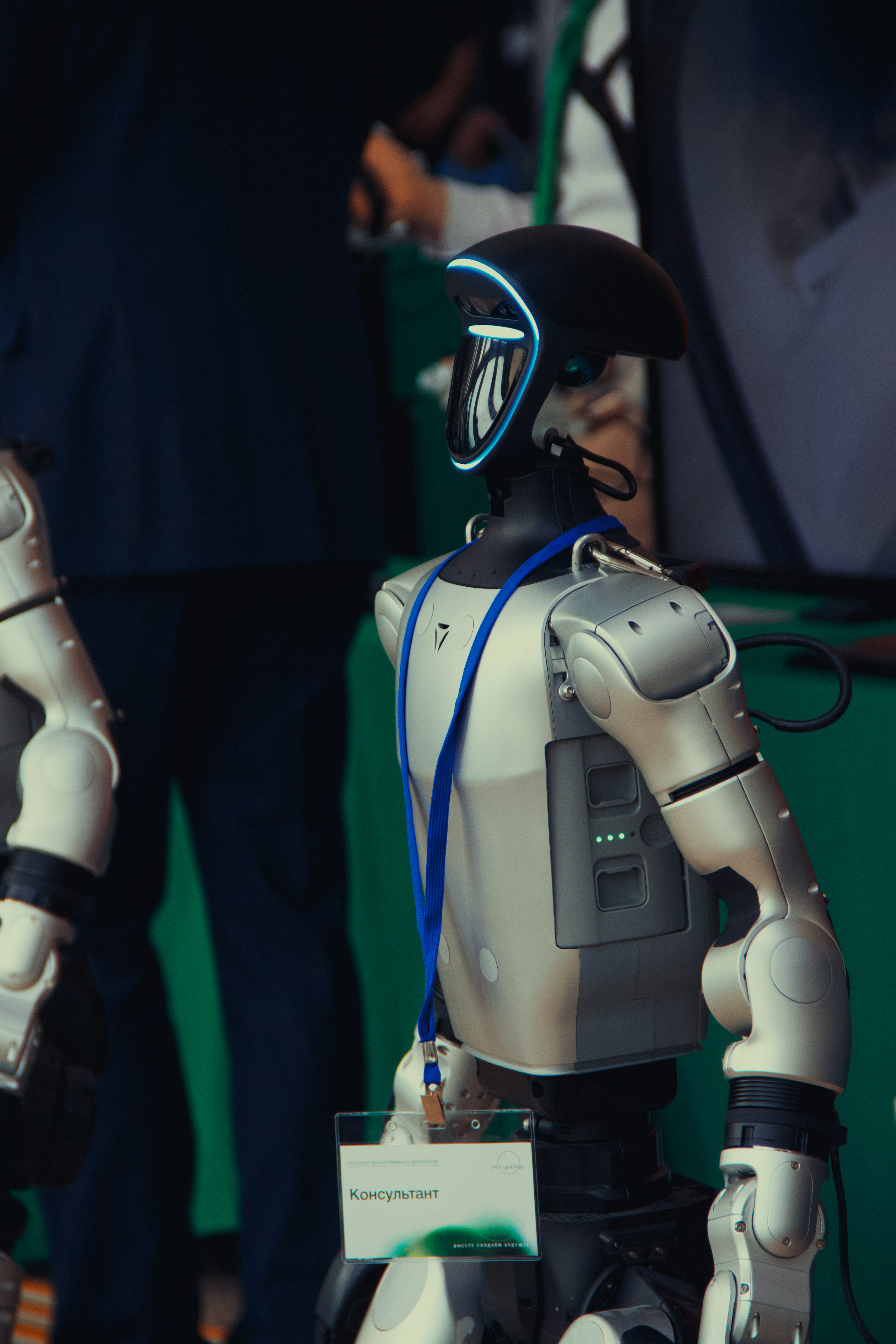
In modern and contemporary societies, work has ceased to be merely a means of economic subsistence and has become a fundamental dimension of individual identity. A professional career not only determines a person’s financial stability but also acts as a powerful indicator of social status (Gati & Kulcsár, 2021). Moreover, one’s relationship with work directly affects mental health and emotional balance, as it is often through work that individuals find purpose, fulfilment, and a sense of belonging and social usefulness.
Given this centrality, the choice of a profession represents a particularly important and complex task. This decision involves a combination of individual factors (such as interests, values, motivations, and abilities) and a broad range of contextual variables, including the social, economic, cultural, and environmental dimensions that shape each person’s reality. This inherent complexity has been significantly amplified in the twenty-first century, within a context of profound and rapid transformations in the global workforce. The technological revolution, combined with the globalisation of the economy, has led to increasing labour mobility and internationalisation, as well as the emergence of new and diversified forms of employment (Tokunova et al., 2024). The result is a constantly evolving landscape, marked by precariousness and instability in employment relationships. Careers are no longer what they were for previous generations. The traditional ideal of a “job for life” has given way to dynamic, non-linear and unpredictable trajectories. This makes both career choice and work adaptation even more challenging (Duarte et al., 2017; Ackerman & Kanfer, 2020; Fonseca et al., 2020).
Within this context of instability, artificial intelligence emerges as a deeply transformative force. It substantially increases complexity and uncertainty for workers and society. AI's effects can be seen economically, socially, and culturally. Experts are split: some see AI as a driver of disruption and displacement, while others see it as a catalyst for new opportunity and growth.
For some, the outlook is bleak. These perspectives are grounded in the observation that AI is particularly efficient in repetitive, task-oriented environments, where large volumes of data can be analysed to identify patterns and inform decision-making, as in the banking and financial sectors. This suggests that AI may begin to replace a significant number of repetitive jobs, often manual and requiring low levels of specialisation (Huang et al., 2021). However, the truly disruptive aspect of AI-driven automation lies in its capacity to operate autonomously by “learning” from data, rather than merely executing predefined instructions. This machine learning capability extends the scope of automation to highly skilled professions, increasing the risk of technological substitution even among highly qualified workers.
In the field of medical diagnosis, for instance, several AI systems (e.g., VizAI, PathAI, Buoy Health, Enlitic) are already in use. While they currently complement the work of specialists, in the future they may fully replace them in interpreting symptoms and advising on treatments. Based on such developments, a pessimistic vision of the future of work has emerged. Various economists and technology experts warn that AI may replace human labour on such a large scale that existing socio-economic structures will be profoundly disrupted, necessitating the development of new post-work forms of social organisation (Danaher, 2019).
However, not all perspectives are pessimistic. In contrast to these more catastrophic views, some economists and historians reject the inevitability of mass technological unemployment (Moghaddam et al., 2020). For these optimists, AI will not destroy jobs but rather create them. They argue that artificial intelligence will result in a net increase in employment, generating new roles and tasks that are currently beyond our imagination. This perspective draws on the historical trajectory of automation, which demonstrates that technological innovations have consistently generated new forms of employment, both directly and indirectly (David, 1990).
In a significant review of the literature combining a historical approach with a task-based perspective, Ernst and colleagues (2019) conclude that AI, unlike previous technological waves, may enhance productivity and foster more inclusive economic growth, provided that appropriate educational measures are implemented in countries integrated into global labour chains. From this optimistic standpoint, automation and the rise of artificial intelligence represent an opportunity to address productivity challenges and to initiate a new cycle of economic growth.
An additional argument challenging dystopian scenarios concerns the qualitative nature of the work that AI may enable. Several researchers suggest that AI could make both existing and emerging jobs more satisfying and humanly rewarding (Paschkewitz & Patt, 2020). At the same time, AI may significantly improve working conditions by reducing exposure to occupational risks in hazardous environments, promoting health and safety, and increasing accessibility to certain roles for individuals with disabilities or limitations. In this way, the labour market could become more inclusive and diverse. From this perspective, intelligent automation is not a threat but an opportunity to humanise work, placing technology at the service of workers’ well-being and dignity.
Thus, the debate surrounding the impact of artificial intelligence on the world of work is fundamentally polarised between two contrasting perspectives. On the one hand, pessimists view AI as a disruptive force capable of replacing human labour on a scale that could destabilise social and economic structures. On the other hand, optimists reject the notion of inevitable mass unemployment, relying on historical evidence that technological innovation has consistently created new employment opportunities. For them, AI is not a threat but an opportunity—an opportunity to improve working conditions, advance social justice, and place technology at the service of human dignity and labour rights.
Amid this debate, it becomes clear that the future is neither pre-written nor predetermined. The tension between pessimists and optimists highlights precisely this: the impact of AI will largely depend on the political, economic and social choices we make. Artificial intelligence is neither inherently good nor inherently harmful. It is not intrinsically a threat, nor is it inherently a promise. AI is a tool, and like all tools, its impact will be shaped by how societies choose to use it. Therefore, the challenge is not merely technological—it is fundamentally human. As such, it is inseparably linked to issues of social justice, inclusion and human rights.
It is therefore essential to develop educational systems adapted to these new realities—systems that not only provide technical preparation but also foster critical and informed citizenship, capable of engaging with the ethical challenges of automation. Robust reskilling policies are needed to reach vulnerable groups equitably, ensuring that the digital transition does not exacerbate existing inequalities but instead helps to reduce them. Strong social protection systems are also required to support transitions within the labour market, ensuring that no worker is left behind in a logic of “survival of the fittest”.
In this way, the balance between substitution and job creation, between automation and the enhancement of human labour, will not be determined by algorithms. It will depend on our collective capacity to anticipate change, invest in human potential, and ensure that the dignity of work is preserved and strengthened. More than a question of economic efficiency, what is truly at stake is the construction of inclusive societies—societies in which technology serves human development, rather than the reverse.
The future of work will thus reflect the decisions we make today and the courage we demonstrate as a society in placing social justice and human rights at the centre of the technological revolution.
References
Ackerman, P. L., & Kanfer, R. (2020). Work in the 21st century: New directions for ageing and adult development. American Psychologist, 75(4), 486–498. https://doi.org/10.1037/amp0000615
Danaher, J. (2019). Automation and Utopia: Human Flourishing in a World without Work. Harvard University Press
David, P. (1990). The dynamo and the computer: an historical perspective on the modern productivity paradox. American Economic Review, 80(2), 355–36.
Duarte M. E., Silva J. T., & Paixão, M. P. (2017). Career adaptability, employability, and career resilience in managing transitions. In K. Maree (Ed.), Psychology of career adaptability, employability and resilience (pp. 241–261). Springer.
Ernst, E., Merola, R., & Samaan, D. (2019) Economics of artificial intelligence: Implications for the future of work. IZA Journal of Labor Policy, 9(1), 1–35. DOI: 10.2478/izajolp-2019-0004
Fonseca, G., Silva, J. T., Paixão, M. P., Crespo, C., Relvas, A. P. (2020). Future hopes and fears of Portuguese emerging adults in macroeconomic hard times: The role of economic strain and family functioning, Emerging Adulthood, 8(6), 476–484. doi:10.1177/2167696819874956
Gati, I., & Kulcsár, V. (2021). Making better career decisions: From challenges to opportunities. Journal of Vocational Behaviour, 126, 1–18. https://doi.org/10.1016/j.jvb.2021.103545
Huang, H. (2021). Algorithmic management in food‐delivery platform economy in China. New Technology, Work and Employment, 38(2), 185–205. DOI: 10.1111/ntwe.12228
Moghaddam, Y., Yurko, H., Demirkan, H., Tymann, N., & Rayes, A. (2020). The future of work: How artificial intelligence can augment human capabilities. Business Expert Press.
Paschkewitz, J., & Patt, D. (2020). Can AI make your job more interesting? Issues in Science and Technology, 37(1), 74–78.
Tokunova, A., Zvonar,V., Polozhentsev,D., Pavlova, V., & Fedoruk,O. (2024). Economic consequences of artificial intelligence and labour automation: employment recovery, transformation of labour markets, and dynamics of social structure in the context of digital transformation. Financial Engineering, 2, 1–12. DOI: 10.37394/232032.2024.2.1
How to cite this article
Mariana Monteiro Morais (2026), "Work in the Age of Robots: Substitution or Transformation?", in Inclusion and Eco-Social Justice, ISSN 3035-5265, https://unipd-centrodirittiumani.it/en/topics/work-in-the-age-of-robots-substitution-or-transformation (consulted on 12/10/2026).
