


“A Place for Everyone?”: School Guidance, Inclusion and the Right to Choose for Students with Disabilities
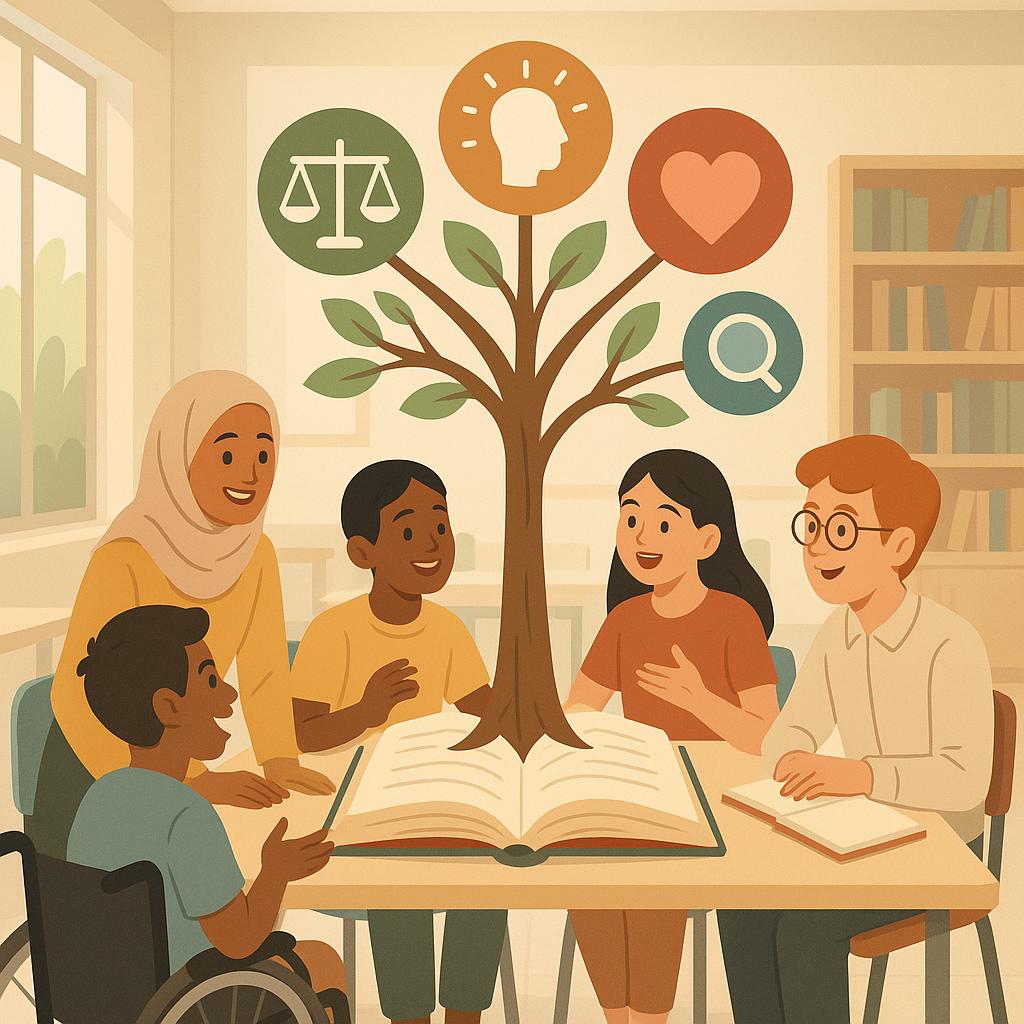
An article recently published by "Superando" on 16 September 2026, entitled “Un banco per tutti?” (“A Place for Everyone?”), reflects on the right of students with disabilities to experience educational guidance as a genuine and informed choice, rather than simply as formal access to a school. Written by Giorgio Sama, the article focuses on the transition from lower to upper secondary education and on the difficulties that can arise when students’ individual needs and preferences are not adequately considered when choosing a school.
The author contrasts two experiences. On the one hand, there is a student who can choose a secondary school through open days, aptitude tests and guidance discussions. On the other, there is a teenager with a disability whose experiences at school and individual preferences may have a much more limited influence on the choice of educational setting. For students with more complex support needs, the decision may depend primarily on distance from home, available services or the presence of familiar staff, rather than on an assessment of which educational environment would best support the student’s development.
The article also refers to data concerning inclusive education. According to the ISTAT data cited in the contribution, during the 2024–2025 school year, a life project had not yet been formally established in 55% of the cases surveyed, while only 40% of students with an Individualised Education Plan had a support teacher who reported that the plan was consistent with the life project. Continuity of support also remains a significant issue: almost six students with disabilities out of ten experienced a change in their support teacher.
These findings raise a question that goes beyond school organisation: how can the right to education be transformed into a genuine opportunity for participation and personal development? Inclusion is not limited to the physical presence of a student in a classroom. It also concerns the possibility of developing relationships, building autonomy, expressing preferences and participating fully in school life.
The article also refers to the concept of misfit, developed by scholar Rosemarie Garland-Thomson, to describe the friction that can emerge when a person encounters an environment designed around the characteristics and needs of others. Applied to education, this perspective encourages a shift from asking only what a student “can do” towards considering what the educational environment can make possible for that student.
Another important dimension concerns relationships among peers. Teachers, educators and other support professionals play an essential role, but they cannot completely replace spontaneous relationships with other students. Participation in school life also means having opportunities to build friendships, share experiences and develop a sense of belonging without relationships always being mediated by adults.
The article also addresses the question of developing and preserving specialised expertise within schools. Making existing competencies more visible – for example, in augmentative communication, low-stimulation environments or cooperation with local services – could provide families with more meaningful information when choosing a school. Such expertise, however, should not result in students being directed towards particular schools on the basis of diagnosis. The choice should remain with the family and, as far as possible, with the student.
From this perspective, educational guidance can become a tool for strengthening self-determination, inclusion and participation, taking into account not only the chosen field of study but also the environments, relationships and conditions that can support each student’s educational pathway.
The reflection published by "Superando" therefore highlights a fundamental principle: ensuring that everyone has the right to enter school is not sufficient if students are not also guaranteed the right to participate fully in school life. Meaningful inclusion requires continuity, expertise, attention to individual preferences and educational environments capable of transforming presence into genuine participation.