


Council of Europe’s Group of Experts on Action against Trafficking in Human Beings (GRETA): the latest report examines the relationship between artificial intelligence and the fight against human trafficking
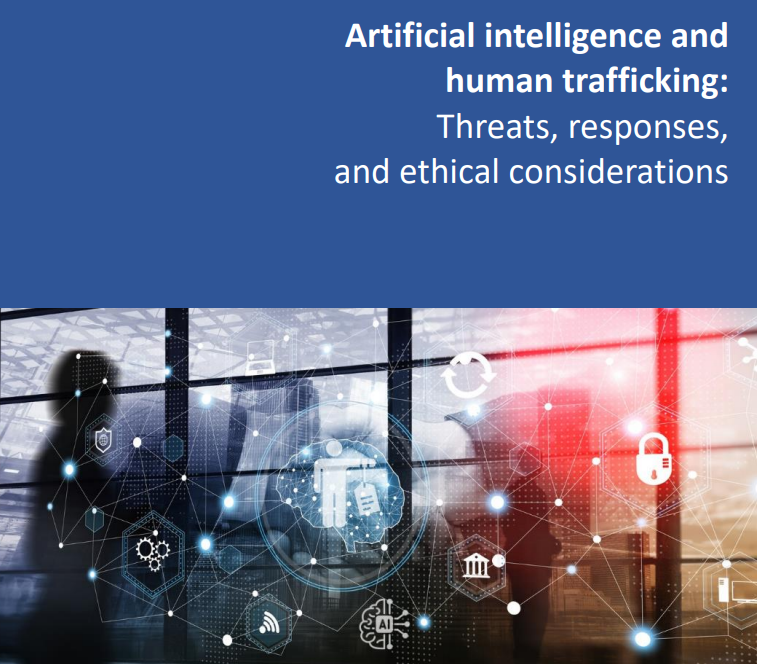
In September 2026, the Council of Europe's Group of Experts on Action against Trafficking in Human Beings (GRETA) and the Council of the Baltic Sea States' Task Force against Trafficking in Human Beings (CBSS-TFTHB) jointly published the policy brief "Artificial Intelligence and Human Trafficking: Threats, Responses, and Ethical Considerations".
As with other technologies, AI may be deployed to both advance and undermine human rights, institutional resilience, and the rule of law. While AI has the potential to strengthen authorities' capacity to detect trafficking patterns, support investigations, and enhance cross-border cooperation, it may equally amplify existing vulnerabilities, inequalities, and power asymmetries that traffickers exploit.
The policy brief examines how criminal actors leverage AI across multiple stages of their operations, including the recruitment of victims, the creation of fake profiles, the production of fraudulent documents, and identity theft. Conversely, it highlights the ways in which anti-trafficking professionals employ AI to advance their work, including facial recognition to identify victims and perpetrators, the provision of assistance and advice to victims, and the gathering and analysis of information throughout the investigative process.
These benefits, however, are accompanied by risks of ethical missteps. Given the rapid pace of AI development and the breadth of its societal impact, grounding its use in a robust ethical framework is essential to ensure that AI contributes to anti-trafficking action in comprehensive, inclusive, and effective ways. At its core, anti-trafficking AI should adopt a human rights-based approach, whereby human rights considerations are integrated throughout every stage of an AI tool's life cycle. To this end, researchers and AI experts have developed various sets of ethical principles to guide responsible use. The policy brief identifies six such principles underpinning a human rights-based approach: accountability, transparency and explainability, fairness and non-discrimination, human control of technology, privacy, safety and security, and professional responsibility. These principles help address ethical challenges associated with AI use, including discriminatory bias, breaches of privacy, and over-reliance on AI-generated conclusions.
Accountability, in particular, requires that AI developers be held responsible for the impacts of their tools, with regulation playing a central role in establishing standards for responsible use and limiting the potential misuse of AI by criminal actors. At the international level, relevant regulatory frameworks include the UN Global Digital Compact, the UNESCO Recommendation on the Ethics of Artificial Intelligence, the Council of Europe Framework Convention on AI, and the EU AI Act. Among these, the Framework Convention and the EU AI Act constitute legally binding instruments, although the former remains pending ratification.
The advancement of AI is unlikely to slow in the coming years, nor is the debate surrounding its challenges and opportunities within anti-trafficking work. In this evolving context, prioritising inclusive collaboration, responsive governance, and equitable access to technology will be essential to the design of AI systems that contribute meaningfully to global efforts to combat human trafficking.