


International Court of Justice: advisory opinion recognizes the right to strike as protected under the ILO Convention
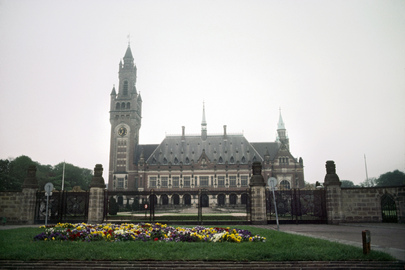
On 21 May 2026, the UN International Court of Justice (ICJ) delivered a landmark advisory opinion, ruling that the right to strike is protected under the Freedom of Association and Protection of the Right to Organise Convention (No. 87), one of the core conventions of the International Labour Organization (ILO), adopted in 1948. The ruling marks a historic moment in international labour law, settling a long-running dispute between workers and employers worldwide over the scope of one of the most fundamental treaties governing labour rights.
The case had been referred to the Court by the ILO's Governing Body in November 2023, after years of deep disagreement among the agency's three core constituents, governments, employers, and worke, over whether Convention No. 87 protects the right to strike, even though the treaty contains no explicit mention of strike action. At the heart of the dispute was a deceptively simple question: does the right to organize under the convention also include the right of workers and their organizations to take strike action?
Employers' groups argued firmly that the convention contains no provision whose ordinary meaning implies such a right, pointing to the treaty's drafting history as evidence that there was never any intention to include strike action within its scope. Workers' representatives, on the other hand, contended that the right to strike is inherent in freedom of association and has long been recognized by ILO supervisory bodies, making it an inseparable part of the convention's protections.
The Court acknowledged that Convention No. 87 "does not contain an explicit reference to the right to strike", but stressed that the absence of such a provision "does not necessarily mean that the issue is excluded" from the treaty. The judges found that strike action could reasonably fall within the ordinary meaning of workers' organizations' activities, as referenced in the convention, alongside provisions protecting the right of workers and employers to form organizations and defend their interests. However, the Court was careful to emphasize that its opinion does not define the exact scope, precise content, or conditions for the exercise of the right to strike, leaving those questions open for further deliberation by the ILO and its constituents.
This case was only the second time in ILO history that a question concerning the interpretation of an international labour convention had been referred for an advisory opinion, and remarkably, it was the first such request to the ICJ since its creation in 1945. While ICJ advisory opinions are not legally binding judgments, they carry enormous legal and political weight, shaping national legislation, international negotiations, and ongoing debates about the rights of workers around the globe. The ILO's Governing Body is now expected to consider the Court's opinion and determine any appropriate follow-up at its November 2026 session, where the ruling's practical implications for international labour standards are likely to be at the center of discussion.