


International Day of Multilateralism and Diplomacy for Peace, 24 April 2026
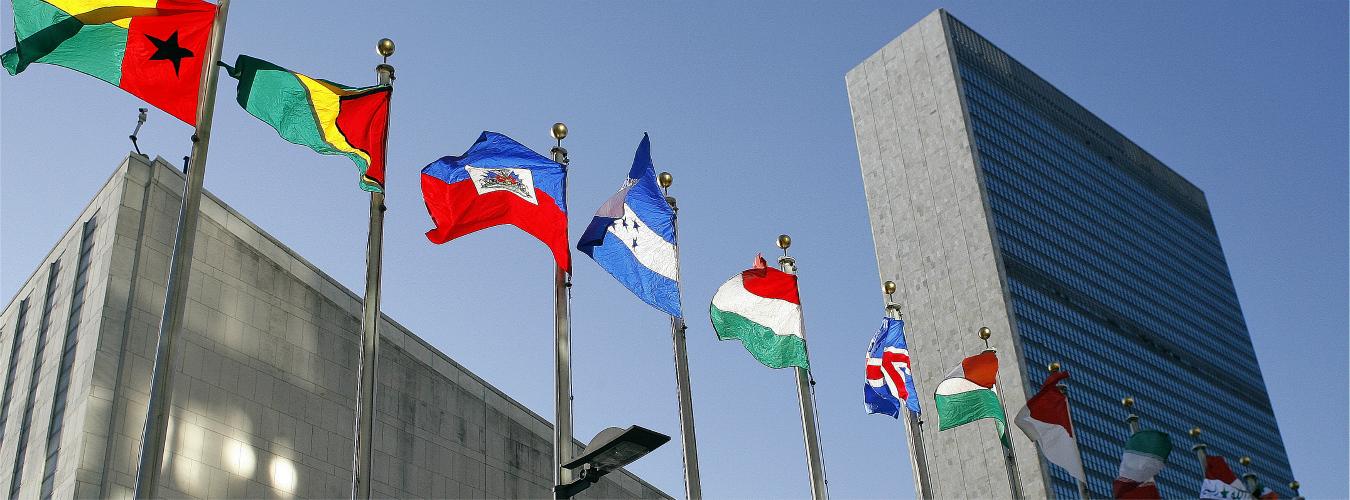
Through the resolution International Day of Multilateralism and Diplomacy for Peace (A/RES/73/127), adopted on 12 December 2018, the United Nations, on 24 April, calls on all Member States, as well as organizations within its structure, to honor the International Day of Multilateralism and Diplomacy for Peace.
Multilateralism, often defined in opposition to bilateralism and unilateralism, is, strictly speaking, a form of cooperation between at least three States. It is based on founding principles of consultation, inclusion and solidarity, ensuring sustainable and effective cooperation by continuously guaranteeing all actors the same rights and obligations. Indeed, multilateralism is both a method of cooperation and a form of organization of the international system.
The UN Charter requires that countries with disputes that could "endanger the maintenance of international peace and security" shall first of all try to "seek solutions through peaceful methods such as "negotiation, enquiry, mediation, conciliation, arbitration, judicial settlement, resort to regional agencies or arrangements, or other peaceful means of their own choice." It envisages roles for the Secretary-General, the Security Council and the General Assembly, among others, in the peaceful settlement of disputes; and UN resolutions and practice have further contributed to the development of the peacemaking functions of the Organization.
During the General Debate in September 2018 many world leaders reaffirmed their commitment to multilateralism and international peace and security. Furthermore, these efforts were further reinforced in the discussion during the High-level Dialogue on Renewing the Commitment to Multilateralism on 31 October 2018.
With the adoption of the Pact for the Future in September 2024, during the Summit of the Future, world leaders reaffirmed their commitment to peace, sustainable development, and the protection of human rights. In today's world, indeed, the values of multilateralism and diplomacy are more crucial than ever.
Multilateralism is an integral part of the United Nations. Indeed, the UN serves its member states by helping them reach agreements on important issues for humanity. The UN Charter establishes it as a “centre for harmonizing the actions of nations in the attainment of these common ends” in order to eliminate “threats to the peace” through the realization of “international cooperation”. In this regard, it must work for “respect for human rights and for fundamental freedoms for all”.
Over the years, multilateralism has evolved within the UN. For example, the number of member states has increased from 51 to 193, and new non-state actors, such as non-governmental organizations (NGOs), international organizations (IOs), as well as private actors, have joined the multilateral framework. This is exemplified by the presence of around a thousand observer NGOs and IOs at the UN today.
Looking at the impact factor, the multilateral foundation on which the UN is built has facilitated significant successes so far, from the eradication of smallpox in the health sector, to the conclusion of landmark international treaties and agreements.