


On mission with Doctors without borders, a workshop on humanitarian action in Sudan, November 2025
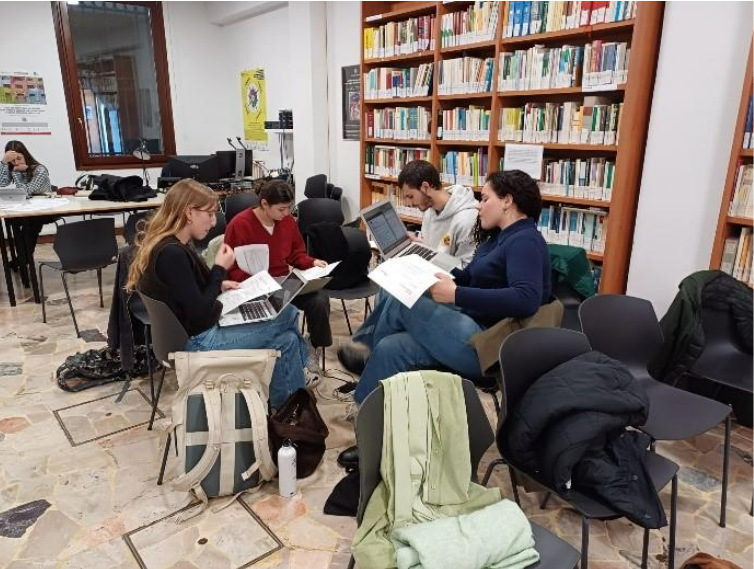
Following the success and strong participation recorded in the previous edition in April 2025, Médecins Sans Frontières (MSF) returned to the Antonio Papisca University Center for Human Rights at the University of Padova to offer a new workshop dedicated to humanitarian action. The workshop, divided into three sessions (November 4, 6, and 20, 2025), involved a group of 24 students from the master's degree course in Human Rights and Multi-Level Governance attending the International Law of Human Rights course (Prof. Paolo De Stefani). More than 50 applications were received, and a selection process was therefore necessary, involving not only the professor but also representatives of the Padua group of MSF Italy.
The aim of the initiative was to offer participants an opportunity to discuss and reflect on the operating methods, constraints, and challenges of humanitarian action in situations of armed conflict.
Once again, the scenario identified was Sudan. International concern about the conflict and the resulting humanitarian catastrophe engulfing this country has further increased following the escalation of clashes in the summer and fall of 2025. This scenario has made it even more urgent to initiate a shared reflection on the necessity and difficulties of humanitarian intervention.
A significant change from the previous edition was the expansion of the workshop, which went from a single meeting to a three-part cycle, including structured reflection sessions both before and after the simulation afternoon on 6 November.
The workshop was therefore divided into three main stages: a preparatory meeting, the simulation and, finally, a concluding session for feedback and discussion.
Introductory meeting
The first meeting, held on 4 November and organised by Sara Lina Kamoun, PhD student in Human Rights, Society and Multilevel Governance at the University of Padua, involved participants in a seminar aimed at reconciling theory and practice in humanitarian action in armed conflict contexts.
The meeting was divided into two main parts. In the first part, students were given an overview of international humanitarian law, its fundamental principles and the ecosystem of actors involved in assisting populations in crisis. The second part, which was more practical in nature, explored the concrete application of these principles in the field, highlighting how their observance is never automatic but must contend with operational complexities, real obstacles and the need to compromise and manage emergency situations pragmatically.
This preparatory meeting allowed participants to prepare for the simulation in an informed manner, providing them with conceptual and practical tools to deal with the real cases presented in the second meeting.
Simulation
The second event, held on 6 November, was the centrepiece of the entire series of meetings. It was led by Giuseppe De Mola, researcher and MSF worker, with the participation (via online link from Geneva) of Vittorio Oppizzi, coordinator of MSF missions in Sudan.
The afternoon focused on simulating a humanitarian mission in the complex scenario of Sudan. The students, acting as MSF humanitarian workers, were able to test their skills in international law and humanitarian action, discussing and quickly making crucial decisions.
After a brief introduction to the work of MSF and the current humanitarian crisis in Sudan, the participants, divided into groups, engaged in the analysis and resolution of real cases drawn from MSF's field experience. The four members of each group were assigned specific roles within an MSF humanitarian team: the field communications manager, responsible for defining and supervising communication strategies; the humanitarian affairs manager, responsible for advocacy activities; the project coordinator, responsible for ensuring that activities are carried out in line with MSF's ethical principles and intervention procedures; and the project medical reference, responsible for planning and monitoring medical activities and supervising the human and material resources necessary to provide care.
The aim of the simulation was to analyse and resolve a series of concrete dilemmas related to the complex economic and social situation in Sudan, with particular attention to the Darfur region, displaced persons in the Zamzam refugee camps and tensions concerning the Masalit ethnic group. Through group dynamics, participants were able to engage with the complexity of humanitarian work, experiencing first-hand the challenges of making effective, ethical and rapid decisions in crisis contexts.
At the end of the simulation, each group presented their solutions to the MSF team in Padua and to the programme coordinator in Sudan, Vittorio Oppizzi, who provided extensive comments and additional updates, interacting with the students. The students thus had the opportunity to engage with professionals who work daily in the scenarios described and to discuss the choices actually made by the organisation.
Follow up
The last session, held on November 20, 2025, provided an opportunity to critically review the experience gained during the simulation, highlighting not only the technical aspects, but above all the ethical, emotional, and deliberative implications.
One of the most recurring themes was that of moral stress and decision overload: many students recognized how complex it is to compromise between what is considered “right” and what is actually achievable, given the context in which one operates. For some of those present, learning about the decisions that MSF had actually made in the situations described did not produce the expected ‘reassuring’ effect: the idea that there is a ‘right way’ to proceed proved to be an illusion. The experience led them to understand that, in situations where nothing is completely under control, the key is not to find the perfect solution to the problem, but to act in an informed, responsible, and consistent manner with humanitarian principles, aware of the risk of making mistakes and of seeing one's choices overtaken by developments on the ground.
Another point for reflection concerned the growing skepticism towards the international regulatory framework, especially in conflict scenarios where, often, the only possible choices oscillate between “the wrong decision” and “the worst decision.”
Another clear point that emerged was the dichotomy between the security needs of humanitarian personnel and the mission to protect communities in danger. The simulation made it clear that every decision involves a delicate balance between individual risks, responsibility towards the communities being assisted, and operational limitations imposed by the context.
Lessons learnt
The students particularly appreciated the opportunity, through simulation, to transform the skills acquired in the classroom into concrete tools for managing the decision-making processes typical of humanitarian intervention.
Taking on the roles of field workers, they grappled with the complexity of finding a credible balance between rationality and empathy, learning to make pragmatic decisions without forgetting their mission and the core values of MSF.
As one participant said, “the use of role-playing and the feedback provided by the experts significantly strengthened the involvement of those present and their understanding of the ethical and operational aspects of the dilemmas presented.”
Giuseppe De Mola expressed great satisfaction with the success of the simulation. One of the main objectives was fully achieved, namely to show that medical-humanitarian action is not limited to healthcare alone, but requires a variety of roles, activities, and organizational processes that are essential to ensure its overall effectiveness. MSF's priority remains to provide healthcare assistance to populations in need, but to do so, it is necessary to continuously assess the impact of its work, ensure the safety of its teams, and constantly negotiate its presence in the field.
On this occasion, De Mola focused on two current concerns. The first relates to the loss of protection for healthcare facilities, which are increasingly becoming targets for strategic attacks. This erosion of protection has a direct and profound impact on MSF's work. To mitigate the risk, the organization is implementing various measures, based on a logic of deconfliction, which includes opening channels of communication with all parties to the conflict, sharing information about its personnel (medical and non-medical), activities, and areas of operation, in order to obtain guarantees and reduce the likelihood of attacks.
The second concern, equally urgent, relates to the drastic downsizing of the humanitarian sector due to funding cuts by governments worldwide. This “reset” of the sector risks compromising the ability of organizations to respond to crises in a timely and continuous manner, raising profound questions about the sustainability of interventions in the coming years.
At the end of the follow-up, the Padua branch of MSF also spoke, offering a brief overview of its ongoing activities in the area. MSF, like other humanitarian organizations, works daily alongside communities in need, not only in areas of armed conflict, but in any other territory experiencing health shortages.
This second edition of the MSF workshop, in collaboration with the Department of Political Science, Law, and International Studies and the Human Rights Center at the University of Padua, allowed participants to transform practical experience into critical awareness, adding new dimensions to their understanding of action in crisis contexts. The hope is to be able to repeat the initiative in the future and to see ever-increasing enthusiasm and participation, elements that characterized both the first editions.
The experience of the Padua workshop was widely reported in the November 2025 issue of MSF Italy's newsletter “Per Principio,” with articles by Sara Lina Kamoun and Shahnawaz Bhutto.