


Reporters without borders: published the 2026 press freedom index
The 2026 RSF World Press Freedom Index delivers a critical verdict on the state of journalism worldwide: for the first time in the index's 25-year history, more than half of the world's countries (52.2%) now fall into the "difficult" or "very serious" categories for press freedom. The overall average score across all 180 countries and territories has never been lower, and less than 1% of the world's population now lives in a country where press freedom is considered "good," compared to 20% in 2002. Journalists continue to be killed and imprisoned for their work, but the tactics used to undermine press freedom are also evolving: hostile political discourse toward reporters, a faltering media economy, and laws increasingly weaponised against the press are collectively asphyxiating independent journalism on every continent.
The sharpest decline this year has been in the legal indicator, which deteriorated in more than 60% of states, 110 out of 180 countries. The growing misuse of national security laws, anti-terrorism legislation, and emergency frameworks to silence journalists represents a truly global phenomenon, affecting not only authoritarian regimes like Russia, China, Belarus, and Iran, but increasingly democracies as well. In Türkiye, charges of "disinformation" and "insulting the President" are routinely used to repress media professionals. The rise of abusive strategic lawsuits (SLAPPs) further compounds the problem, affecting countries as varied as Bulgaria, Guatemala, and even France. In more than 80% of countries analysed, protection mechanisms for journalists are considered non-existent or ineffective.
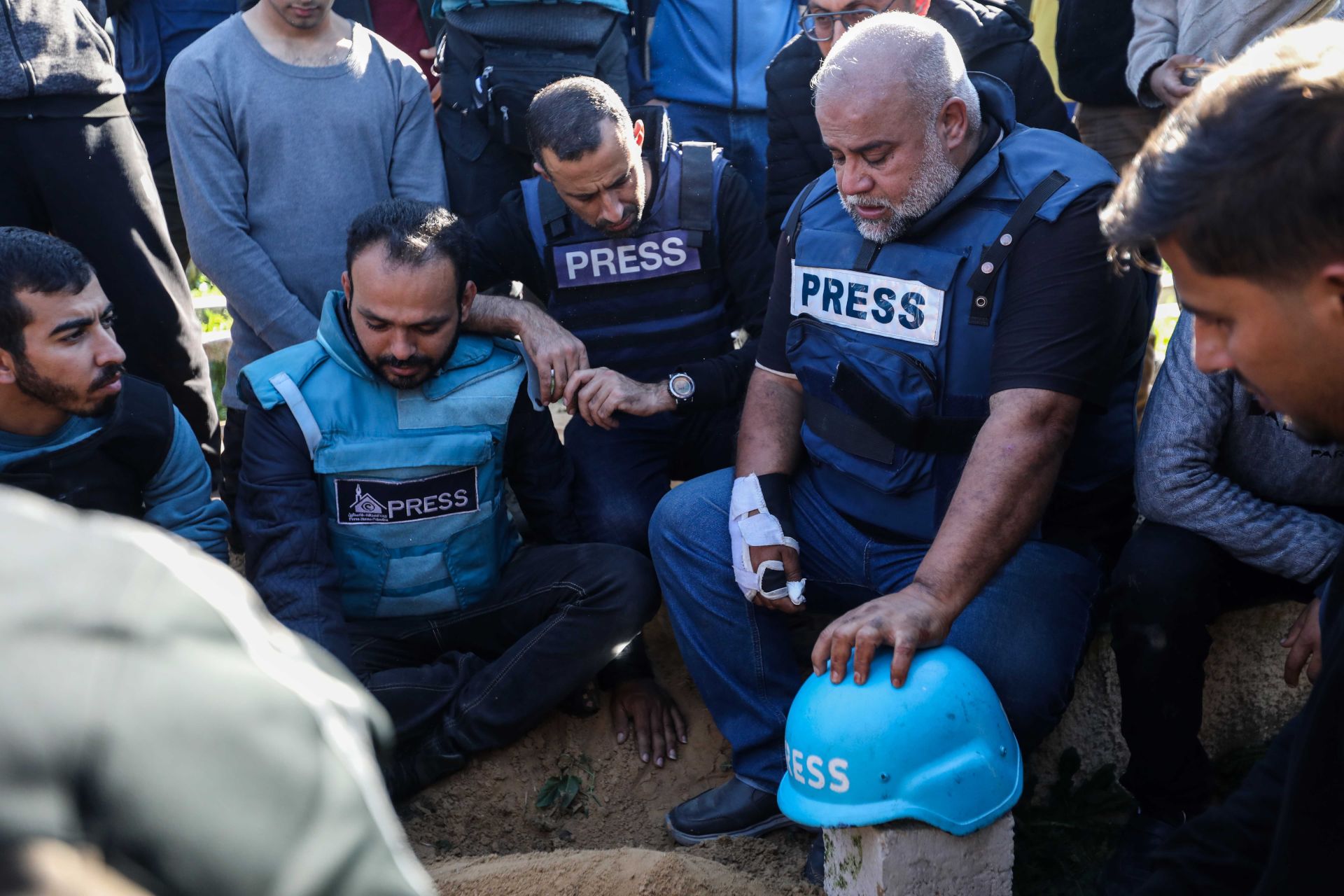
Armed conflict continues to devastate press freedom in several regions. In Gaza, more than 220 journalists have been killed by the Israeli army since October 2023, including at least 70 slain while actively reporting. Elsewhere, long-standing authoritarian regimes keep press freedom in a near-permanent deadlock: Eritrea, North Korea, and China occupy the bottom of the Index as they have for years. Some countries have seen dramatic long-term collapses: Hong Kong (140th, -122 places over time), El Salvador (143rd, -105 since 2014), and Georgia (135th, -75) tell a story of accelerating repression. The steepest single-year fall belongs to Niger (-37), reflecting the broader collapse of press freedom under armed groups and military juntas. One rare bright spot is found in Syria, which climbed 36 places following the fall of the Assad dictatorship in December 2024.
In the Americas the situation has deteriorated sharply. The United States dropped seven places to 64th as President Trump transformed attacks on the press into systematic policy, while cuts to the US Agency for Global Media led to the closure or downsizing of key international broadcasters. Argentina and El Salvador mirrored this trend under their Trump-aligned leaders. Venezuela, Cuba, and Nicaragua remain among the most repressive environments for journalism in the area.
Against this bleak panorama, Norway holds the top spot for the tenth consecutive year, while the 2026 Index stands as the most alarming in its 25-year history, a clear signal that without urgent structural action, the global free press may be approaching a point of no return.