


The provision of the security decree that "rewards" lawyers for facilitating the voluntary return of their clients undermines legal professional ethics and the rule of law
On 24 February 2026, the Italian Government adopted Decree-Law No. 23, concerning "urgent provisions on public security, investigative activities of the judicial authority in the presence of justifying circumstances, the operational capacity of the police forces and the Ministry of the Interior, as well as immigration and international protection". Parliament has 60 days to convert it into law and make its provisions — already in force — permanent.
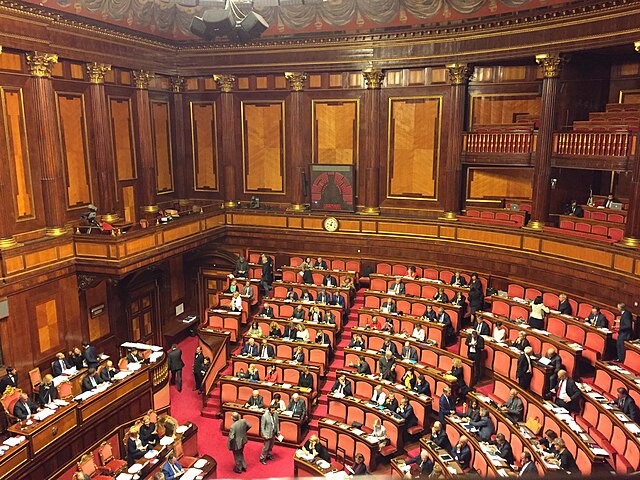
On 17 April 2026, the Italian Senate approved the decree text with certain amendments. One of them, in particular, has drawn fierce criticism.
Article 30-bis of the decree-law, inserted into the conversion act, provides that the Government shall transfer €246,000 to the National Bar Council for 2026, and €492,000 for each of the two following years, in order to "compensate" lawyers who assist their clients in participating in an assisted return programme, provided that the return actually takes place. It has been calculated that such "compensation" will amount to approximately €615 for each return successfully completed.
One may consider it legitimate for a Government (with the endorsement of the Legislator) to attempt to incentivise a measure — that of the voluntary return of irregular migrants or asylum seekers — which it deems preferable to granting them the protection to which they would be entitled. However, it is unacceptable for a Government to attempt to do so by "enlisting" the very lawyers of those migrants in support of its own policy, given that those lawyers have a duty to provide the best possible professional service in the exclusive interest of their clients. This applies equally in cases where they have been appointed to represent asylum seekers at the State's expense. (It should also be noted that the security decree has repealed the provision allowing for legal aid in expulsion proceedings.)
Article 24 of the Italian Constitution establishes that "All persons may take legal action to protect their individual rights and legitimate interests. The right to defence shall be inviolable at every stage and instance of legal proceedings. The indigent shall be assured, by appropriate measures, the means for legal action and defence in all courts."
And Article 13 of the European Convention on Human Rights reaffirms that "Everyone whose rights and freedoms as set forth in this Convention are violated shall have an effective remedy before a national authority notwithstanding that the violation has been committed by persons acting in an official capacity."
Lawyers are the guarantors of these rights. To offer them "compensation" for facilitating the pursuit of a government policy, even at the expense of their clients' interests, implies either a poor regard for lawyers' ethical and professional integrity or a belief that the safeguards of the rule of law may be relaxed when it comes to migrants. In either case, the conflict between such a provision and constitutional and international norms appears strikingly evident and must be remedied.