


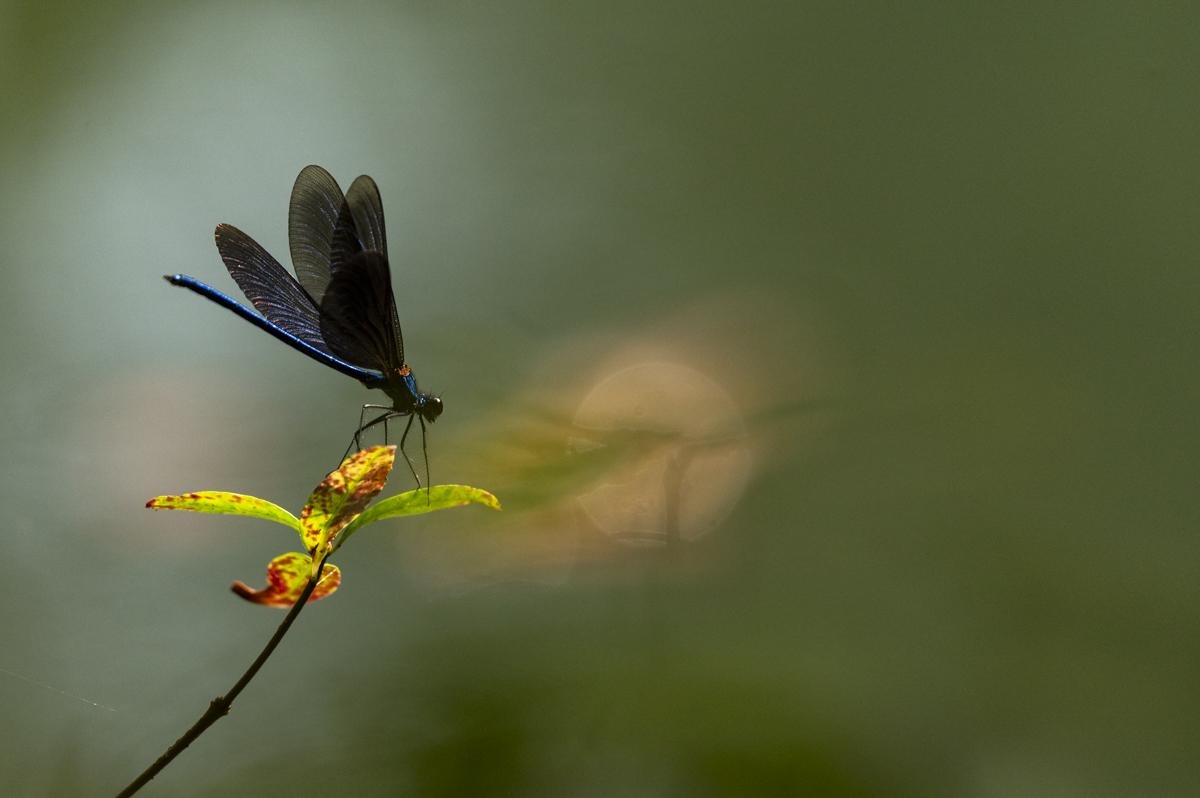
Damselfly
Calopteryx splendens, commonly known as the Banded Demoiselle, is also referred to as a damselfly. It is one of the most common species and can be observed from April to September along watercourses.
During the Carboniferous period, the Earth was covered by vast rainforests. The climate was warm and humid, and the atmosphere contained high levels of oxygen. One theory suggests that this elevated oxygen concentration contributed to the gigantism of invertebrates and insects, including certain millipedes and ancient dragonflies. With a wingspan of almost 70 centimetres and a body length of around 50 centimetres, they may have been among the largest insects ever to appear on Earth.
To survive across different geological eras, dragonflies gradually reduced their size, while demonstrating an extremely efficient biological structure and preserving their remarkable predatory and flight abilities.
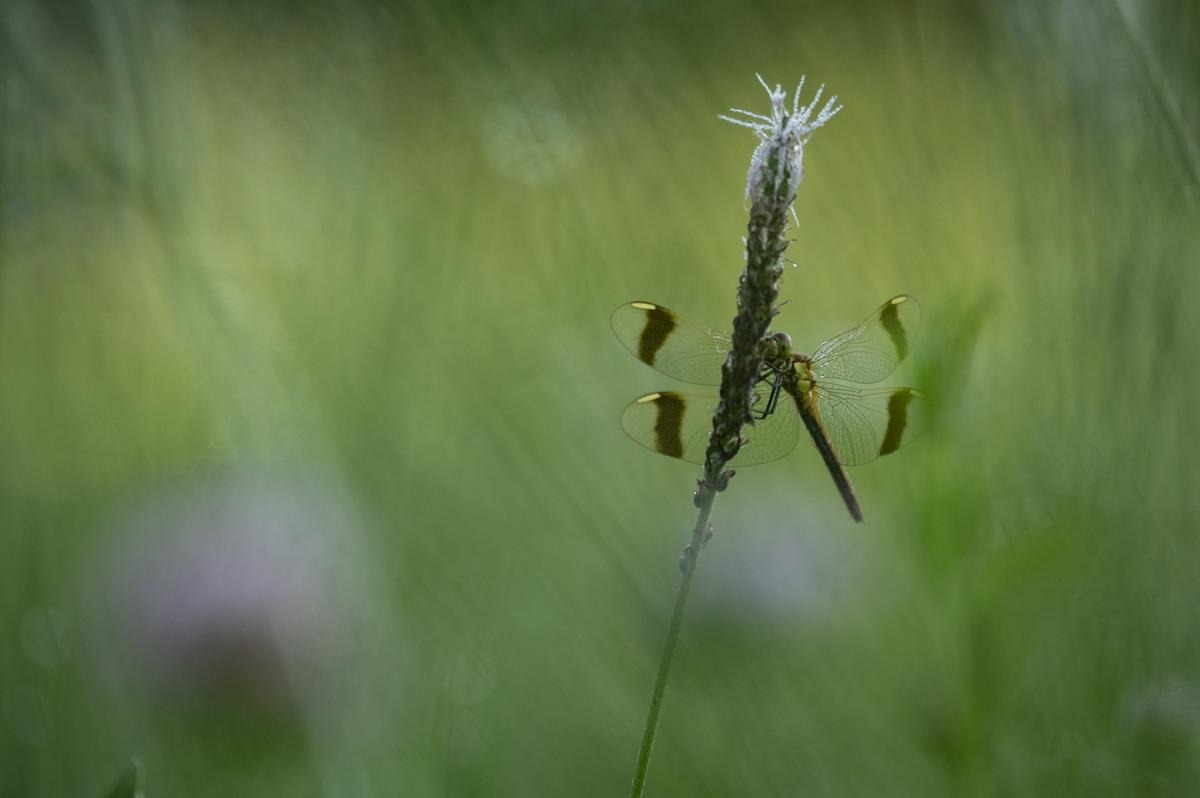
Sympetrum pedemontanum
Commonly known as the Banded Darter. At both European and Italian level, this species is classified as of Least Concern. It can be observed from late June to October.
The dragonfly is distinguished from other insects by its long, slender abdomen, composed of several segments, and by its two pairs of brightly coloured membranous wings. It is capable of flying at great speed and moving in every direction with extraordinary rapidity and agility, to the extent that it can catch prey and return to its perch in less than a second and a half.
Its wings move independently, allowing the insect to glide or even fly backwards, a rare manoeuvre in nature. Dragonflies are also formidable hunters thanks to their enormous compound eyes, made up of around 30,000 facets, which provide them with panoramic vision. Insects and mosquitoes, on which they eagerly feed, stand little chance against these small flying dragons, which unknowingly perform the role of a natural insecticide.
Yet, as always in nature, they too are prey: birds and amphibians are among their predators.
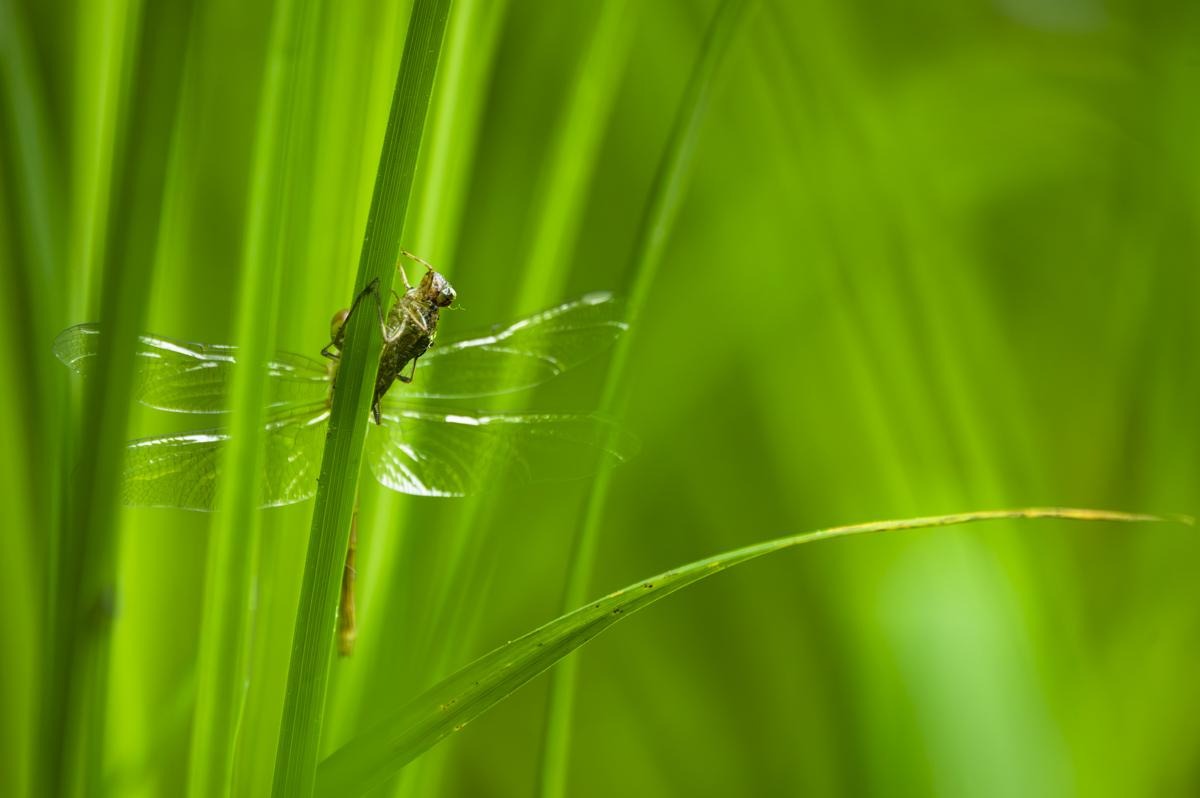
Transformation
A larva has just completed the final stage of its aquatic life and transformed into a dragonfly, leaving behind its outer casing, known as an exuvia.
Dragonflies lay their eggs on aquatic plants or disperse them directly into the water. Once the larva emerges from the egg, it lives in water for a period ranging from one to five years, feeding on plants, insects and tadpoles, and undergoing several moults. At the end of the final moult, the larva climbs up the stem of a plant and allows its outer covering to dry in the sun. As it hardens and splits, the insect slowly emerges, transformed into a splendid dragonfly, ready to fly away.
But this beauty comes at a high price: the adult dragonfly has only a few weeks to live, mate and reproduce.
In the Mediterranean basin, Italy holds the greatest richness of dragonfly diversity, with 93 recorded species. Around twenty of these are endangered. Their habitat—natural wetlands—is unfortunately decreasing in our country. Dragonflies are excellent indicators of environmental quality, as their presence and diversity signal clean waters and a high level of biodiversity. Unfortunately, they are also highly sensitive to environmental change, and their decline indicates degradation or pollution.
Symbols of freedom, peace and the search for truth, dragonflies are still considered sacred animals in several cultures. This heritage of biodiversity and beauty must be protected and preserved by safeguarding, as much as possible, the remaining wetlands: essential places for the reproduction of these extraordinary insects.
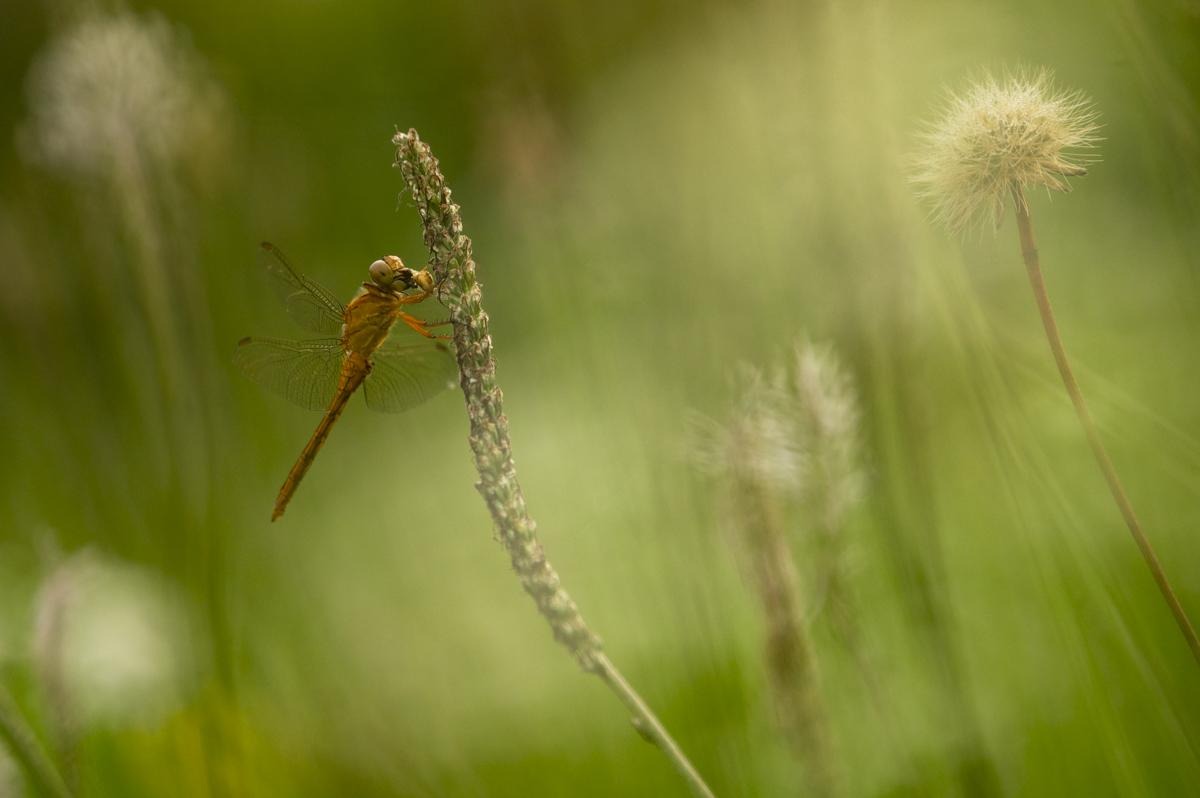
Predation
Highly skilled hunters, once they have captured their prey, dragonflies return to their perch, taking all the time they need to devour the unfortunate victim of the moment.
Keywords
How to cite this article
Diana Crestan (2026), "Ancient dragons", in Inclusion and Eco-Social Justice, ISSN 3035-5265, https://unipd-centrodirittiumani.it/en/topics/ancient-dragons (consulted on 09/10/2026).
