


From refugees to labour migrants: an analysis of syrians’ enhanced vulnerability in Lebanon (2011-2024)
Introduction
Since the outbreak of the Syrian uprisings in 2011, armed violence and persecution from both the al-Assad regime and non-state armed groups have displaced at least 14 million people within Syria and beyond. In Lebanon, approximately 1.1 million Syrians, between registered and unregistered, remain in a precarious legal limbo amid the country’s political and economic instability. By utilising a vulnerability-based approach, the work examines how Lebanon systematically fails to uphold its human rights obligations toward Syrians, resulting in compounded violations of their basic human rights.
An entangled history: behind Lebanon’s management of the Syrian migrant crisis
Facilitated by shared language, customs, and fewer bureaucratic hurdles, Syrians have long constituted the backbone of Lebanon’s labour force, peaking at 400’000-600’000 workers in 2005. Specifically, their capacity to easily adapt to Lebanon’s political and economic fluctuations, as well as their willingness to accept low-paid, informal work, made them indispensable in agriculture, construction, and services for decades. After 2011, however, the influx of displaced Syrians in Lebanon unfolded within an increasingly restrictive and deliberately ambiguous legal environment, shaped by the memory of the Palestinian displacement, the 1975-1990 civil war, and the 1976-2005 Syrian occupation.
In fact, fearing political spillovers, demographic shifts, and pressure on scarce resources, Lebanon did not ratify the 1951 Refugee Convention or its 1967 additional Protocol, and lacks a comprehensive legal framework on refugees beyond the unutilized Articles 26-29 of the Law of Entry and Exit. Moreover, the 2003 Memorandum of Understanding (MoU) with UNHCR further reinforced Lebanon’s aversion to refugee recognition, asserting that it does not view itself as a country of asylum.
Additionally, the arrival of displaced individuals from Syria echoed Lebanon’s earlier influx of politically active Palestinian refugees, widely blamed for contributing to plunge the country into the 1975 civil war. As Palestinian fidayyins trained and organized inside refugee camps, those sites came to be seen as lawless hubs for radicalization. Thus, to avoid similar outcomes, on the eve of the Syrian crisis, Lebanon implemented a dual “non-encampment” and “open door” policy, aiming to keep emergency reception from becoming permanent settlement, calm societal anxieties, and avoid direct involvement in the Syrian conflict.
Because of Lebanon’s initial approach to the influx, UNHCR took the lead in managing the arrival of Syrians; however, the 2015 Lebanon Crisis Response Plan highlights itself a problematic contradiction: the UN describes Syrians’ flight as a “refugee movement”, while Lebanese authorities label them “displaced individuals”, deepening legal uncertainty and increasing the risk of criminalization and prolonged precarity. Indeed, by May 2015, with almost 1.2 million registered refugees, UNHCR had to halt new registrations. Meanwhile, Lebanon introduced restrictions and policies linking legal residency to work sponsorship or to prior registration, drastically narrowing Syrians’ ability to secure legal status.
As the next sections demonstrate, these policies help explain why Syrians’ presence in Lebanon remains closely linked to their role as de facto labour migrants.
Conceptualizing vulnerability
While Syrians’ human rights violations have been extensively documented over the years, less attention has been paid to how Lebanon’s migration policies intersect with Syrians’ precarious legal status and their exploitative working conditions. Given the interdependence and indivisibility of human rights, my analysis approaches these violations as a compounded issue through the lens of vulnerability.
According to the Office of the United Nations High Commissioner for Human Rights (OHCHR), the concept of “vulnerable situation” - in which a migrant can be found - encompasses a wide range of intersecting factors that can coexist simultaneously while influencing and exacerbating one another. These determinants of vulnerability are either “internal” - rooted in one’s personal identity and characteristics, such as age, gender, ethnicity, nationality, religion, language, sexual orientation or gender identity, or migration status - or “external” - shaped by the circumstances encountered en route, at borders, and at reception. These internal and external factors often converge and overlap, heightening risks of harm.
Drawing on reports from international organisations, NGOs and monitoring bodies, this study highlights legal gaps and violations that reveal Lebanon’s failure to uphold its international human rights obligation. As a consequence, Syrians’ vulnerability is exacerbated first as unrecognised refugees and then as exploited labour migrants, with women and children particularly exposed to gender-based violence and barriers to education.
Structural vulnerability through legal marginalisation and normative violations
As stated, Lebanon does not grant Syrians political asylum under national law, notwithstanding the recognition of “political asylum” in Articles 26-29 of the Law of Entry and Exit, nor does it formally recognise them as refugees, despite its ratification of international and regional instruments that uphold the right to seek asylum, including the Universal Declaration of Human Rights and the Arab Charter on Human Rights.
In this context, a first level of vulnerability - that I term “structural” specifically because it results from the State’s systemic non-recognition of refugees - exposes Syrians to direct human rights violations including arbitrary arrest and detention, ill-treatment and torture, mobility restrictions, and refoulement. For instance, human rights groups have reported nearly 2’500 arrests of Syrians, many followed by deportation, between April and May 2023 alone; documented instances of beatings and torture by Lebanese authorities, both during arrest and detention, underscore the gravity of these abuses. Moreover, without lawful status, Syrians - particularly men - face severe limits on mobility due to checkpoints, targeted curfews, and self‑imposed restrictions driven by fear of arrest while at home, at work, or while carrying out daily tasks. Finally, while in principle the lack of legal status should not automatically lead to deportation, and even though Lebanon remains bound by national, regional, and international commitments to the principle of non-refoulement, human rights organisations have documented unlawful deportations, both individual and collective, since the onset of the Syrian crisis. In 2019 alone, nearly 3'000 Syrians were handed over by Lebanon to Syrian authorities. These unlawful expulsions continue annually without due process, exposing returnees to serious risks, including warfare, detention, torture, and death.
Contextual vulnerability: the consequences of State-induced employment informality
Interestingly, my analysis shows that lack of legal status both creates and amplifies a “contextual” layer of vulnerability within which Syrians’ likelihood of working informally increases due to restrictive work-related regulations and a weak and ambiguous framework on labour migrants. Informal employment - characterized by absent working contracts, no social security and missing work or residency permits - encompasses nearly half of Lebanon’s workforce, but disproportionately affects displaced Syrians. In fact, unable to afford unemployment, many accept degrading or exploitative working conditions in order to survive.
In this context, certain state policies have directly fostered labour informality by linking legal exclusion with economic barriers that disincentivise entry into the formal labour market. For instance, tightened residency norms make it difficult to obtain the legal status required for work permits; Syrians without residency therefore become irregular migrants and must rely on informal work. Even when residency is secured, access to work permits is deliberately limited, presumably to discourage long-term settlement and to ease competition with host communities.
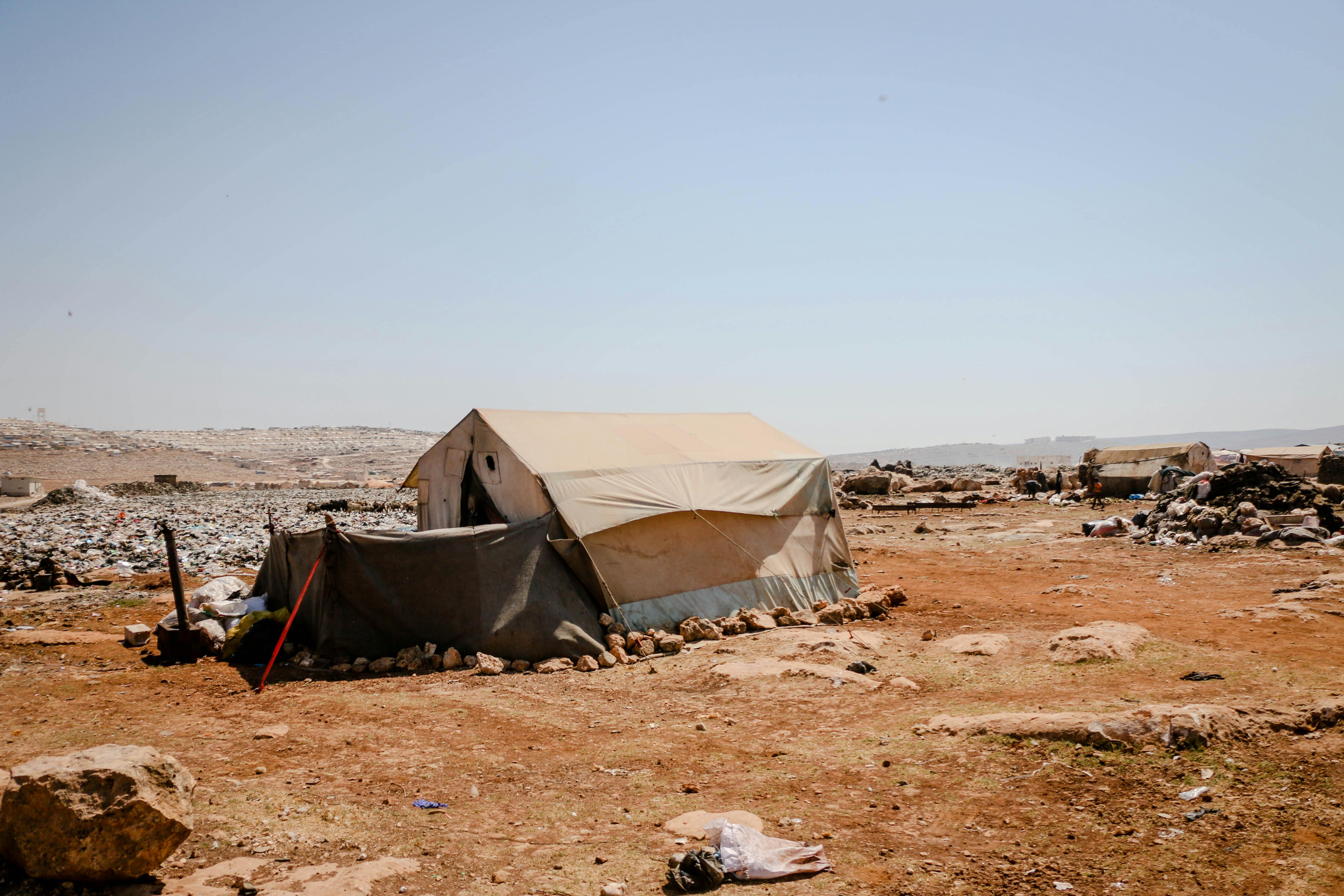
Additionally, Lebanon’s non-encampment policy, high costs of living, limited job opportunities and legal prohibition on owning or renting property, have forced Syrians into precarious housing. Agricultural workers in particular have resorted to informal tented settlements (ITS), where labour informality is reinforced by both the private organisation of the camps, and an internal economy that ties labour, rent and aid together - often forcing Syrians to “pay” for shelter through work. Furthermore, the sectors where Syrians are concentrated as per Resolution No. 29/1 of 2018 - agriculture, construction, and environmental services - are especially exploitative and highly informal. Finally, in 2015, new regulations were introduced: Syrians registered with UNHCR were required to "pledge not to work," while unregistered ones had to secure a private sponsor. As a result, formal employment became nearly unattainable for many.
Lebanon’s legal framework also contains provisions and gaps that worsen workers’ vulnerabilities. For example, Article 7 of the Labour Code excludes from its protection certain migrant-dominated occupations, depriving domestic and agricultural workers of social security, minimum wage protections, regulated hours, and leave entitlements. Additionally, the legally established sponsorship (kafala) system, imposed exclusively on non-Lebanese workers, and extended to Syrians since 2015, links residency and work permits together and prevents workers from freely terminating abusive contracts. Human rights groups report routine threats of sponsorship cancellation, coercively trapping workers in exploitative conditions. Finally, Syrians are effectively barred from forming or joining trade unions, and the Ministry of Labour’s inspectorate lacks jurisdiction, staff, and resources to enforce proper working conditions in the informal sector.
Because state-induced informality and legal gaps persist, Syrians’ working conditions often fall short of Lebanon’s human rights obligations. Documented abuses include conditions akin to forced labor, informal layoffs, and wage reductions that exacerbate poverty and worsen living standards. Economic precarity, widespread informality, and the absence of a government-led encampment policy leave many Syrians without secure and safe housing conditions, and disproportionally vulnerable to evictions. Additionally, fear of deportation and limited awareness of legal remedies deter complaints, effectively denying Syrians access to justice.
Embodied vulnerability: a gender and age-based perspective
Finally, personal attributes such as gender and age intersect with structural and contextual factors to produce overlapping disadvantages and distinct patterns of human rights violations.
Reports show that women bear particularly severe burdens in Lebanon’s informal labour market: as the gender gap intersects with other gaps, poor, less-educated women, especially labour migrants, experience heightened exploitation in agriculture and domestic services. Labour informality increases exposure to instances of sexual abuse and harassment by employers, sponsors, landlords and shaweesh. Irregularity and employment informality also create additional barriers to reporting, due to fear of repercussions, arrest, and deportation, effectively limiting their access to justice.
Lack of work and residency permits, limited freedom of movement, and precarious living conditions also push Syrian families to resort to child labour as a form of self-sufficiency, contributing to its increase to 7.3% in 2023. On top of exacerbating children’s vulnerability via exploitative and dire working conditions, child labour creates important barriers to children’s access to education. Complicit issues with funding, infrastructure, and enhanced administrative barriers, more than half of displaced Syrian children in 2019 did not attend school, entering a cycle of precarity whereby their labour compromises their education, and this educational gap reinforces long-term poverty.
Conclusions
My analysis demonstrates how Lebanon’s failure to respect its national, regional, and international obligations has exacerbated the conditions faced by Syrians as unrecognized refugees and labour migrants. Moreover, through the lens of vulnerability, it also exposes the profound and intrinsic interconnections between various human rights violations.
Recent political shifts and security developments in both Lebanon and Syria have reignited bidirectional cross-border movements, underscoring how migration remains a survival mechanism amid security pressures and humanitarian challenges. Following Israel’s ground offensive in October 2024, displacement spread across Lebanon, reaching nearly 985’000 internally displaced people (IDPs) by the end of the year and significantly deepening Syrians’ precarity within the country. Meanwhile, the fall of the al-Assad regime prompted both voluntary returns and coordinated repatriation agreements between Lebanon, Syria and the UNHCR. Though internationally praised, these arrangements risk enabling rapid or coerced returns to a country still plagued by intense, unpredictable violence and insecurity - conditions that could trigger renewed displacement among vulnerable minority groups. This reality makes it therefore all the more urgent to identify the limitations of current refugee reception policies and explore reforms that safeguard and uphold the fundamental rights of displaced people.
Article by G.F. - She holds a Specializing Master’s degree in Middle Eastern Studies and a Master’s double degree in Human Rights and Multi-level Governance from the University of Padova and Université Catholique de Lyon.
Documents
Links
Keywords
How to cite this article
(2026), "From refugees to labour migrants: an analysis of syrians’ enhanced vulnerability in Lebanon (2011-2024)", in Human Rights Centre "Antonio Papisca", University of Padova, https://unipd-centrodirittiumani.it/en/topics/from-refugees-to-labour-migrants-an-analysis-of-syrians-enhanced-vulnerability-in-lebanon-2011-2024 (consulted on 23/10/2026).
