


Publishing and Artificial Intelligence: Dynamics and Reactions in an Evolving Sector
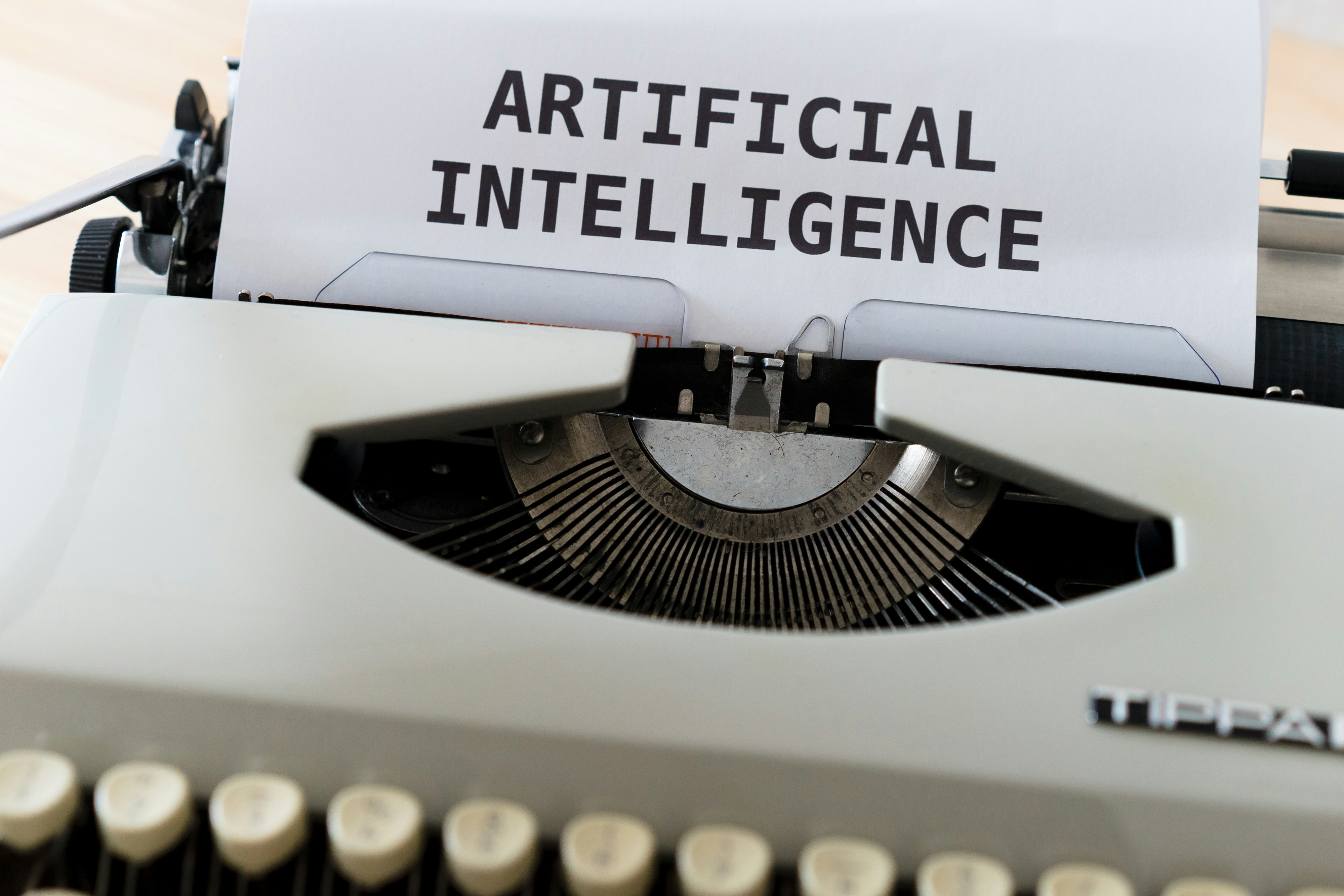
Table of Contents
- The ambiguity of “memorisation”: Penguin Random House vs OpenAI
- Given these shifting roles, a key question emerges: How widely is AI used in publishing houses, and can we recognise its presence?
- A glimmer of hope: the Hachette case
- The “Human Authored” label and the protest "Don’t Steal This Book"
- Harlequin and experimentation with AI-generated drama
- Concluding reflections
While the market is increasingly populated with children’s books and products written and illustrated using artificial intelligence (a quick search on Amazon is enough to confirm this), the publishing industry is responding on multiple fronts: Penguin Random House has filed a lawsuit against OpenAI over the alleged misuse of copyrighted materials; Hachette Book Group has withdrawn a book suspected of being written with AI; the Society of Authors has introduced the “Human Authored” label to distinguish books created by humans; and Harlequin has signed an agreement with a company specialising in AI-generated video to develop a series of short animated dramas based on titles from its catalogue.
To better understand this evolving landscape, let's examine how the publishing industry is grappling with the impact of Artificial Intelligence across various facets.
The ambiguity of “memorisation”: Penguin Random House vs OpenAI
“Can you write a children’s book in which the dragon Coconut finds himself on Mars?”
A simple prompt, which generated text, illustrations, and even a cover scarcely distinguishable from an original work by Ingo Siegner, author of the long-running series "Der kleine Drache Kokosnuss".
This is what led Penguin Random House, on 27 March 2026, to file a lawsuit against OpenAI’s European branch, once again bringing into focus—though it had never truly disappeared—the issue of Artificial Intelligence in publishing and its regulation.
In this specific case, the legal proceedings will assess the concept of “memorisation”, namely the ability of AI systems to store content used during training and reproduce it in response to user prompts. This practice risks resulting in the storage and reproduction—more or less faithful, but certainly unauthorised—of copyrighted materials. It also highlights one of publishers’ primary concerns (58.8%), as revealed by the first Italian survey on AI use conducted by the Italian Publishers Association (AIE) and presented at the Più libri più liberi fair in December 2025.
Moreover, another aspect has unsettled industry professionals: when generating content, AI also provides a cover, a blurb, and active support for potential publication, effectively replacing the professional roles traditionally involved in the publishing process.
Given these shifting roles, a key question emerges: How widely is AI used in publishing houses, and can we recognise its presence?
While it is true that three out of four publishers (75.4%) regularly use AI tools, it is equally true that professional expertise remains essential to ensure a high-quality product for readers, despite the increasingly fast-paced market.
The excessive number of titles published (70,409 in 2025) reflects a long-standing structural issue: books, even those with low sales, help financially sustain future publications.This demand for speed likely explains why around 60% of authors use AI, at least as a support tool, in the writing process. However, a major concern lies in our difficulty in recognising its use in the texts we read.
In this regard, an article published in The New Yorker in December 2025 reported that short narrative and non-fiction texts—some written by human authors and others generated by AI—were virtually indistinguishable to readers.
“Hallucinations” and the pressure for speed
Among the greatest risks associated with AI, alongside copyright violations, are so-called “hallucinations”, which concern 50.5% of respondents in the AIE survey. These consist of false or distorted information presented as factual, and if users do not cross-check with other sources, they can become highly problematic.
AI systems already display bias, for instance, in news aggregators that gradually confine readers within filter bubbles. Hallucinations further exacerbate this issue, increasing the risk of misinformation.
Beyond ethical concerns, AI poses risks when used in journalism, where the pressure to produce news rapidly is constant. Recently, the case of Fortune journalist Nick Lichtenberg sparked debate: within a few months, he published more articles than some colleagues produce in a year. However, Lichtenberg himself emphasised that he remains aware of AI’s limitations and consistently verifies data by returning to original sources.
Moreover, the role of journalists also involves uncovering data that does not yet exist—a task that remains fundamental in navigating today’s overwhelming flow of information.
Journalism is not an assembly line, just as publishing is not—although this is sometimes forgotten. These fields can be considered forms of art precisely because of the human contribution they entail. Yet it is legitimate to ask whether, just as AI-generated images have become increasingly widespread and difficult to distinguish from human-made ones—now used without hesitation by 50.7% of publishers employing AI—the same may happen with journalism and books.
A glimmer of hope: the Hachette case
At times, however, a faint glimmer of hope emerges.
Recently, Hachette Book Group withdrew "Shy Girl" by Mia Ballard following numerous reader accusations of AI use during its writing. Suspicion was raised by the writing style and internal inconsistencies, fuelling online debate. After its UK release, the publisher withdrew the book and cancelled its US publication, reaffirming its commitment to “original creative expression and storytelling”.
Nevertheless, doubts had already circulated when the book was self-published, well before Hachette’s involvement, raising further concerns—particularly regarding how such inconsistencies were not identified during the editorial process.
While this episode offers some reassurance, there is also concern that it may trigger a “witch hunt”, exacerbated by the difficulty of identifying AI-generated texts and the unreliability of current detection tools.
The “Human Authored” label and the protest "Don’t Steal This Book"
It is therefore necessary to develop new ways of protection and identification. In this context, the initiative of the Society of Authors—a UK association of writers, illustrators and translators—fits in. Members can register their works and download a “Human Authored” label to place on the back cover, promoting human creativity.
Alongside this initiative, nearly 10,000 authors—well-known and emerging—have launched a protest by publishing a blank book entitled "Don’t Steal This Book", featuring a message on the back:
“The UK government must not legalise the theft of books to benefit AI companies.”
Harlequin and experimentation with AI-generated drama
Meanwhile, Harlequin—a popular romance imprint now part of HarperCollins France—continues to attract attention with new AI-driven initiatives.
Following controversy in late 2025 over contract renewals for translators—who were required to shift towards editing AI-generated translations—Harlequin has now entered a multi-year agreement with Dashverse, a company specialising in AI-generated video content.
The project aims to produce 40 micro-drama series based on romance titles from its catalogue, targeting younger, social media–active audiences. These short, vertical, animated videos in English are designed for global distribution.
This represents a shift in perspective: the original book is no longer the end goal of marketing, but the starting point for creating an independent product.
Concluding reflections
In short, the revolution is underway and appears unstoppable. However, this is not necessarily a negative development. Artificial intelligence is a tool, and as such, it is neutral: everything depends on how it is used.
It is therefore essential to establish stricter rules and, above all, to develop clear regulations regarding content use, alongside strong user awareness.
The challenge facing the publishing sector—including journalism, increasingly absorbed into a frenetic cycle of constant news production—is to strike a balance that safeguards the rights of all, especially those of readers.
Resources
Philip Oltermann, “Penguin to sue OpenAI over ChatGPT version of German children’s book”, in The Guardian, 31 marzo 2026, https://www.theguardian.com/technology/2026/mar/31/penguin-sue-openai-chatgpt-german-childrens-book-kokosnuss
Indagine sistematica dell’Associazione Italiana Editori, “L’Intelligenza Artificiale in casa editrice: per fare cosa?”, https://www.aie.it/Cosafacciamo/Studiericerche/Approfondimento.aspx?IDUNI=qngdg05vkwz0puj0rki5dz33869&MDId=17800&Skeda=MODIF105-10901-2025.12.5
43ª edizione della Scuola per Librai Umberto e Elisabetta Mauri, “L’intelligenza dei libri”, https://youtu.be/UWhfGaGA3Ig?si=k2pjEK_R4Euc4HEp
Vauhini Vara, “What If Readers Like A.I.-Generated Fiction?”, in The New Yorker, 20 dicembre 2025, https://www.newyorker.com/culture/the-weekend-essay/what-if-readers-like-ai-generated-fiction?utm_source=twitter&utm_medium=social&utm_campaign=dhtwitter&utm_content=null
Isabella Simonetti, “An AI Upheaval Is Coming for Media. This Journalist Is Already All In.”, in The Wall Street Journal, 26 marzo 2026, https://www.wsj.com/business/media/an-ai-upheaval-is-coming-for-media-this-journalist-is-already-all-in-3511d951?st=VEMZ9z&reflink=article_copyURL_share
Emma Loffhagen, “Hachette pulls horror novel Shy Girl after suspected AI use”, in The Guardian, 20 marzo 2026, https://www.theguardian.com/books/2026/mar/20/hachette-horror-novel-shy-girl-suspected-ai-use-mia-ballard
The Society of Authors, Human Authored, https://humanauthored.co.uk/
Don’t Steal This Book, https://www.dontstealthisbook.com/
Lianna Cohen, “Harlequin and Dashverse To Launch Animated Microdrama Franchises Multi-Year Agreement to Adapt Iconic Romance Titles into Mobile-First Serialized Video”, in Harlequin Press Room, 30 marzo 2026, https://corporate.harlequin.com/press-room/harlequin-and-dashverse-to-launch-animated-microdrama-franchises-multi-year-agreement-to-adapt-iconic-romance-titles-into-mobile-first-serialized-video/
How to cite this article
Federica Depetro (2026), "Publishing and Artificial Intelligence: Dynamics and Reactions in an Evolving Sector", in Inclusion and Eco-Social Justice, ISSN 3035-5265, https://unipd-centrodirittiumani.it/en/topics/publishing-and-artificial-intelligence-dynamics-and-reactions-in-an-evolving-sector (consulted on 20/10/2026).
