


The Hazara
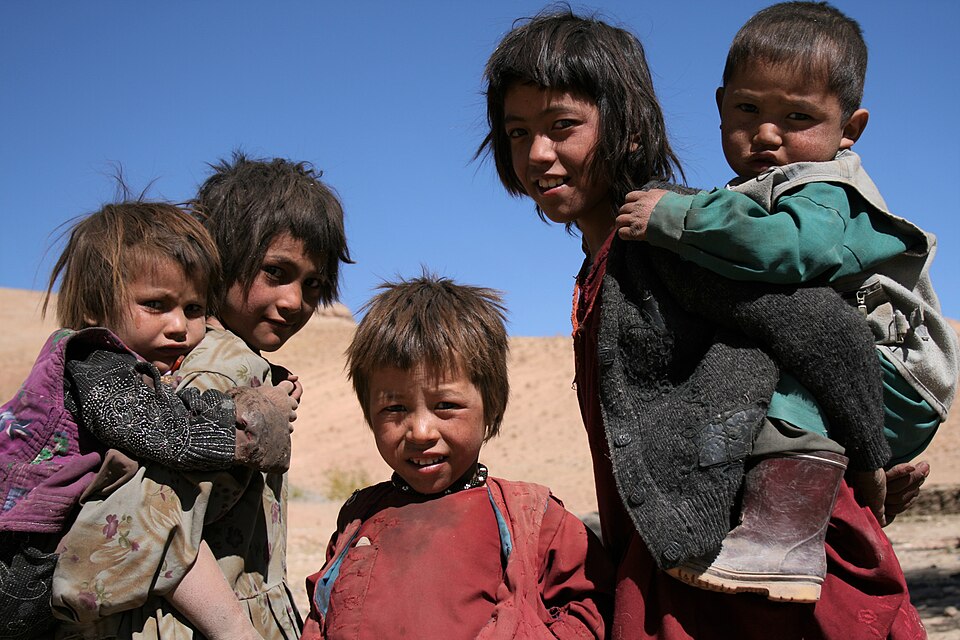
Table of Contents
- Who are the Hazaras?
- The historical memory of the Hazaras – genocide in slow motion
- How do Hazaras live today? Segregation
- What can we do today?
- Conclusions
Who are the Hazaras?
The Hazaras are one of the ethnic groups living in Afghanistan. Unlike the Afghan majority, which practises the Muslim faith, this community follows the Sunni tradition; more specifically, the Hazaras are Shia. This small but significant difference from other local populations is one of the main grounds on which their discrimination, persecution, and the violence to which they are subjected are based today.
The culture of this community is rooted in mountain life and in its rich oral traditions. It is important to remember these traditions because it is precisely through folk songs and poetry that the memory of this people has been preserved, making it possible to trace their memories and suffering.
Moreover, another factor that has made this people a target of violence and discrimination by the Sunni majority in the Afghan region is the inherently feminist character of their social structure. Historically, Hazara women have enjoyed better social conditions than their Sunni sisters within this community.
The historical memory of the Hazaras – genocide in slow motion
In legal scholarship, the Hazara case is studied through the lens of so-called “genocide in slow motion” or “cumulative persecution”. This terminology refers to a series of events accumulating over time which, through equally traumatic events driven by the same discriminatory motivations over the years, have wounded and torn apart this community.
One of the earliest events that can be referred to is the persecution under Emir Abdur Rahman Khan (1891–1893: the Great Massacre). This period represents a symbolic date for the community, comparable to the Holocaust for the Jewish people or the Nakba for Palestinians. National dynamics became intertwined with international ones: the Emir, financially and militarily supported by the United Kingdom, proposed nationalising property with the aim of creating a buffer state. Unfortunately, this resulted only in the Hazara community being labelled as Shia heretics by their Sunni neighbours.
The result was, in fact, a genuine massacre. It is estimated that, on this occasion, 60% of the Hazara community was killed, while others were forced to flee, creating a diaspora. Those who were unable to escape were either killed or even reduced to slavery. Although the Convention on Genocide was adopted many years later, numerous legal scholars and international organisations have stated that it is nevertheless appropriate to refer to these events as genocide, precisely because, according to them, both the “actus reus” (mass killing and deportation) and the “mens rea” (the specific intent to destroy, in whole or in part, the group) were already present.
Subsequently, on 22 February 1993, during the Afghan Civil War, following the withdrawal of the USSR, the Mujahideen factions clashed for control of the capital, Kabul. In the Afshar district, west of Kabul, government forces led by Ahmad Shah Massoud and Abdul Rasul Sayyaf carried out a military operation that ended in a massacre of Hazaras. This event resulted in a series of mass rapes, summary executions, and enforced disappearances of members of the community. For this reason, as also reported by Human Rights Watch (2005, Blood-Stained Hands: Atrocities in Kabul) and the Project for International Human Rights Law, this event is considered a clear example of a crime against humanity.
Moving forward along the timeline, on 8 August 1998, during the Taliban's first seizure of power, the Taliban carried out a major offensive against the Hazara ethnic group. Taliban militants conducted raids against Hazara civilians. The governor at the time also delivered hate speeches, inciting violence and stating that, if the Hazaras intended to remain in the area, they would have to convert to Sunni Islam or accept their fate. According to several organisations, including Human Rights Watch and Amnesty International, this event met all the criteria for war crimes and constituted a violation of the Geneva Conventions.
Subsequently, on 23 July 2016, during the Enlightenment Movement attack, the Hazaras, under NATO's guidance, adopted forms of non-violent resistance, such as peaceful protests. During one such protest, two ISIS suicide bombers detonated themselves in the crowd, killing many civilians. This event marked the beginning of discrimination that was no longer merely social or cultural, but also economic, in a sense denying the right to development, given that the protest was aimed at demanding greener policies and the reconstruction of the energy infrastructure.
Today – and, in fact, since August 2021 – many experts have spoken of the return of the Taliban regime and of an ongoing genocide. Not only did the community once again become a target of the injustices already known following the withdrawal of the United States, but serious human rights violations have also occurred. Examples include their exclusion from all governance bodies, the resumption of land and property expropriations, and an increase in attacks by ISIS against the population, particularly targeting places of gathering and culture, such as schools. It is important, in fact, to remember the attack in September 2022, in which more than 50 Hazara female students lost their lives.
How do Hazaras live today? – Segregation
Since August 2021, when the Taliban returned to power, the Hazara community has therefore been living in a condition of severe vulnerability and systematic persecution. They continue to be preferred targets of the Taliban, particularly of the extremist group ISIS, through armed attacks and suicide bombings that terrorise the community.
Attacks such as these primarily target Hazaras for religious reasons, as the community is Shia and, for many extremist Sunni groups, this is considered sufficient justification to dehumanise them and legitimise such acts. Places where people gather, such as schools and parks, are generally targeted, forcing the community into a form of self-imposed segregation, obviously due to the fear of becoming victims of terrorist attacks, armed attacks, or suicide bombings.
In the areas of Daikundi and Uruzgan, for example, forced evictions and the expropriation of ancestral lands, or simply of people's homes, have been documented, with these properties and lands being allocated to Taliban members, regime supporters, or Sunni Muslims. These events inevitably lead members of the community to emigrate, leaving people internally displaced or forcing them to migrate to countries such as Pakistan or Iran.
Under the current Taliban government, there is no Hazara representation, nor is there any representation of the Shia community more generally. Unfortunately, there is a genuine form of forced religious restriction: although the practice of Shia Islam has not been formally prohibited, access to or development of this branch of Islam is made impossible. Reports indicate severe restrictions on public religious celebrations; those that are permitted are extremely limited, and the teaching of Shia doctrine is also prohibited at every level of education.
Furthermore, Hazara women unfortunately face double discrimination. Women in general are discriminated against by the Taliban regime, as they are denied access to public places, education, singing, speaking, the freedom to look out of windows, the freedom to marry, and the freedom to determine their own lives in general. In addition, Hazara women, who have historically enjoyed greater freedom due to their religious background, face further discrimination because they are Shia women and Hazara women and are, in fact, still viewed in an even more degrading manner, comparable to animals. It is enough to consider the numerous cases of violence, arrests, and intimidation carried out by the Taliban during women's liberation protests.
Finally, it is unfortunately almost possible to speak of a form of “damnatio memoriae”, as the Taliban have progressively erased or altered Hazara symbols of memory through actions such as demolishing or replacing monuments dedicated to men and women of the community's resistance.
What can we do today?
The response to such a complex issue can be divided into two parts. On the one hand, there is a formal response provided by international institutions which, unfortunately, sometimes remains superficial, held back by bureaucracy. On the other hand, there is a grassroots response from the international civil population, which is probably less powerful, but no less valuable.
From the perspective of the international community, action has been taken on three fronts. Institutions such as the United Nations, through regular reports on the human rights situation in Afghanistan, provide information and/or exert pressure by refusing to legitimise or recognise the Taliban regime.
In addition, several organisations representing the Hazara diaspora are working intensively to bring evidence demonstrating the presence of genocide and ongoing human rights violations before Western parliaments. Their aim is to obtain such recognition because it would activate international protection mechanisms that could help and protect the community.
Furthermore, the International Criminal Court continues to collect data, testimonies, and valuable information on the abuses experienced by the community, not only for ongoing investigations but also to build a historical record. Experts have, in fact, proposed various solutions, such as the creation of an international investigative mechanism within the UN system, with the aim of documenting and preserving this information.
In addition, proposals have been made to establish special humanitarian corridors, expand resettlement quotas, and provide specific humanitarian visas for communities at greatest risk. Finally, another proposal concerns the establishment of a genuine guarantee that humanitarian aid intended for the Hazara community is distributed fairly, preventing discrimination or, worse still, preventing the Taliban regime from using such aid for its own purposes.
In this regard, it could also be useful to put pressure on host countries (Pakistan and Iran) to ensure that they do not forcibly repatriate displaced Hazaras, as this would expose them to inhuman and degrading treatment (Article 3 of the UN human rights charter).
Obviously, as individual citizens or local communities, one possible course of action could be to support NGOs, such as BMF, an organisation that provides support and scholarships for young Hazaras, which work actively on the ground in favour of the Hazara community.
It would also be possible to contribute actively to the integration of these people into the local area and the wider national community by volunteering through organisations that provide Italian-language teaching.
Conclusions
One of the main methods used today to reduce a people to the margins is dehumanisation, followed by their marginalisation, limiting their visibility, customs, and traditions, and portraying them as something distant.
In response to this, the aim of this article has been to restore dignity to a community that, unfortunately, like many others, receives little attention. This lack of visibility almost makes it possible for people to be discriminated against in a condition that is already discriminatory in itself, as is the case with the Hazaras.
The conclusion aims to leave us with an open question: how important are dialogue and media pressure on certain issues in maintaining public attention, considering that, unfortunately, even in cases such as this, some situations tend to be given priority over others?
Resources
Human Rights Watch (HRW): Periodic reports specifically addressing violence against the Hazara minority in Afghanistan.
Amnesty International: Documentation on historical massacres and ongoing human rights violations against the Hazara population.
MRG (Minority Rights Group International).
UNAMA (United Nations Assistance Mission in Afghanistan).
Mousavi, Sayed Askar (1997). The Hazaras of Afghanistan: An Historical, Cultural, Economic and Political Study. St. Martin's Press.
Ibrahimi, Niamatullah (2017). The Hazaras and the Afghan State: Rebellion, Exclusion and the Struggle for Recognition. Oxford University Press.
Poladi, Hassan (1989). The Hazaras. Mughal Publishing Company.
New Lines Institute for Strategy and Policy (2022–2024): The Hazara Genocide: Legal Analysis.
Harvard Human Rights Journal (2024): Hakimi, H., “The Afghan State and the Hazara Genocide”.
Amnesty International (1998): Afghanistan: The Massacre in Mazar-i Sharif.
Human Rights Watch (2005): Blood-Stained Hands: Atrocities in Kabul and Afghanistan’s Legacy of Impunity.
UN Special Rapporteur on Afghanistan: Official reports by Richard Bennett (UN Documents A/HRC).
Human Rights Watch (HRW).
Amnesty International: Annual reports on the human rights situation in Afghanistan, particularly concerning the impact of forced displacement and targeted attacks against Shia minorities.
United Nations (UN / UNAMA): Reports by the UN Special Rapporteur on the human rights situation in Afghanistan (Richard Bennett), including reports on systematic persecution of the Hazaras and other ethnic and religious minorities.
Human Rights Watch (HRW): Report, Afghanistan: ISIS Group Targets Hazara Shia.
Harvard Kennedy School Student Policy Review: Essay and investigative analysis, Genocide and Hazara Persecution in Afghanistan.
JURIST News / FORUM-ASIA: Reporting on “Human rights NGO network calls upon international community to prevent possible genocide of Hazaras”.
Amnesty International: Annual reports and appeals for the protection of the Hazara minority and Afghan refugees.
UNAMA (United Nations Assistance Mission in Afghanistan): Periodic human rights reports by the Special Rapporteur Richard Bennett.
How to cite this article
Sofia Fraschetti (2026), "The Hazara", in Inclusion and Eco-Social Justice, ISSN 3035-5265, https://unipd-centrodirittiumani.it/en/topics/the-hazara (consulted on 29/10/2026).
