


The Special Rapporteur Communication AL ITA 6/2025 on the gunfire attack on the search and rescue vessel Ocean Viking by the Libyan Coast Guard, and the response of the Italian Government
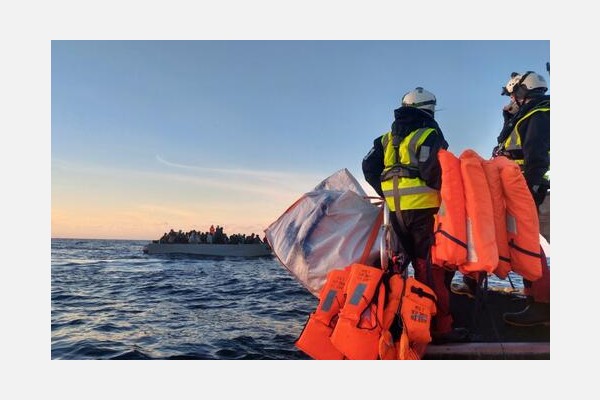
Table of Contents
- Joint Communication AL ITA 6/2025 of 15 October 2025
- The Incident of 24 August 2025
- Key Concerns and Requests
- Italy’s Response
- Final Remarks
Joint Communication AL ITA 6/2025 of 15 October 2025
On October 15 2025, the Permanent Mission of Italy to the United Nations in Geneva received a joint communication (AL ITA 6/2025) by Mary Lawlor, Special Rapporteur (SR) on the situation of human rights defenders, Gehad Madi, SR on the human rights of migrants, and Siobhan Mullally, SR on trafficking in persons, especially women and children.
The Joint Communication mentioned information concerning the alleged gunfire attack of 24 August 2025 by the Libyan Coast Guard on the Ocean Viking search and rescue vessel. Since 2019, this vessel has been operated by SOS Méditerranée, an international humanitarian organisation engaged in maritime rescue operations in the Central Mediterranean since 2016. In a previous communication (AL ITA 4/2024 of 31 May 2024 - see in Yearbook 2024), UN experts raised allegations of restrictions and interferences with search and rescue efforts in the Central Mediterranean. Since then and until May 2025, the International Organisation for Migration (IOM) recorded 1,873 deaths and disappearances of migrants throughout the Central Mediterranean route. The SRs mention that the IOM had previously brought attention to the limitations in maritime rescue capability and constraints imposed on NGO work as a key element contributing to the route becoming the deadliest for migrants. The Communication 6/2025 also noted that Libya and Italy entered into a Memorandum of Understanding (MoU) concerning cooperation in combating illegal immigration, human trafficking, and smuggling, as well as reinforcing border security, among other areas.
The incident of 24 August 2025
The communication then recounted the incident of the 24 of August 2025 in detail. At 2:09 am, the Ocean Viking recovered 47 individuals in international waters who required assistance within the Libyan Search and Rescue Region of the Central Mediterranean. The rescue was allegedly conducted keeping all pertinent maritime authorities updated throughout the operation. Marina di Carrara,a location at about three and a half days sailing distance, was designated by the Italian Maritime Rescue Coordination Centre (IMRCC) as the secure harbour for disembarkation . The Ocean Viking was then allowed by Italian authorities to carry out the rescue of an additional 40 people in distress at sea, as well as a third boat requiring assistance in the Central Mediterranean, resulting in a deviation from its course.
At 2:45 pm of the same day, the Ocean Viking spotted a boat approaching them and established radio contact. The vessel was identified as Houn 664, a Libyan Coast Guard Corrubia-class patrol ship, donated by Italy to Libyan authorities in 2023 within the framework of the European Union’s Support to Integrated Border and Migration management in Libya (SIBMMIL) program, partnered with the Italian Ministry of Interior. The Libyan Coast Guard allegedly instructed the Ocean Viking to “go north”, to which the Ocean Viking replied it was conducting a rescue mission. Soon after, the Ocean Viking changed its course to the north and the Libyan Coast Guard opened fire on it, reportedly without warning. The Ocean Viking informed the IMRCC of the situation and requested their intervention with Tripolitan authorities. As the shooting continued, the Ocean Viking issued mayday calls and continued to inform the IMRCC about the situation’s development, while requesting the Libyan Coast Guard to cease the continued shooting as they were leaving the area. The Libyan Coast Guard threatened an increase in their fire, a threat which was then repeated despite the communications of the Ocean Viking in Arabic and English. The ITMRCC informed the Ocean Viking’s crew that they were not in contact with the Tripolitan authorities and suggested that they contact their flag state (Norway). The Libyan Coast Guard had not ceased their shooting and continued to threaten the Ocean Viking and its crew with violence and with the sinking of the vessel. Eventually, the Guard Coast vessel left leading south. The humanitarian ship was left with considerable damage to its exterior and equipment, and more than 100 bullet holes.
Subsequent to the attack, the IMRCC was informed about the departure of the Libyan Coast Guard and the intentions of the Ocean Viking to proceed in the direction of the port of Marina di Carrara. The Ocean Viking also notified NATO Operation Sea Guardian of the events and petitioned for protective escort, to which they were instructed to communicate with the Italian Navy, which was done unsuccessfully. The EU Naval Force Mediterranean Operation was also contacted to no avail. Eventually, the Ocean Viking contacted the IMRCC again, communicating the damage sustained and seeking a closer disembarkation site for the rescued individuals on board. The port of Augusta was designated as the site for safe disembarkation, which took place on the evening of August 25th, 2025. This was not the first attack on the Ocean Viking carried out by the Libyan Coast Guard: a similar occurrence took place in July 2023.
Key Concerns and Requests
The SRs highlight their concern about the reported attack on the Ocean Viking, sharing their apprehension regarding the possibility of the attack being an intentional attempt at hindering the ship’s rescue work and its possible link to serious human rights abuses perpetrated by the Libyan authorities. The SRs also referenced reports made by different UN branches related to the extensive and recurrent violations directed at migrants in Libya and their recommendations towards assessing or discontinuing cooperation with the Libyan authorities responsible for said abuses.
The SRs requested clarification on the following points:
- Any information or comments, if available, related to the aforementioned allegations.
- Whether any investigation has been initiated, or not, regarding the specified Ocean Viking attack.
- Whether Italy’s assistance to the Libyan Coast Guard and other bodies under the 2017 MoU was coherent with Italy’s responsibilities under international law.
- Whether safeguards existed, based on the MoU, for the protection of migrants, refugees, and asylum seekers.
- What steps Italian authorities have implemented to enforce recommendations made by the previously mandated Independent Fact-Finding Mission on Libya.
Italy’s response to Communication AL ITA 6/2025 (16 December 2025)
Italy’s response to the SR Joint Communication, issued on December 2025, addressed the search and rescue (SAR) operations at sea legal framework, codified by the International Convention on Maritime SAR of 1979. The Convention specifies that States are responsible for appointing their own operational areas to oversee maritime SAR missions. The Italian body supervising operations in the Italian SAR zone is the IMRCC, that collaborates with the Maritime Rescue Coordination Centres (MRCCs) of other States in order to coordinate rescue operations, as Italy does not cover the Central Mediterranean entirely and shares responsibility with other coastal states.
For the case specified in the SR Joint Communication, Italy argued that there was no involvement of its authorities, as the incident occurred in international waters within Libya’s Search and Rescue Area. Italy’s response underlines that the IMRCC was not overseeing the Ocean Viking’s rescue operations and therefore the humanitarian vessel was acting independently in rescuing individuals requiring assistance. The Ocean Viking then asked for a Place of Safety (POS), which was thereafter designated by Italy. The response then pointed out that the IMRCC did not ask the Ocean Viking to alter its course and to proceed to “another distress event”, and that they only received word from the vessel requesting approval in delaying their arrival to the POS. Italy then mentioned that subsequent to the notification of the vessel being subjected to gunfire, the IMRCC contacted the corresponding MRCCs for that area and Norway, the vessel’s flag state. Since the supposed attack occurred in the Libyan Search and Rescue Region, no formal administrative investigations was carried out on the matter. However, the Public Prosecutor’s Office in Siracusa did begin a judicial inquiry, but this was an autonomous decision of the judicial body over which the executive branch has no authority, nor does it possess the power to intervene.
Italy’s reply then indicated that the MoU of 2017 between Italy and Libya is framed towards combatting human trafficking and provides for technical support in instances of border oversight, maritime search and rescue operations. All activities fall within the scope of the EU Support to Integrated Border and Migration Management in Libya (SIBMMIL) project, Phase I and Phase II, funded by the European Union through the Trust Fund for Africa and the NDICI financial instrument and are overseen by the Ministry of Interior. The transfers of vessels to the Libyan authorities in implementation of the SIBMMIL Project have been governed by specific bilateral MoU between Italy and Libya adopted in 2022, 2023, and 2025. The response outlines the responsibility of Libyan authorities in complying to international human rights standards, international law, and EU policies in their use of the transferred vessels as part of the aforementioned bilateral Memoranda. Italy stated that equipment transferred to Libya should only be employed for navigation safety, maritime surveillance for search and rescue, control of illegal transport of migrants and human trafficking, and safeguarding human life at sea.
The response then concludes by indicating that the Italian Embassy in Tripoli and the EU Delegation were in communication with the Libyan authorities in regards to the mentioned agreements. Italy also underscores its support for the migrant and refugee initiatives in Libya that were conducted by international organizations such as the IOM and the United Nations High Commissioner for Refugees. Italy’s reply concludes by declining any responsibility to “an event that occurred outside its Search and Rescue Region and without the involvement of any person acting under the control of Italian authorities”. Finally, Italy reiterated its dedication towards collaborating with UN Special Procedures.
Final Remarks
Italy’s response largely avoids responsibility regarding the events detailed in the SR communication and distances itself from the incident. The response goes into detail about Italy’s cooperation with Libyan authorities through different frameworks, and points at Libya’s obligations according to these agreements. However, there are no concrete mechanisms described to enforce and monitor compliance by Libya to its commitments, despite a history of systematic abuses by the Libyan Coast Guard as mentioned by the SR Communication.
The response is considerably procedural and legalistic and fails to acknowledge the substantive human rights risks faced by the crew and the rescued persons during the incidents nor the repetitive nature of the attacks. While Italy reaffirms its commitment to UN mechanisms and human rights principles, it fails to address the indirect responsibility it may bear as a result of its support, training, and provision of vessels to the Libyan Coast Guard under SIBMMIL, consequently empowering actors who have repeatedly committed human rights violations. Although Italy’s response is consistent with international maritime law, its language is vague and at time seems to shifts blame towards the Ocean Viking for the endured attack.
Keywords
How to cite this article
Natalia Michelle Aguierre Sanchez (2025), "The Special Rapporteur Communication AL ITA 6/2025 on the gunfire attack on the search and rescue vessel Ocean Viking by the Libyan Coast Guard, and the response of the Italian Government", in Italian Yearbook of Human Rights, ISSN 3035-5435, https://unipd-centrodirittiumani.it/en/topics/the-special-rapporteur-communication-al-ita-62025-on-the-gunfire-attack-on-the-search-and-rescue-vessel-ocean-viking-by-the-libyan-coast-guard-and-the-response-of-the-italian-government (consulted on 13/10/2026).
