


What Omelas Teaches Us About Disability: Structural Invisibility and the Marginalization of Non-Visible Impairments
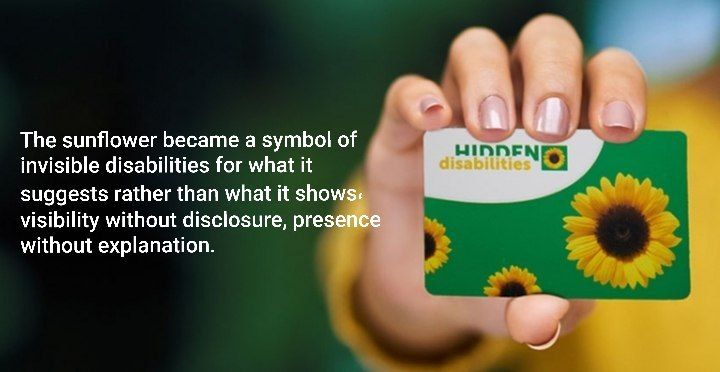
Table of Contents
- Introduction
- The CRPD and the Hesitation in Recognizing Disability as a Human Rights Issue
- Ongoing Neglect of Invisible and Intersectional Disabilities
- Ableism and the Marginalisation of Invisible Disabilities
- Conclusion
Introduction
Ursula Le Guin’s short philosophical story “The Ones Who Walk Away from Omelas” can aptly illustrate the structural invisibility of certain disabilities. The relevance of this parallel does not lie in equating persons with invisible disabilities with the deliberately sacrificed child portrayed in the story, but rather in showing how modern societies may unknowingly depend on forms of exclusion that remain unseen by the majority. Omelas is a city whose beauty and harmony are sustained by a hidden reality, suffering kept out of sight and therefore out of mind. Similarly, when policies, vital environments, and future expectations are built around narrowly ableist norms, the needs of those with disabilities, in particular, non-visible disabilities, are systematically overlooked without explicit intent. This metaphor serves as a reminder that exclusion does not always arise from malice, instead, more often, it is the result of a societal structure whose foundations quietly depend on the invisibility of those who do not fit the dominant epistemology based on ability.
Bringing invisible disabilities into the spotlight means confronting the gaps still present in legislation, social standards, and policies. While disability rights have been overall strengthened, people with non-visible disabilities continue to face inappropriate questioning, a lack of recognition, and inadequate assistance.
The CRPD and the Hesitation in Recognizing Disability as a Human Rights Issue
Before the early 2000s, persons with disabilities were largely considered through a medical or charity lens, rather than independent rights-holders. This perspective characterized decades of international inaction. Unlike other groups considered “vulnerable”, such as women, children, and ethnic minorities, persons with disabilities were not protected by a legally binding human rights treaty until 2006, when the UN adopted the Convention on the Rights of Persons with Disabilities (CRPD). This delay indicates profound negligence from states that have for long failed to recognize disability as a source of inequity requiring specific legal safeguards. The CRPD followed decades of work by the United Nations to change the societal attitudes and approach vis-à-vis persons with disabilities, from viewing them as “objects” of charity, medical treatment and social protection, to considering persons with disabilities as “subjects”, endowed with rights and capable of claiming those rights and making decisions for their lives based on their free and informed consent, active members of the community.
During the early stages of the discussion about the new instrument at the Ad Hoc Committee, several States emphasised that the rights of persons with disabilities were already covered by the core human-rights treaties and warned against duplication. Speaking on behalf of the European Union, the representative of Greece stressed that the new convention should be firmly based on existing treaties and “neither undermine, nor simply duplicate” other human-rights instruments. Canada likewise framed the proposed convention in terms of “complementarity”, urging that it be designed to fill gaps while remaining consistent with existing monitoring mechanisms, and Australia expressly supported the recommendation that any new instrument “complement and not undermine existing human rights instruments”.
As Don MacKay, Chair of the Ad Hoc Committee, later recalled, “initially, many Governments argued that there was no need for a new convention, as the existing human rights instruments applied to persons with disabilities,” even though in practice these instruments had “fallen far short” in protecting their rights. Indeed, over the years, some groups had tended to be less than a priority for Governments in implementing their human rights obligations. The United Nations have characterized persons with disabilities as “the world’s largest minority”. It is estimated that around 10 per cent of the world’s population lives with a disability, a figure that continues to rise as the world population grows.
Importantly, the CRPD was not born out of proactive state leadership but of sustained pressure from civil society organisations, especially from organisations of persons with disabilities (DPOs). These dynamics underline that the recognition of disability rights at the international level was largely reactive, a response to historic exclusion, rather than a proactive guarantee.
Ongoing Neglect of Invisible and Intersectional Disabilities
Despite substantial advancements, the drafting process of the CRPD also revealed persistent gaps. Issues related to invisible disabilities, such as mild hearing loss, psychosocial disabilities, chronic illnesses, learning disabilities, as well as intersectional experiences of disability combined with gender, ethnicity, story of migration, or disadvantaged socio-economic status, were not fully addressed. These omissions persist today in the practices aimed at implementing, monitoring, and collecting data regarding the CRPD.
Although the CRPD affirms that all persons with disabilities are rights-holders, it does not explicitly distinguish between visible and invisible disabilities. This gap has practical consequences. Without specific guidance on identification, assessment, and accommodation, the lived realities of persons with non-visible disabilities remain insufficiently addressed. As a result, people with invisible disabilities continue to face disbelief, scepticism, or demands for proof that are rarely imposed on those with visible impairments. Empirical data from countries such as Canada demonstrate that non-visible or “hidden” disabilities comprise a substantial portion of the disability experiences and that their prevalence is rising. According to the National Statistical Office of Canada, in 2022, about 27% of Canadians aged 15 years and older, roughly 8.0 million people, reported having at least one disability limiting their daily activities. The most reported types of disability are not always visible. In 2022, after pain-related disability (62%), “mental health-related,” “flexibility,” and other categories saw significant prevalence increases compared to 2017. (Statistics Canada+1)
Defining this broad set of disabilities, a Canadian disability-support organisation explains that invisible disabilities, also called hidden or non-visible disabilities, include chronic pain, mental-health conditions, learning disabilities, neurological disorders, and other conditions “that significantly impact daily functioning without outward physical signs.”
Despite the scale and growing prevalence of these non-apparent disabilities, policy frameworks, data collection, and social recognition often remain oriented toward visible impairments. The reliance on visible manifestations (mobility impairments, use of assistive devices, etc.) reinforces social and institutional assumptions that only “visible disability” counts, leading to inadequate recognition, under-reporting, or misclassification of those with invisible conditions.
Moreover, even though the 2021–2030 EU Strategy explicitly recognises that “disability” includes long-term physical, mental, intellectual or sensory impairments, many being invisible, it must be borne in mind that the assessments of the preceding 2010–2020 European Disability Strategy highlighted persistent implementation gaps, including limited progress in employment, social inclusion, and access to social protection.
Ableism and the Marginalisation of Invisible Disabilities
The persistent lack of recognition and accommodation for invisible disabilities can be understood through the lens of ableism. Nario-Redmond defines ableism as a “prejudice and discrimination toward individuals simply because they are classified as people with disabilities, regardless of whether their impairments are physical or mental, visible or invisible” (Nario-Redmond, 2020). Other scholars describe ableism as a system of beliefs and structures that privileges certain abilities and normative modes of functioning, thereby marginalizing those whose bodies or minds do not conform to dominant expectations (Dolmage, 2017 ; Campbell, 2009).
From this perspective, the marginalisation of persons with invisible disabilities is not merely a policy gap; it is embedded in social hierarchies that value observable, easily categorized forms of impairment while dismissing those that challenge normative expectations. This is the modern echo of Omelas: societies may not consciously intend harm, but their comfort is partially sustained by what they choose not to see.
Stigma, disbelief, reluctance to disclose, and insufficient accommodations all reflect how ableism functions as an invisible architecture that shapes the everyday experiences of individuals with non-apparent disabilities. Research consistently shows that people with invisible disabilities often encounter scepticism or are presumed to be exaggerating or fabricating their impairments because their disabilities do not conform to dominant visual markers of “real” disability. This creates a paradox in which disclosure becomes a double-edged mechanism: nondisclosure can lead to a lack of necessary support, while disclosure may expose individuals to stereotypes, distrust, or accusations of inauthenticity. Studies have documented how invisible disabilities are met with suspicion in workplaces, educational institutions, and social contexts, where accommodations are often contingent upon visible impairment or bureaucratic proof. As a result, individuals must constantly negotiate how, when, and whether to reveal their disability status, navigating structural conditions that privilege visible impairments and marginalise those whose disabilities remain concealed or contested (Hendry & Wilson, 2022).
Conclusion
The story of Omelas speaks for this, because it reveals that exclusion is not always explicit or intentional. Often, it is woven quietly into the structures of society, into laws that do not name certain realities, institutions that overlook specific needs, and social norms that elevate visibility over lived experience. Invisible disabilities expose these blind spots with clarity.
To move forward, disability rights frameworks must confront not only legal omissions but the deeper cultural and structural forces that sustain invisibility. Just as some citizens in Omelas choose to walk away after witnessing the hidden suffering on which their society depends, modern societies have a choice: to remain comfortable within ableist norms, or to confront the unseen forms of exclusion that continue to shape the lives of millions. Only by making the invisible visible, naming what is hidden, and acknowledging what is ignored, can we hope to achieve true inclusion, justice, and dignity for all.
References
Campbell, F. K. (2009). Contours of ableism: The production of disability and abledness. Palgrave Macmillan. https://doi.org/10.1057/9780230245181
Dolmage, J. T. (2017). Academic ableism: Disability and higher education. University of Michigan Press. https://library.oapen.org/handle/20.500.12657/47415
Hendry, G., Wilson, C., Orr, M., & Scullion, R. (2022). I just stay in the house so I don’t need to explain: A qualitative investigation of persons with invisible disabilities. Disabilities, 2(1), 145–163. https://doi.org/10.3390/disabilities2010012
Nario-Redmond, M. R. (2019). Ableism: The causes and consequences of disability prejudice. John Wiley & Sons. https://doi.org/10.1002/9781119142140
Contribution written with the support of Manuela Viezzoli, Human Rights and Inclusion of Persons with Disabilities Project.
Links
How to cite this article
Pegah Mostajeran (2026), "What Omelas Teaches Us About Disability: Structural Invisibility and the Marginalization of Non-Visible Impairments", in Inclusion and Eco-Social Justice, ISSN 3035-5265, https://unipd-centrodirittiumani.it/en/topics/what-omelas-teaches-us-about-disability-structural-invisibility-and-the-marginalization-of-non-visible-impairments (consulted on 25/10/2026).
