


ZEM 2026: a tool to support inhabitants facing forced evictions
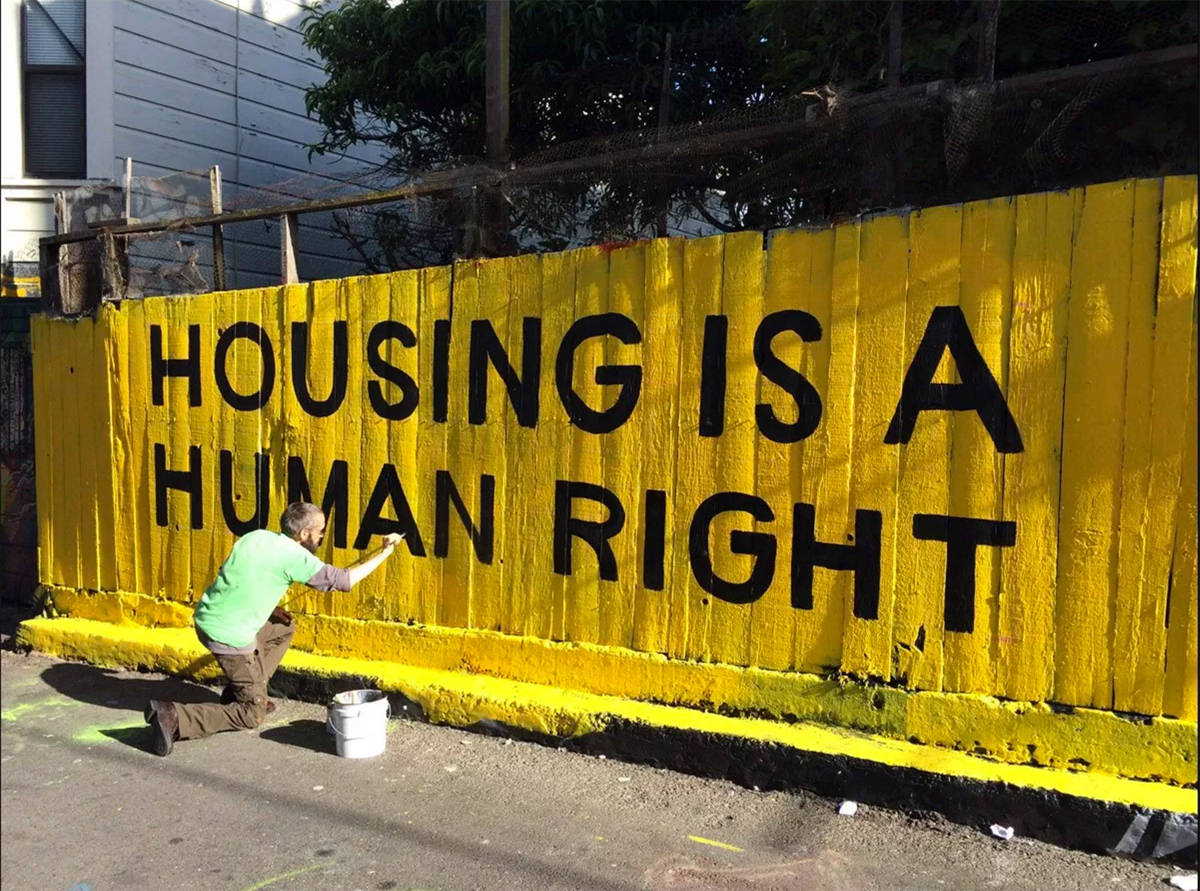
Forced evictions, whether due to unpaid rent, lack of recognised title, or any other cause, are often framed as an individual failing. But when they turn into inaccessible procedures and result in the loss of stable housing, they become something harsher: a mechanism that undermines rights, communities and the future. Forced evictions and removals occur in every part of the world. In many places, housing as a human right and the social function of property are falling victim to speculation and rent extraction, while vulnerability increases; at the same time, tensions grow for those who defend access to housing and those who end up paying the price for decisions made elsewhere.
The International Zero Evictions Marathon (ZEM), held as part of the World Zero Evictions Days in collaboration between the Human Rights Centre of the University of Padova and the International Alliance of Inhabitants, now in its third edition, places housing firmly within the framework of human rights. This year, the ZEM 2026 will address evictions not only as an outcome but also as a process, influenced by the conditions, policies, and planning choices that make housing less accessible and less secure for many.
A consistent thread runs through this process: attacks on human rights defenders, including defenders of the right to housing, who are often targeted with intimidation and pressure when they demand transparency, accountability and respect for safeguards.
ZEM 2026 is built around a few key focus areas. Evictions driven by extractivist neoliberal policies, mega-projects, and climate-related policymaking remain, sadly, as widespread as ever, compounded by the silent yet crushing weight of unsustainable housing costs and the criminalisation of a growing homeless population. At the same time, mass evictions of entire populations are spreading at an alarming rate, such as those of the other face of the Palestinian genocide and of the urbicide and domicide unfolding in Gaza, for example. Meanwhile, the pervasive impact of AI on the housing sector continues to take hold. Automated systems and algorithms speed up decisions, deepen asymmetries, skew risk assessments, and make bias and errors harder to challenge. This year's key novelty is a focus on evictions linked to different forms of occupation without legal title, an issue that should not be reduced to a mere law-and-order matter but understood as a potential disregard of the social function of property: a principle often enshrined in law, yet almost never upheld in practice.
This last theme will be explored in depth by the new UN Special Rapporteur on Adequate Housing, Mr. Koldo Casla, who will be warmly welcomed at ZEM 2026 — just as his predecessor, Balakrishnan Rajagopal, was last year.
ZEM is a platform that offers an important opportunity for dialogue among institutions, civil society, and academia on concrete pathways to policies that protect the right to adequate housing.
ZEM 2026 is for everyone who can move this conversation forward and turn it into change: the general public, tenant unions and associations, landlords and homeowners, universities, institutions and the press. Because solutions are not just about ‘who is right and who is wrong’, but about drafting better rules, providing prevention tools, implementing stronger protection pathways and balancing public interests and private responsibilities without leaving people behind.
For the media, ZEM 2026 is a chance to report on a high-stakes reality with solid context: the legal and social mechanics behind every eviction, the human rights dimension of housing conflict, and how inhabitants' resistance can offer real solutions while fully respecting human rights and the environment.
For inhabitants and tenants, it is a meeting point to understand how these processes work, connect with organisations and networks, and push for solutions that prevent evictions rather than simply managing their aftermath, so that housing security is treated as a right, not a privilege.
For landlords and homeowners, the ZEM provides a structural forum for discussing responsibilities and sustainability: clear and fair rules for managing non-payment and mechanisms that reduce uncertainty and escalation.
For students too, ZEM is an opportunity to highlight how housing insecurity has become a growing everyday reality: soaring rents, precarious contracts, limited access to accommodation and the constant fear of displacement can derail both studies and future prospects.
ZEM 2026 helps understand the dynamics behind the global housing crisis, learn how rights are defended in practice, and shape new-generation solutions. Innovation is needed to design more inclusive and transparent public housing policies, fairer procedures and standards for the responsible use of technologies, mechanisms that reduce uncertainty and conflict, and pathways that protect both tenure stability and people's dignity.
So, set the date for Thursday 29th and Friday 30th October 2026, and join the ZEM from 7:00 am to 7:00 pm (UTC), and help turn the right to housing and the zero-evictions goal into a shared agenda supported by data, community choices, and the law.
Links
Keywords
Paths
How to cite this article
Soha ben Slama (2026), "ZEM 2026: a tool to support inhabitants facing forced evictions", in Human Rights Centre "Antonio Papisca", University of Padova, https://unipd-centrodirittiumani.it/en/topics/zem-2026-a-tool-to-support-inhabitants-facing-forced-evictions (consulted on 18/10/2026).
