


Crisis in Sudan: rising tensions and challenges for humanitarian aid
The situation in Sudan is continuing to escalate, as the UN Special Adviser on the Prevention of Genocide, Chaloka Beyani, has expressed concern over widespread reports of war crimes committed in Sudan’s El Fasher. He stated that “We are witnessing extensive violations of international human rights law, direct assaults on civilians, and blatant disregard for international humanitarian law governing the conduct of hostilities — with civilians bearing the brunt of these attacks”.
Mr. Beyani’s office noted that indicators of potential atrocity crimes are evident in Sudan but stressed that only an international court or other competent legal authority can determine whether genocide has occurred. While graphic footage and reports surfaced online late last month, appearing to show war crimes committed by the Rapid Support Forces (RSF) militia as they seized control of El Fasher, the capital of Darfur, from government troops after more than 500 days under siege.
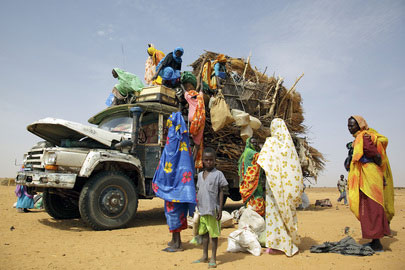
The United Nations has warned of a rapidly deteriorating humanitarian situation in North Darfur, where thousands of families displaced from El Fasher are enduring severe hardship. “Across Tawila and nearby areas, displaced communities lack sufficient food, clean water, shelter, and medical assistance,” UN Deputy Spokesperson Farhan Haq said.
The Office of the Prosecutor of the International Criminal Court (ICC) has expressed deep alarm over reports of mass killings, rapes, and other atrocities allegedly committed by the Rapid Support Forces (RSF) during their recent assault on El Fasher. These acts form part of a wider pattern of violence that has devastated Darfur since April 2023 and, if verified, may constitute war crimes and crimes against humanity under the Rome Statute.
Under UN Security Council Resolution 1593 (2005), the ICC has jurisdiction over crimes in Darfur and is actively investigating those committed since the renewed outbreak of conflict in 2023. The Office is taking urgent steps to secure evidence related to the El Fasher attacks, working closely with victims’ groups, civil society, and international partners. It recalled the recent conviction of Janjaweed leader Ali Muhammad Ali Abd-Al-Rahman as a warning that accountability for such crimes will follow.
Meanwhile, the UN is warning of a worsening humanitarian crisis in North Darfur, where thousands displaced from El Fasher are living in dire conditions. In Tawila and the surrounding areas, families lack food, clean water, shelter, and medical care, according to Deputy UN Spokesperson Farhan Haq. Aid agencies are setting up new camps to accommodate the growing number of displaced people, now exceeding 650,000 in Tawila alone.
Humanitarian agencies, in coordination with local partners, are establishing new displacement sites to accommodate the influx, adding to the more than 650,000 people already sheltering in Tawila. In Tawila Al Omda alone, over 3,000 newly arrived individuals are in urgent need of plastic sheeting, sleeping mats, and blankets as temperatures continue to fall. Many displaced people — including the injured, persons with disabilities, and unaccompanied children — are sleeping in the open. Similar dire conditions are reported among more than 6,500 people in Daba Al Naira and Um Jangour camps.
The Human Rights Council convened a special session on 14th of November to address the concerns about the human rights situation in and around El Fasher, Sudan. It unanimously passed a resolution urging the Independent International Fact-Finding Mission on Sudan to launch an immediate investigation into alleged recent violations of international law in the area. The council strongly condemned what it described as a wave of atrocities by the Rapid Support Forces (RSF) and allied actors following their assault on the city, including ethnically motivated killings, torture, summary executions, and the widespread use of sexual and gender-based violence as a weapon of war.
The resolution calls for the Fact-Finding Mission to identify, wherever possible, individuals reasonably believed to be responsible for the abuses and to help ensure those allegedly responsible are held to account. The United Nations Office at Geneva also asks the Office of the High Commissioner for Human Rights to provide an oral update on the situation before the Council’s sixty-first session, followed by an interactive dialogue.