


People with disabilities and voting in the constitutional referendum on March 22 and 23, 2026
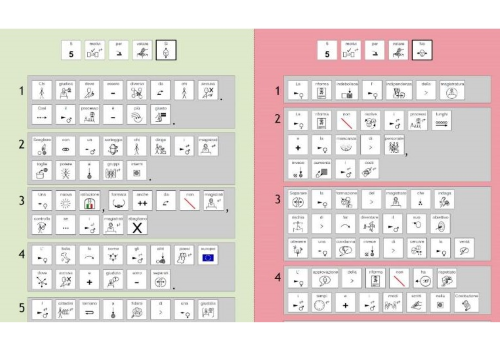
On Sunday, 22 March from 7am to 11pm and on Monday, 23 March from 7am to 3pm, the confirmatory referendum on the constitutional law containing “Provisions on the judicial system and the establishment of the Disciplinary Court” will take place.
All Italian citizens of legal age are called upon to exercise their right to vote by going to the polling stations, but the effective exercise of this right presents obstacles for people with disabilities. In this regard, current legislation allows people with disabilities to vote in different ways, depending on their health conditions.
Home voting is available to anyone who is in a state of continuous and vital dependence on medical equipment and unable to leave their home. In order to vote in this way, it is necessary to submit an explicit request to the Mayor of the municipality in which the person is registered on the electoral roll.
People that are hospitalised or in nursing homes can vote at the place of care. In this case, the person is required to submit, within three days of the referendum, a specific declaration to the Mayor of the municipality in whose electoral register they are listed, along with a certificate from the medical director of the place of care.
People who are physically unable to cast their vote due to disabilities such as blindness, hand amputation, paralysis or other impairments of comparable severity may choose an assistant, namely a family member or another voter willing to assist the person with a disability into the voting booth.
This option is available to voters who have had the ADV code (“right to assisted voting”) added to their voter registration card and to voters with an obvious physical impairment. If the disability is not immediately noticeable, a medical certificate must be presented to confirm the inability to vote autonomously.
The legislation also provides for the option of voting at another polling station within the municipality if the assigned polling station is not accessible to a voter with reduced mobility. This is possible by presenting, together with one’s voter registration card, a medical certificate stating “Inability to walk or severely reduced ability to walk”. Some municipalities also offer free public transport services to help people with disabilities reach the polling station.
In the three days leading up to the election, Local Health Authorities facilitate the exercise of the right to vote by ensuring that every municipality has a sufficient number of doctors who are authorised to issue accompanying certificates and the medical certificate referred to in Article 29 of Law 104/92.
On March 13, 2026, Circular No. 32 of the Ministry of the Interior recognized that people with disabilities can use the European Disability Card as a valid document for admission to assisted voting. The EU Disability Card is a public tool that guarantees people with disabilities access to goods and services, both public and private, free of charge or at reduced rates. The document certifies the disability without the need to carry other certifications, and ensures full compliance with privacy regulations.
The Card can be requested through an online procedure on the INPS website and can be issued with an explicit and visible wording, also indicating the need for a companion.
Finally, it is worth highlighting the commendable initiative by Antonio Bianchi, councillor of the League for the Rights of People with Disabilities (LEDHA), who has produced a text in Augmentative and Alternative Communication (AAC) to explain the reasons for voting ‘yes’ and ‘no’ and the option to cast a blank ballot, allowing people with cognitive disabilities (and others) to access and understand the issues of the referendum.