


Laura Nota: ‘The Future Is Not Something We Endure, but Something We Imagine’. From Switzerland, a Manifesto for Rethinking Career Guidance, Freedom and Social Justice
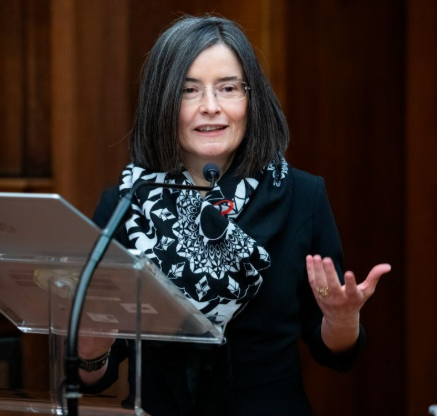
Psychologist Laura Nota of the University of Padua has been awarded an honorary doctorate by the University of Lausanne and has issued a challenge to the academic world: abandon dominant narratives and return to building, together with people, new horizons of choice, inclusion and democracy.
What Professor Laura Nota delivered on 28 May during the Dies Academicus of the University of Lausanne, on the occasion of the conferment of her honorary doctorate, was not a traditional lectio magistralis. Rather, it was a scientific and civic manifesto addressed to universities, researchers, and all those who reflect on the future of contemporary societies.
The distinction recognises an academic career of outstanding international significance. Certainly. Yet, even more importantly, it celebrates a research journey that, over the past twenty years, has profoundly transformed the field of career guidance, contributing to the emergence of the Life Design paradigm and opening up new perspectives on inclusion, social justice, decent work and human rights.
From the very first words of her lecture, Laura Nota states this achievement within a collective story. She does not recount an individual success, but rather a network of scientific and human relationships built over the years with colleagues at the University of Lausanne, the University of Padua and the international Life Design community. A community established more than twenty years ago through encounters with scholars such as Jean-Pierre Dauwalder, Jérôme Rossier, Jonas Masdonati, Koorosh Massoudi, Mark Savickas, Jean Guichard, Maria Eduarda Duarte, Annalies Van Vianen, Raoul Van Esbroeck and Salvatore Soresi, her mentor and research companion, also remembered for his historic civic commitment to the educational inclusion of people with disabilities.
This long-standing collaboration has given rise not only to joint research projects, but also to the foundation of the European Society for Vocational Designing and Career Counseling (ESVDC), the ECADOC international network dedicated to early-career researchers, and the UNESCO UNITWIN programme, helping to build one of the world's leading scientific communities in the field of career guidance. Yet the true heart of the lecture does not concern the past. It concerns the future.
Against a Future Already Written
The starting point is a question that is as simple as it is radical: who is imagining the future? According to Laura Nota, today the future is described almost exclusively through major international reports, economic analyses and technological forecasts. These narratives describe the advent of artificial intelligence, identify which occupations will be in demand, outline the skills that future generations will need, and predict how cities, work and even leisure time will change. Such scenarios are frequently presented as inevitable. The problem, the scholar argues, lies not in what these reports describe, but in what they omit. Missing are the contradictions, the social costs, the consequences for inequality and the threats to democracy. Above all, what is absent is people's involvement in shaping the future. The implicit and seemingly unavoidable message appears to be only one: adapt. Professor Nota's critique directly challenges the way career guidance itself is now conceived. For decades, career guidance has meant helping people find their place in the labour market. But if the market itself becomes the only conceivable horizon, career guidance risks turning into an instrument for adapting people to the status quo—or even for subordinating them to it—thereby abandoning its educational and transformative function. 'Participation has been taken away from us,' Laura Nota essentially argues. We are asked to prepare ourselves for technological change, yet we are increasingly discouraged from discussing what kind of technology we want, what kind of economy we wish to shape, and what vision of society we intend to pursue.
The Anthropocene and the Burden of Inequality
To understand this transformation, the lecture begins with the Anthropocene, the geological epoch in which human activities profoundly alter the balance of the planet. Laura Nota immediately introduces a crucial qualification: humanity as a whole does not bear equal responsibility. Drawing on scholars such as Kohei Saito, Jason Moore, Nancy Fraser and Ugo Mattei, she argues that the social and ecological crisis does not arise from human beings as such, but from a specific economic model based on the continuous extraction of value from labour, people and nature. This is an explicit critique of contemporary neoliberalism, which, she argues, has progressively detached economic freedom from equality, fostering the concentration of wealth, the emergence of global monopolies and the erosion of social rights. The result is a system in which a small number of major corporations acquire ever greater power, while precariousness, vulnerability and poverty continue to grow. The environmental crisis, therefore, cannot be addressed without simultaneously confronting the issue of social justice—and vice versa—because the two dimensions are inseparable.
From Homo Economicus to Homo Adaptus
One of the most original sections of the lecture concerns the critique of the anthropological model that, according to Laura Nota, has gradually become dominant in Western societies. Alongside homo economicus, the rational individual who pursues only his or her own economic interest, another, even more problematic figure has emerged over recent decades, she argues: homo adaptus, constantly required to adapt to changes produced by others. The word 'adaptation' now permeates public discourse: adapting to transformations in the labour market, to the digital revolution, to artificial intelligence, and to new models of production.
But who decides the direction of these changes, of these adaptations? This question runs throughout the entire lecture. According to Laura Nota, the risk is that career guidance, education and even university teaching will ultimately do little more than prepare people to face a future already designed by others, rather than enabling them to become active protagonists in shaping it. The point, however, is not to deny technological change. The point is to ask whether it should simply be accepted or instead debated, governed democratically and directed towards collectively shared purposes.
The Financialisation of Society
The lecture then introduces a phenomenon that remains largely invisible, yet is already deeply entrenched: the financialisation of the economy. Laura Nota describes a radical transformation. For a long time, industrial capitalism functioned according to a relatively straightforward logic: capital was invested to produce goods and services, generating employment, innovation and wealth. Today, she observes, money increasingly generates more money without passing through production. This is the predominance of finance over the real economy. Within this scenario, major international investment funds play an increasingly influential role. They acquire struggling companies, restructure them, outsource activities, reduce their workforce and subsequently resell them at a higher value. The guiding principle becomes immediate financial return. At whatever cost: social, environmental or human. Long-term planning, the quality of work, the well-being of local communities, and even the survival of entire productive sectors are relegated to the background. According to the scholar, the consequences are now visible everywhere. Small businesses disappear. Independent professions are progressively absorbed by large corporate groups. Public services are entrusted to financial actors whose primary interest is to generate returns for investors. Even welfare itself changes in nature. The weakening of public healthcare and public pension systems pushes increasing numbers of citizens towards private insurance and pension funds, further feeding the financial cycle. This is a process that transforms not only the economy but also the way people come to perceive themselves. The individual is no longer simply a worker or a citizen; he or she simultaneously becomes an investor, a saver and a financial consumer. Even the financial education increasingly offered in schools, Laura Nota argues, risks teaching people primarily how to adapt to this model, rather than how to approach it critically.
Artificial Intelligence Beyond the Enthusiasm
And what about artificial intelligence? Laura Nota distances herself both from uncritical enthusiasm and from catastrophic interpretations. The central issue is not AI itself. Rather, she shifts attention to the way it is portrayed. Dominant narratives insist on its opportunities: new occupations, higher productivity, technological development and increasingly personalised services. Far less attention is devoted to its possible adverse consequences. The scholar refers to recent research showing that automation is not merely replacing manual labour, but is increasingly affecting highly qualified professions in communication, finance, research and even technology itself. One of the most worrying effects is what some scholars describe as premature de-professionalisation. As increasingly sophisticated expertise becomes embedded within artificial intelligence systems, the economic value of specialised education declines. This explains why many young people are beginning to wonder whether investing years in higher education still makes sense. As Laura Nota observes, this question now resonates across countless families. What is at stake is not merely employment, but the very meaning of education, its value and its reason for being.
The Construction of Ignorance
The digital revolution has also produced another phenomenon that the lecture addresses forcefully: the spread of disinformation. Drawing on studies in agnotology—the "science of the production of ignorance"—Laura Nota describes an information environment characterised by fake news, manipulated content, artificially generated images, hate speech and oversimplified narratives. Once again, this is not simply a technological issue. It is a democratic one. When partial or conflicting information prevails, developing a shared understanding of reality becomes increasingly difficult. Public debate becomes polarised. People are driven towards a competitive, individualistic logic in which others are perceived as rivals—or worse, as enemies. This stands in stark contrast to the culture of cooperation which, according to Laura Nota, should instead form the very foundation of career guidance and education.
The Crisis of Hope
Perhaps the most powerful section of the lecture comes when the focus shifts from economic issues to their psychological consequences. The growth of inequality, precariousness and vulnerability certainly generates material poverty, but it also impoverishes people's expectations. Many young people now struggle to imagine a better future. The international studies cited by Laura Nota show that forty years of neoliberalism have fostered a widespread sense of powerlessness, with significant consequences for mental health, quality of life and trust in public institutions. In this context, career guidance cannot simply teach people how to find employment. It must help restore something even more precious: the possibility of imagining the future. It is precisely here that the lecture changes direction. Having described the transformations reshaping our age, Laura Nota turns her attention to what she considers the university's true mission: not to help people adapt to the present, but to enable them to design and realise alternatives.
The Real Challenge: Recovering Complexity
Having outlined the risks posed by a society increasingly driven by financialisation, the concentration of economic power and technology controlled by a handful of global actors, Laura Nota changes register. The question is no longer: What is happening? Instead, it becomes: What can we do? Her answer begins with the institution she knows best: the university. According to the Padua academic, universities cannot limit themselves to preparing professionals who are ever more adaptable to market change, nor simply to "heal the wounds" produced by an economic and social system that continually generates new forms of exclusion. Universities must once again become places where ideas are created. Places capable of questioning dominant narratives and demonstrating that the famous neoliberal slogan There Is No Alternative is not a law of history, but a cultural construction. For Laura Nota, this is where research becomes an exercise in democracy—not by providing ready-made answers, but by restoring people's capacity to imagine different futures.
Rethinking Social Justice
One of the first concepts that Professor Nota calls for us to reclaim is that of social justice. This may seem surprising. It is an expression that appears everywhere: in international documents, political programmes and university strategies. Yet, she explains, when her research group asked university students to define it, an unexpected finding emerged. Many were unable to explain what social justice actually meant. Those who attempted to do so almost invariably reduced it to equality of opportunity in access to employment. An important definition, certainly—but an extremely limited one. For Laura Nota, social justice is far more than that. It is a rich intellectual tradition encompassing a wide range of perspectives on the distribution of resources, rights, power, democratic participation and people's opportunities to lead fulfilling lives. Reducing it solely to individual merit impoverishes public debate. Above all, it limits our ability to imagine different models of society.
Freedom Is More Than Choice
Even more compelling is the reflection devoted to freedom: the philosophical core of the lecture. Laura Nota begins with a simple observation. We live in an age in which the word "freedom" is used incessantly, almost always with a single meaning: the freedom to choose. The freedom to consume. The freedom to do whatever one wishes. Drawing on contemporary philosophical debate, the scholar describes this as a neoliberal conception of freedom: one centred almost exclusively on the individual. A conception that tends to detach freedom from equality, solidarity and even democracy. The paradox is evident. Never before have we been told so insistently that we are free. Yet, Laura Nota points out, the options genuinely available to millions of people are steadily diminishing. Employment is becoming increasingly precarious. Access to housing is becoming more difficult. Education is becoming more expensive. Inequalities continue to widen. This is what some philosophers describe as the illusion of freedom. An apparent freedom that risks giving way to passivity—or even resignation.
The Other Forgotten Freedoms
Professor Nota's proposal is not to reject the Western concept of freedom, but to enrich it. During the lecture, she presents what is effectively a "map" of the different conceptions of freedom developed within philosophy and the social sciences. There is republican freedom, which identifies freedom with the absence of domination and with the ability to look others in the eye without fear or subordination. There is social freedom, according to which no one can be truly free without mutual recognition and relationships founded upon care and cooperation. There is ecocentric freedom, which expands the very notion of community to include other living beings and ecosystems, overcoming the traditional opposition between humanity and nature. Finally, there is an intercultural perspective, showing how other civilisations have developed conceptions of freedom profoundly different from the Western tradition, grounded in collective harmony and reciprocal responsibility. The point is not to decide which definition is the best. Rather, it is to recognise that freedom is a far more complex concept than public debate generally acknowledges. And that it is precisely this plurality that provides a resource for imagining the future.
Career Guidance as a Democratic Practice
From this emerges what Laura Nota, together with her research group, defines as a new perspective on Career Guidance 5.0. Career guidance is no longer conceived as a collection of techniques designed to help people choose an occupation. Instead, it becomes an educational space in which critical consciousness can be developed. A space in which to understand different conceptions of the economy. To question the meanings of freedom. To explore the many understandings of social justice. To reflect upon the relationships between work, the environment, democracy, and social, civil and human rights. The objective is not to profile individuals. It is to enable them to read reality critically and to participate in constructing—and imagining—possible futures. Within this perspective, career guidance is transformed into an instrument of citizenship. It does not merely prepare people for work. It prepares them for democracy.
From the Classroom to Society
The lecture does not remain at the level of theory. Laura Nota presents several initiatives that are already under way. Among them is a training programme involving fifty journalists, designed to explore issues of inclusion, social justice and the role of information in shaping public narratives. The programme resulted in the publication of an essay and even in the creation of a new interdisciplinary news outlet, La cura del vero ("The Care of Truth"). Another project focused on financial education, approached from an unconventional perspective: fostering a critical understanding of different economic models and distinguishing financialisation from ethical and sustainable finance. Similar educational initiatives have also been developed with university students, inviting them to engage with different conceptions of the economy, freedom, social justice and inclusion, based on the conviction that the capacity to imagine the future depends first and foremost upon the richness of the cultural tools available.
A Manifesto for the Future
The lecture concludes in the tone of a genuine manifesto. According to Laura Nota, the contemporary world does not simply need new skills. It needs more culture. New theories. Greater pluralism. Universities capable of making visible what today remains invisible. Spaces in which it is possible to discuss, to question and to imagine. Finally, the researcher openly declares where she chooses to stand. Laura Nota stands—and invites others to stand—on the side of transformative social justice; of a conception of freedom that is also social and ecological; of inclusion without boundaries; of a democracy that extends through work, education and public institutions; ultimately, on the side of peace. It is a conclusion that is striking precisely because it breaks with the tradition of academic neutrality. Laura Nota asserts the right—and perhaps the duty—of research to take a stand whenever human dignity, human rights and the future of the planet are at stake.
The honorary doctorate awarded by the University of Lausanne thus acquires a significance that extends far beyond the recognition of an outstanding scientific career. It honours a scholar who, through the psychology of career guidance, advances a different vision of the university: not a place that merely prepares people to adapt to the world, but a space in which the world can still be imagined, debated and transformed in the light of a collective vision founded on solidarity, inclusion, equity and sustainability—for both humanity and the environment.
Keywords
How to cite this article
Monica Andolfatto (2026), "Laura Nota: ‘The Future Is Not Something We Endure, but Something We Imagine’. From Switzerland, a Manifesto for Rethinking Career Guidance, Freedom and Social Justice", in Inclusion and Eco-Social Justice, ISSN 3035-5265, https://unipd-centrodirittiumani.it/en/topics/laura-nota-the-future-is-not-something-we-endure-but-something-we-imagine-from-switzerland-a-manifesto-for-rethinking-career-guidance-freedom-and-social-justice (consulted on 18/10/2026).
