


Repression or Protection? Freedom of Movement as a Prism of Mobility Along the Balkan Route
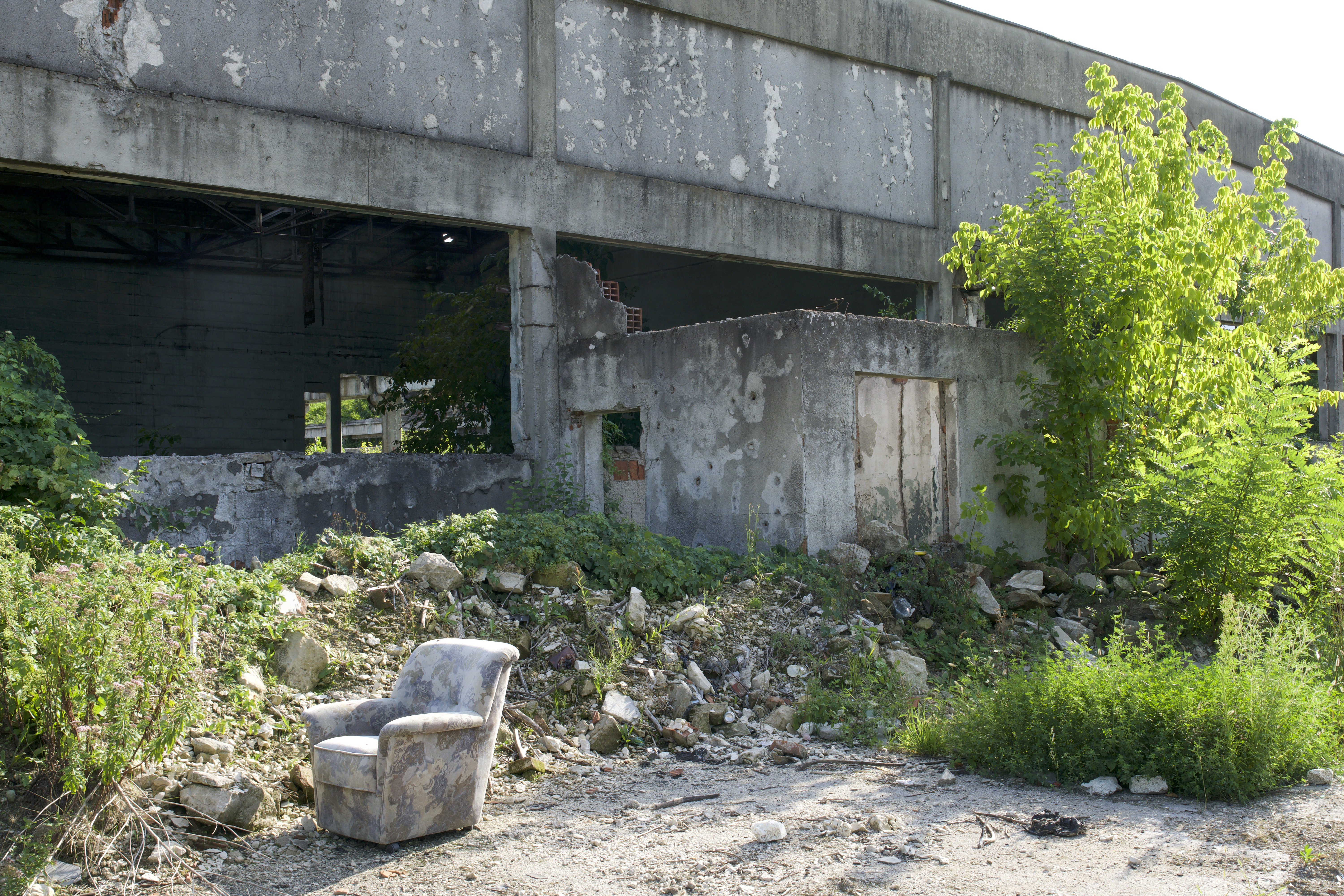
Table of Contents
- Methodology and Voices from the Route
- From Corridor to Prism
- Fragmented Mobilities Along the Route
- Conclusion: A Political Choice
Methodology and Voices from the Route
This article is based on a broader research developed within a Master’s thesis, structured through legal analysis, historical reconstruction, and fieldwork conducted in August 2025 along the Balkan Route, from Trieste to Athens. The aim was to study migration governance through legal frameworks and public policies, but also to observe how these tools operate in practice across different contexts.
The fieldwork was carried on thanks to the collaboration of a wide range of actors encountered along the route: formal and informal organisations, grassroots networks, volunteers, fieldworkers, and people on the move who agreed to share their experiences. These include: Linea d’Ombra, IPSIA, No Name Kitchen, U Pokretu, Jesuit Refugee Service, Medical Volunteers International, Operazione Colomba, Karama Collective, and many others. Their perspectives are not uniform. They differ in roles, approaches, and interpretations. Yet, across these differences, a common element emerges: the strength of resilience, resistance, and humanity, characteristics that stand in stark contrast to the systemic violence and indifference that permeate these contexts. These voices are not an addition to the analysis, but its foundation. They allow us to grasp the distance between law and lived reality, between what is formally guaranteed and what is experienced.
From a Corridor to a Prism
The Balkan Route is often described as a corridor. Yet, rather than a linear pathway, it takes shape as a political space in which mobility is constantly shaped, filtered, and constrained.
To understand this transformation, the analysis begins from the border. In “I Am Border”, Shahram Khosravi interprets the border not only as an external frontier to be crossed, but as an internalised presence, embedded in the everyday lives of those who live in irregularity and fear. As he states: “I became the border. The border had moved into my body.”
From this perspective, the border does not operate only spatially, but also on a biopolitical level: it selects, excludes, and hierarchises lives, determining who can move as a bearer of rights and who is instead perceived as a threat.
It is precisely by observing borders that freedom of movement reveals its complexity. Rather than a fixed and universally guaranteed right, it emerges as a prism: a single principle that breaks into different realities and possibilities depending on where it is experienced, on the legal and political conditions that regulate it, and on how it is managed. For some, mobility is immediate and almost invisible. For others, it becomes a continuous negotiation with systems of control, waiting, and often violence.
Fragmented Mobilities Along the Route
Building on these encounters and observations, the research focuses on five countries along the route. For each of them, the analysis combines the legal framework governing entry and reception systems with a specific case study, in order to understand how these structures concretely shape or restrict freedom of movement. Each state represents a different manifestation of the same prism.
In Italy, freedom of movement collides with marginalisation.
The case of Trieste, particularly the areas of Silos and Porto Vecchio, shows how the absence or insufficiency of reception produces immobility.
During an interview conducted inside the Porto Vecchio, it was possible to observe how a seemingly abandoned space was deeply inhabited: people brushing their teeth, clothes hanging to dry, everyday objects scattered throughout the area. During the interview, a worker involved in the renovation of the site asked us to leave, claiming it was not a safe place. On that occasion, the interviewee Marine Corre observed:
“He too sees these people living here, but there is no willingness to interact. Two parallel worlds that see each other, that stand side by side every day but never meet.” (Marine Corre, U Pokretu, Trieste, 4 August 2025)
What emerged as problematic was not only the lack of reception capacity, but the structural coexistence of two realities that remain separate and invisible.
In Bosnia and Herzegovina, freedom of movement takes the form of spatial confinement.
The case of Lipa camp, located about 25 kilometres from Bihać and surrounded by forests and landmine areas, clearly illustrates this dynamic. Movement is technically possible, but meaningless. Violent and illegal pushbacks carried out by Croatian police at the border reinforce this condition, repeatedly forcing people back into marginal and isolated spaces. Mobility here is allowed but emptied of real possibility.
In Serbia, freedom of movement becomes forced and circular.
A significant example is represented by the joint police operations between Serbia and Hungary in 2023, carried out in the name of combating migrant smuggling. These operations led to the dismantling of informal settlements and the continuous relocation of people, a practice that still persists today. People are constantly moved from one place to another, without any possibility of stabilisation.
Mobility, in this context, is not a choice, but a condition imposed from above.
In Bulgaria, freedom of movement is marked by exhaustion.
Detention centres such as Busmantsi and Lyubimets show how detention, unclear procedures, and a constant legal limbo operate together to strip people of hope. People on the move are often released from these centres without status or prospects, unable to move forward, but also unable to return.
The experience of a Syrian asylum seeker encountered in Harmanli reflects the depth of this condition:
“I come from the border, from the mountains. (...) I almost died at the border between Turkey and Bulgaria. Now I am afraid of the word ‘forest’. (...) Bulgaria gave us deportation papers to return to Syria, but we do not want to return because Syria is completely destroyed. (...) They say Bulgaria is safe, Syria is safe, but nothing is safe. It’s all just words.” (Syrian asylum seeker, Harmanli, 14 August 2025)
In this context, movement collides with fear, uncertainty, and prolonged waiting.
Finally, Greece perhaps reveals the most stratified face of the prism: one in which movement becomes a racialised privilege.
This dynamic is shaped and made concrete by specific legislative measures. The 2021 Joint Ministerial Decision designates Turkey as a safe third country for asylum seekers from Syria, Afghanistan, Somalia, Pakistan, and Bangladesh, limiting and delaying access to asylum procedures. This mechanism is further reinforced by Article 79 of Law 5218/2025, through which the Greek government suspended the possibility to apply for asylum for people arriving from North Africa.
Not only movement, but also the asylum procedure itself becomes a privilege among already non-privileged people, generating unjust and discriminatory dynamics that often lead individuals to give up. During a field interview, a Syrian man described this condition:
“I have been in Greece for seven years, and during all this time I haven’t seen my children or my family. I even divorced my wife because of these delays. My life is destroyed. (...) My only wish is to have a passport and a residence permit, so I can work legally, go out, come back, do something. But here I can’t do anything. (...) I’m waiting for February 202C. If they refuse again, I will go back to Syria. Whatever the situation there, it will be better than staying here without an identity.” (Syrian asylum seeker, Athens, 17 August 2025)
Conclusion: A Political Choice
What emerges from this analysis is not a system in crisis, but one that functions in a highly coherent way.
Through the analysis of borders and how they operate, it becomes clear that the European Union has, for years, experimented along the Balkan Route with migration control practices: externalisation, containment, pushbacks, administrative filtering, and differentiated access to rights. As stated by a legally trained refugee during an interview:
“Violence is not created at the borders; it is created in the laws, in the capitals. At the borders it simply appears. (...) If you want to solve the problem at the border, you need to solve it in the capitals. (...) Borders are just a mirror of the problem within the country.” (Legally trained refugee, Harmanli, 13 August 2025)
This testimony captures the core issue: the problem is not the physical border between states, but the way in which law, and those who apply it, interpret and implement human rights. If rights continue to be filtered through nationality, borders will continue to function as barriers, instruments of exclusion, and devices of inequality. Practices of control and violence that, with the implementation of the New Pact on Migration and Asylum, risk becoming increasingly normalised and extended beyond border areas, entering the ordinary functioning of the European system.
In this sense, the Balkan Route is not a periphery, but an anticipation that reveals the direction of a political project. A project in which the European Union continues to present itself as a space of rights, while systematically organising their limitation. A project in which mobility is not regulated equally, but selectively. A project in which freedom of movement is no longer universal, but conditional.
The Balkan Route thus becomes a mirror of European contradictions: violence, waiting, and uncertainty are not exceptions, but the outcome of precise legal and political choices. As long as these choices remain unquestioned, it will not be “the route” that changes, but the lives of those who are forced to cross it.
Resources
Asylum Information Database (AIDA). Country Reports on Asylum in 25 countries
Border Violence Monitoring Network. Monthly Reports on Pushbacks and Border Violence.
Hellenic Republic. Joint Ministerial Decision 427SS/2021, “Designation of Turkey as a Safe Third Country for Nationals of Syria, Afghanistan, Pakistan, Bangladesh and Somalia.” Official Gazette of the Hellenic Republic B’ 2425/07.06.2021.
Hellenic Republic. Law 5218/2025. Official Gazette of the Hellenic Republic A 125/14- 07-2025; Amendments, Official Gazette A 189/16-09-2025.
Khosravi, Shahram. I Am Border, I Am the Wall. Manifesto XXI, 2021
Mezzadra, Sandro, and Brett Neilson. Border as Method, or, the Multiplication of Labor.
Durham: Duke University Press, 2013.
Moreno-Lax, Violeta. Accessing Asylum in Europe. Oxford University Press No Name Kitchen. Reports on Border Violence
Links
How to cite this article
Caterina Civico (2026), "Repression or Protection? Freedom of Movement as a Prism of Mobility Along the Balkan Route", in Human Rights Centre "Antonio Papisca", University of Padova, https://unipd-centrodirittiumani.it/en/topics/repression-or-protection-freedom-of-movement-as-a-prism-of-mobility-along-the-balkan-route (consulted on 23/10/2026).
